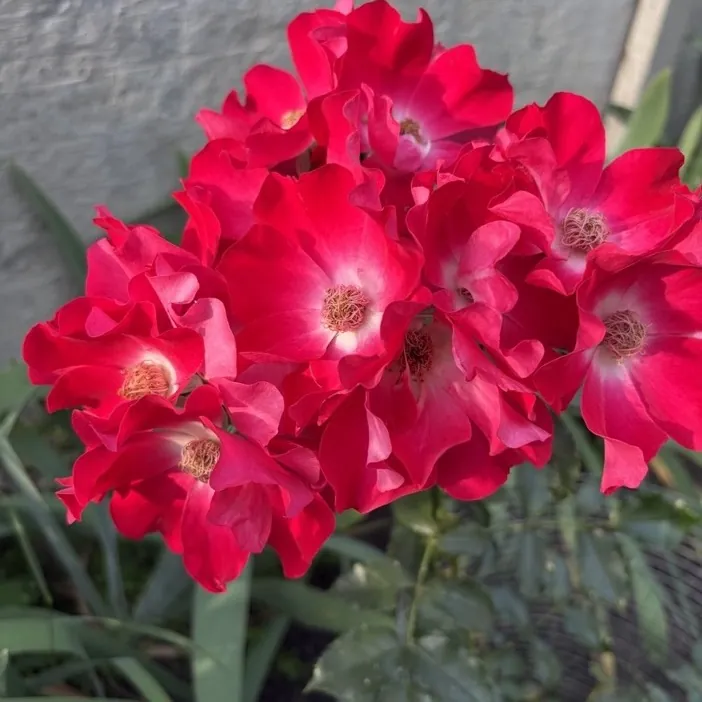





Dortmund, close-up of the flower
Back to catalogue
Hybrid KordesiiWilhelm Kordes II, 1955Red

Dortmund

ADR 1954; Longwood 10-Year Trials; the first major success of the Hybrid Kordesii line, a turning-point variety of the twentieth century.

Shrub Climber · one of the founding varieties

Variety profile

Flowering

Repeat, in flushes

First strong wave in June, then repeat waves; abundant repeat flowering requires removing spent flowers. Months are approximate, for the climate of Ukraine.

Awards

ADR 1954

+ RHS award · Longwood 10-Year Trials

Winter hardiness

−34 °C

USDA zone 4b–9b. One of the hardiest climbers; all of Ukraine without protection. One of the hardiest climbers · all of Ukraine without winter cover.

Compare reference temperatures

Plant size

250–365 × 180–215 cm
person 170 cm250–365 cm
Habit
Stiff arching shoots, the typical Hybrid Kordesii habit
Dimensions
250–365 cm tall × 180–215 cm wide
Support
Needs support: arch, pergola, trellis, north or east wall (thanks to its ability to grow in part shade)
Shoots
Sturdy, straight, easy to train on a support
Branching
Good; over time it forms a powerful framework

Flower

9–11 cm
Bud shape
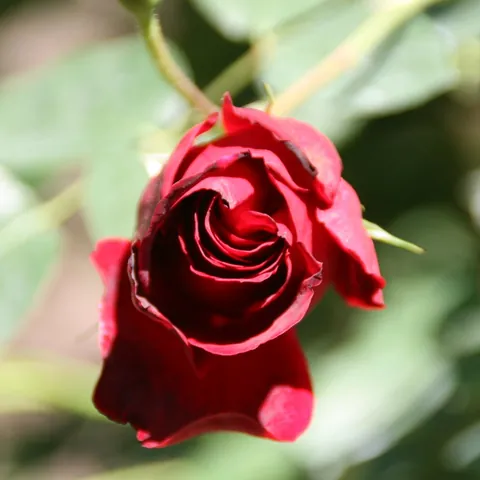
Round, dark cherry-red
Open flower
Widely open, single, 'poppy' effect, petals slightly wavy; 9–11 cm across
Centre
A clean white 'eye' with golden stamens, a characteristic feature of the variety
Fullness
Single (4–8 petals)
Flower carriage
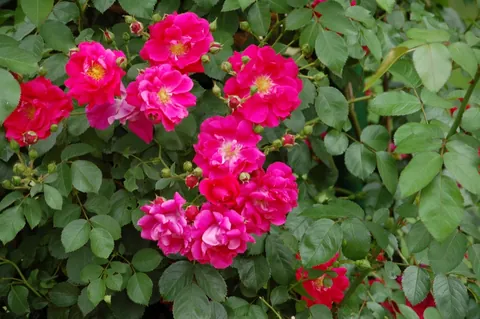
In large clusters on the stem

Fragrance

Barely noticeable

Very weak to light; a light note of apple.

Disease resistance

5 out of 5

5/5, one of the most resistant roses in the catalogue; passed Longwood's 10-year trials (a rare achievement).

Sun

Sun or part shade

Rare for a climber, it tolerates part shade well.

Thorns

Moderate
thornlessfewmoderatemanyvery many

Medium number, sturdy.

Foliage

Dark green, glossy, leathery; inherited from R. wichuriana.

All characteristics in a table
Group
Hybrid Kordesii
Breeder
Wilhelm Kordes II, 1955
Bud shape
Round, dark cherry-red
Open flower
Widely open, single, 'poppy' effect, petals slightly wavy; 9–11 cm across
Centre
A clean white 'eye' with golden stamens, a characteristic feature of the variety
Colour
Bright cherry-red with a white 'eye'; the contrast between red and white is the hallmark of the Hybrid Kordesii line
Fullness
Single (4–8 petals)
Flower carriage
In large clusters on the stem
Flowering
First strong wave in June, then repeat waves; abundant repeat flowering requires removing spent flowers
Fragrance
Very weak to light; a light note of apple
Hips
Large orange decorative hips; if NOT pruned, flowering weakens in autumn, but the bush is beautiful in autumn and winter
Habit
Stiff arching shoots, the typical Hybrid Kordesii habit
Branching
Good; over time it forms a powerful framework
Shoots
Sturdy, straight, easy to train on a support
Thorns
Medium number, sturdy.
Dimensions
250–365 cm tall × 180–215 cm wide
Support
Needs support: arch, pergola, trellis, north or east wall (thanks to its ability to grow in part shade)
Foliage
Dark green, glossy, leathery; inherited from R. wichuriana
Resistance
5/5, one of the most resistant roses in the catalogue; passed Longwood's 10-year trials (a rare achievement)
Variations of the variety
No official sports

Colour scheme

Bright cherry-red with a white 'eye'; the contrast between red and white is the hallmark of the Hybrid Kordesii line

Rose neighbours

Perennials to plant nearby

Neighbouring roses and clematis

Purple clematis on the same support (pruning group 3, matched to Dortmund):

Clematis 'Étoile Violette'Clematis 'Perle d'Azur'Clematis 'Mme Julia Correvon'Darcey Bussell

Perennial companions

Blue and purple underplanting + a white shrub neighbour:

catmint 'Walker's Low'lavender 'Hidcote'sage 'Caradonna'philadelphus 'Belle Étoile'

Availability worldwide

A classic among hardy climbers — widely available:

  • 🇩🇪 Europe: Kordes · David Austin EU · Peter Beales · Trevor White
  • 🇺🇸 USA: Heirloom · Rogue Valley · High Country · Antique Rose Emporium
  • 🇯🇵 Asia: less often · Japanese collectors' nurseries
  • 🇺🇦 Ukraine: RoseTUR · Sady Bukovyny · Mahiia Troiand

More about the variety

Hips
Large orange decorative hips; if NOT pruned, flowering weakens in autumn, but the bush is beautiful in autumn and winter
Variations of the variety
No official sports

How to grow

Where to plant. Arches, pergolas, trellises, even on a north or east wall (a rare advantage for climbers); decorative hips look good in autumn and winter.

Climate. Down to −34 °C; one of the hardiest climbing roses in the world, ideal for all of Ukraine, including the Carpathians and the Sumy region, without protection.

Care. Minimal, thanks to 5/5 resistance; for abundant repeat flowering, remove spent flowers. If you want decorative hips, leave the last wave unpruned.

About the name

Name. After the German city of Dortmund (North Rhine-Westphalia, Germany), which has a large rose garden of its own and is part of the European Rose Route. The name is a tribute by Kordes to German rose culture.

Breeding. Raised by Wilhelm J.H. Kordes II (1891-1976) at W. Kordes' Söhne (Sparrieshoop, Germany); introduced in 1955. It has no modern code name (it predates the KOR-code system). Parentage: an unnamed seedling × Rosa kordesii H. Wulff.

Significance. The first big success of the Hybrid Kordesii line, which Wilhelm Kordes II created in 1941 by crossing R. wichuriana with R. rugosa and obtaining the tetraploid species Rosa kordesii. Dortmund proved that the iron hardiness of species roses can be combined with repeat flowering and the beauty of modern varieties, a turning point in the history of climber breeding in the twentieth century. It won the ADR-award as early as 1954. It passed Longwood's 10-year trials (a rare achievement).

Frequently asked questions about Dortmund

Does Dortmund need winter protection?

The cultivar’s reference temperature is −34 °C (USDA zone 4b–9b). Overwintering depends on the conditions. One of the hardiest climbers; all of Ukraine without protection.

How many times a season does Dortmund flower?

First strong wave in June, then repeat waves; abundant repeat flowering requires removing spent flowers.

How big does Dortmund grow?

250–365 cm tall, 180–215 cm wide.

Which diseases affect Dortmund?

Overall resistance: 5 out of 5. One of the most resistant roses in the catalogue; passed 10-year trials at Longwood.

How much sun does Dortmund need?

Sun or part shade; rare for a climber, it tolerates part shade well.

What does Dortmund smell like?

Very weak to light; a light note of apple.

Gardeners' photos and reviews

My climate

Choose a reference temperature to compare with the cultivar’s data. This is not an overwintering forecast or advice on winter protection; consider wind, moisture and the duration of frost.

Regional data are generalised. USDA describes average annual extreme minima, not a forecast; the values in the list are rounded. Check the conditions at your site. More information: Roses in Ukraine's climate.