


Back to catalogue
Large-flowered climberWilhelm Kordes II, 1955Red

Flammentanz

ADR 1952; one of the hardiest climbers in the world; parentage R. eglanteria × R. kordesii; flowers once a year (4–6 weeks, very profusely).

Hybrid Rubiginosa · once-flowering

Variety profile

Flowering

Once-flowering

ONE-TIME flowering — many Ukrainian sources wrongly say 'repeat'. But the bloom is very profuse, lasting 4–6 weeks in June–July; the bush is completely covered in flowers. Months are approximate, for the climate of Ukraine.

Awards

ADR

1952 · an early example of German garden toughness

Winter hardiness

−34 °C

USDA zone 4b–9. All of Ukraine, no cover needed; a legend in Canada/Scandinavia. All of Ukraine, no cover · legendary in Canada/Scandinavia.

Compare reference temperatures

Plant size

270–360 × 120–180 cm
person 170 cm270–360 cm
Habit
A sturdy large-flowered climber — long, thick canes that shape well on an arch or fence
Dimensions
270–360 cm tall × 120–180 cm wide
Support
Needs a sturdy support — arch, pergola, trellis on a south wall, tall fence
Shoots
Long, very strong, hold the flower clusters well
Branching
Good; over time it forms a powerful green wall

Flower

≈ 10 cm

17–25 petals.

Bud shape
Round-conical, bright red
Open flower
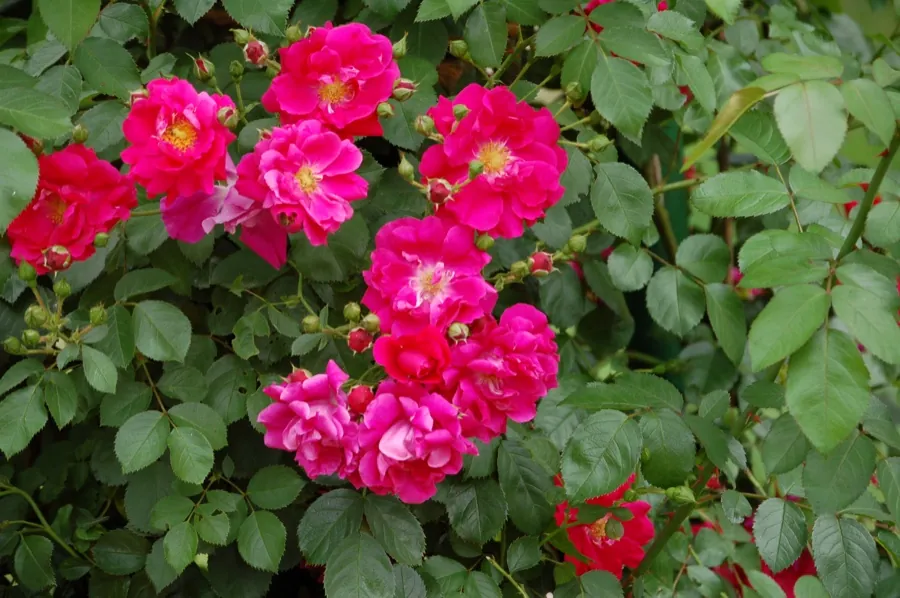
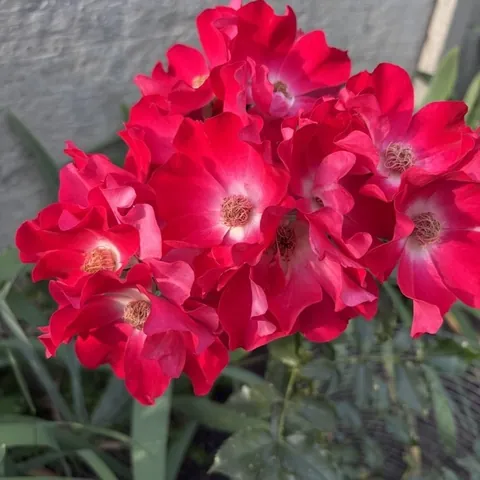
Cup-shaped, semi-double, with a noticeable yellow heart of stamens; ~10 cm across
Centre
A golden heart of stamens — a bright contrast with the raspberry-red petals
Fullness
Semi-double, 17–25 petals
Flower carriage
In small clusters of 3–5 per shoot

Fragrance

Light

Light to moderate, a light rose-and-apple note (the R. eglanteria parent has apple-scented foliage).

Disease resistance

5 out of 5

Outstanding — the R. kordesii parent (Kordes 1941, tetraploid) gave the line 'iron health'.

Sun

Full sun for profuse flowering

Tolerates partial shade.

Thorns

Many
thornlessfewmoderatemanyvery many

Many thorns — typical of R. eglanteria descendants.

Foliage

Dark green, leathery, very healthy.

Other names

Flame Dance, Flaming Dance, Vlammenspel
All characteristics in a table
Group
Large-flowered climber
Breeder
Wilhelm Kordes II, Germany, 1955
Bud shape
Round-conical, bright red
Open flower
Cup-shaped, semi-double, with a noticeable yellow heart of stamens; ~10 cm across
Centre
A golden heart of stamens — a bright contrast with the raspberry-red petals
Colour
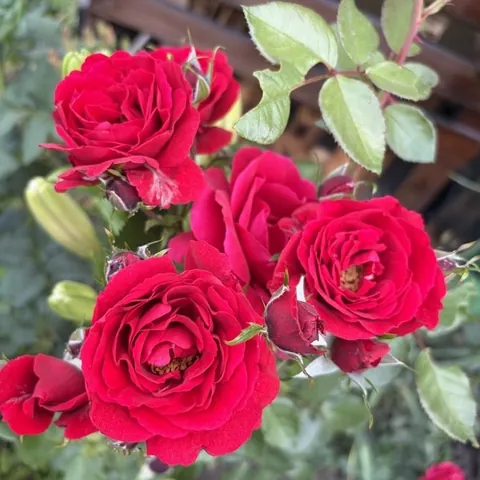
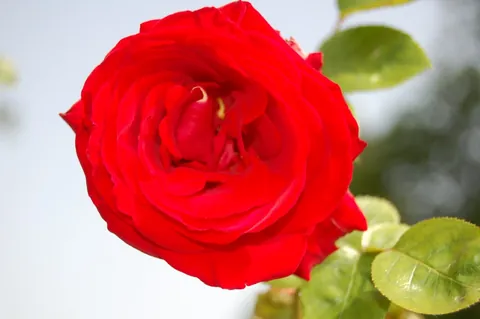
Pure raspberry-red (crimson) — no maroon, no orange tint
Fullness
Semi-double, 17–25 petals
Flower carriage
In small clusters of 3–5 per shoot
Flowering
ONE-TIME flowering — many Ukrainian sources wrongly say 'repeat'. But the bloom is very profuse, lasting 4–6 weeks in June–July; the bush is completely covered in flowers
Fragrance
Light to moderate, a light rose-and-apple note (the R. eglanteria parent has apple-scented foliage)
Hips
Decorative red hips in autumn — extends the decorative season
Habit
A sturdy large-flowered climber — long, thick canes that shape well on an arch or fence
Branching
Good; over time it forms a powerful green wall
Shoots
Long, very strong, hold the flower clusters well
Thorns
Many thorns — typical of R. eglanteria descendants.
Dimensions
270–360 cm tall × 120–180 cm wide
Support
Needs a sturdy support — arch, pergola, trellis on a south wall, tall fence
Foliage
Dark green, leathery, very healthy
Resistance
Outstanding — the R. kordesii parent (Kordes 1941, tetraploid) gave the line 'iron health'
Variations of the variety
Synonyms Flame Dance; Flaming Dance; Vlammenspel; code KORflata

Colour scheme

Pure raspberry-red (crimson) — no maroon, no orange tint

Rose neighbours

Perennials to plant nearby

Rose neighbours

Climbers that either contrast or harmonise:

Perennial companions

Purple verticals bring out the dramatic red:

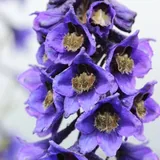
lavender 'Hidcote'delphinium 'Black Knight'lady's mantle (Alchemilla)lamb's ear (Stachys byzantina)

Availability worldwide

A classic for cold climates — the standard among winter-hardy climbers:

  • 🇪🇺 Europe: HIGH · Kordes classic · Scandinavia
  • 🇺🇸 USA: moderate · popular in Canada and the northern states
  • 🇯🇵 Asia: low
  • 🇺🇦 Ukraine: HIGH · one of the top climbers for cold regions

More about the variety

Hips
Decorative red hips in autumn — extends the decorative season
Variations of the variety
Synonyms Flame Dance; Flaming Dance; Vlammenspel; code KORflata

How to grow

Where to plant. Tall arches, pergolas, south- and east-facing house walls, tall fences; ideal for country plots in cold regions (Kyiv Oblast, Chernihiv Oblast, Sumy Oblast); a typical scene — an old farmstead in northern Europe covered in it; paired with the white 'Iceberg Climbing' it makes a dramatic red-and-white duo.

Climate. To −34 °C — all of Ukraine without cover; a legend in Canada (zone 4) and Scandinavia; one of the few climbers that tolerates frost with no preparation at all.

Care. Formative pruning of climbers is minimal — only sanitary pruning after flowering; it is important to train the main shoots horizontally for abundant flowering; it flowers on the previous year's shoots — do NOT prune it every year like a Hybrid Tea (HT).

About the name

Name. 'Flammentanz' — German for 'flame dance'. The name conveys the blazing raspberry-red colour and the energy of the flower clusters moving in the wind, like a dancing flame.

Breeding. Bred by Wilhelm J.H. Kordes II (father of Reimer Kordes, who later created 'Friesia'), Sparrieshoop, Germany. Date clarification: bred 1951–52, ADR 1952; commercial introduction 1955. Often mistakenly written as '1952'. Code KORflata. Parentage: Rosa eglanteria (= R. rubiginosa, sweet briar) × Rosa kordesii (Kordes 1941, tetraploid).

Significance. One of the hardiest large-flowered climbers in the world. The Hybrid Kordesii line (created by Wilhelm Kordes II in 1941, when he crossed R. wichuriana × R. rugosa and obtained the tetraploid R. kordesii) gave the world a class of extremely hardy roses for cold regions. Flammentanz was its first major commercial success. Dortmund (Kordes 1955) also belongs to this line — both are legendary in Canada, Scandinavia and the Carpathian region of Ukraine. ADR 1952 — one of the very first ADR-certificates, in a system that had only just been launched.

Frequently asked questions about Flammentanz

Does Flammentanz need winter protection?

The cultivar’s reference temperature is −34 °C (USDA zone 4b–9). Overwintering depends on the conditions. All of Ukraine, no cover needed; a legend in Canada/Scandinavia.

How many times a season does Flammentanz flower?

ONE-TIME flowering — many Ukrainian sources wrongly say 'repeat'. But the bloom is very profuse, lasting 4–6 weeks in June–July; the bush is completely covered in flowers.

How big does Flammentanz grow?

270–360 cm tall, 120–180 cm wide.

Which diseases affect Flammentanz?

Overall resistance: 5 out of 5. Outstanding; the R. kordesii parent line is known for robust health.

How much sun does Flammentanz need?

Sun; full sun for profuse flowering; tolerates partial shade.

What does Flammentanz smell like?

Light to moderate, a light rose-and-apple note (the R. eglanteria parent has apple-scented foliage).

Gardeners' photos and reviews

My climate

Choose a reference temperature to compare with the cultivar’s data. This is not an overwintering forecast or advice on winter protection; consider wind, moisture and the duration of frost.

Regional data are generalised. USDA describes average annual extreme minima, not a forecast; the values in the list are rounded. Check the conditions at your site. More information: Roses in Ukraine's climate.