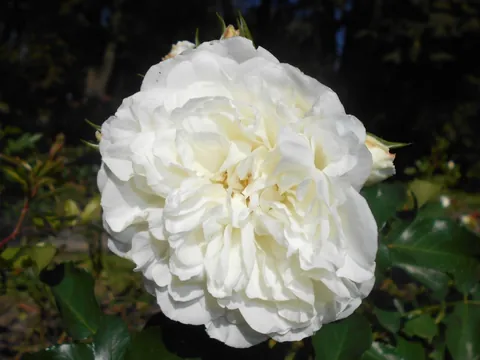
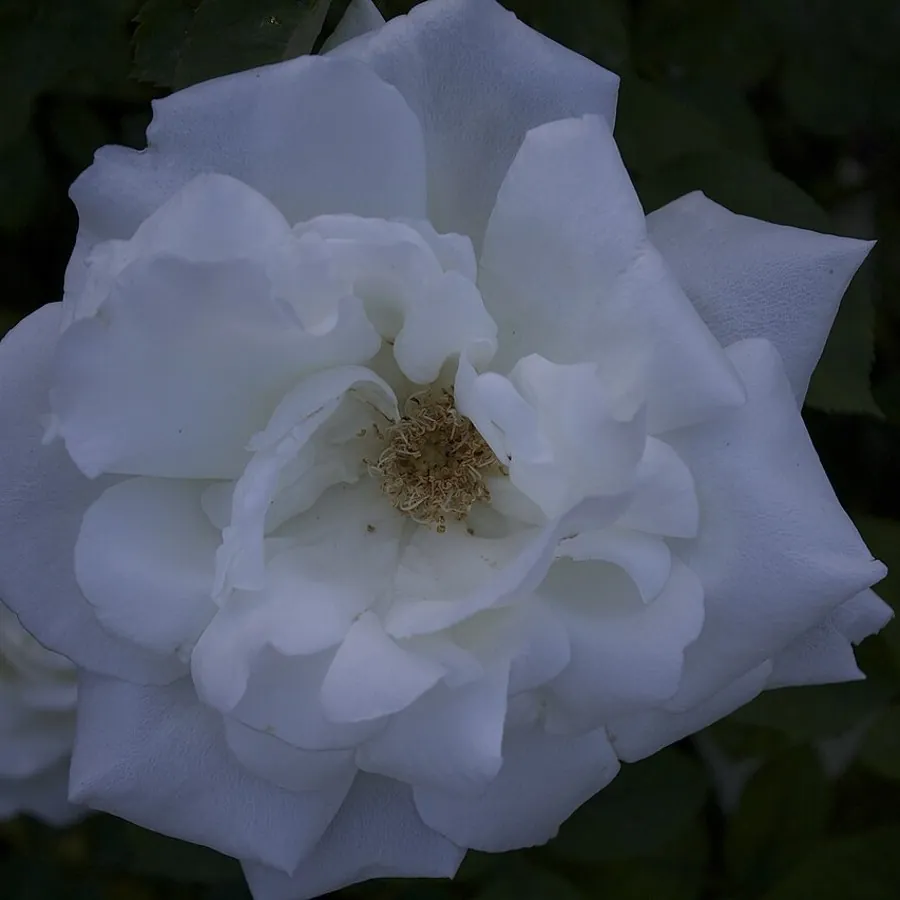
Frau Karl Druschki, close-up of the flower
Photo: Patrick Nouhailler, CC BY-SA 2.0
Back to catalogue
Hybrid Perpetual (repeat-flowering)Peter Lambert, 1901White and cream

Frau Karl Druschki

'the benchmark white rose' of the early XX century; pure white; very hardy; almost no fragrance.

Variety profile

Flowering

Repeat, in flushes

Repeat-flowering, but weak — a profuse first flush, then solitary flowers. Months are approximate, for the climate of Ukraine.

Awards

Classic

'benchmark white rose' of the early twentieth century; no modern formal awards

Winter hardiness

−32 °C

USDA zone 4b+. All of Ukraine, usually without cover; prefers a dry climate.

Compare reference temperatures

Plant size

200 × 120 cm
person 170 cm200 cm
Habit
Upright, tall, well branched
Dimensions
Up to 200 cm tall × 120 cm wide
Support
Needs no support — but benefits from tying in or pegging down the long shoots
Shoots
Long, arching — can be trained as a low climber or pegged down
Branching
Good

Flower

≈ 14 cm

Dense, ~26–40 petals (36 on average) petals.

Bud shape
Long, pointed, elegant
Open flower
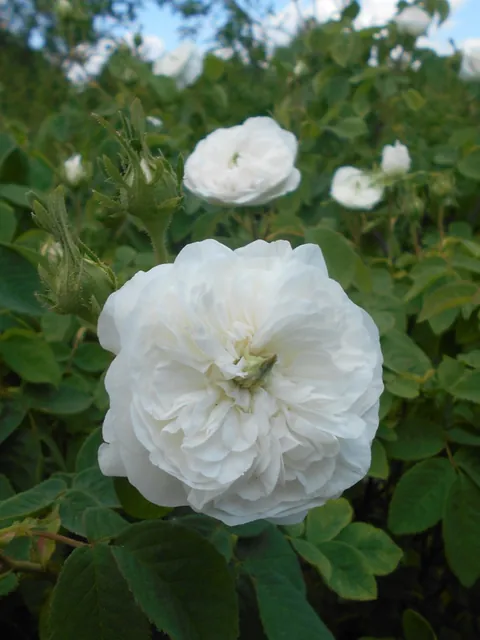
Large, high-centred / goblet-shaped; ~14 cm across
Fullness
Dense, ~26–40 petals (36 on average)
Flower carriage
Mainly singly, sometimes in small clusters

Fragrance

Almost absent

Almost absent — the variety's main 'drawback'; a faint fresh note under some conditions.

Disease resistance

2 out of 5
Black spotsusceptiblePowdery mildewsusceptibleRustsusceptible

Low to medium; prone to powdery mildew, in humid climates to black spot and rust.

Sun

Full sun

In strong heat the white petals can brown at the edges.

Thorns

Moderate
thornlessfewmoderatemanyvery many

Has thorns, moderate number.

Foliage

Light green, sparse, matt.

Other names

Snow Queen, Schneekönigin, White American Beauty
All characteristics in a table
Group
Hybrid Perpetual (repeat-flowering)
Breeder
Peter Lambert, Germany, 1901
Bud shape
Long, pointed, elegant
Open flower
Large, high-centred / goblet-shaped; ~14 cm across
Colour
Pure white; in cool weather the bud often has a pale pink or lilac bloom, sometimes a faint lemon tint at the heart — the fully open flower is snowy white, with no pink
Fullness
Dense, ~26–40 petals (36 on average)
Flower carriage
Mainly singly, sometimes in small clusters
Flowering
Repeat-flowering, but weak — a profuse first flush, then solitary flowers
Fragrance
Almost absent — the variety's main 'drawback'; a faint fresh note under some conditions
Hips
Does not form in practice
Habit
Upright, tall, well branched
Branching
Good
Shoots
Long, arching — can be trained as a low climber or pegged down
Thorns
Has thorns, moderate number.
Dimensions
Up to 200 cm tall × 120 cm wide
Support
Needs no support — but benefits from tying in or pegging down the long shoots
Foliage
Light green, sparse, matt
Resistance
Low to medium; prone to powdery mildew, in humid climates to black spot and rust
Variations of the variety
Parents: Merveille de Lyon × Madame Caroline Testout; synonyms: Snow Queen, Schneekönigin, White American Beauty

Colour scheme

Pure white; in cool weather the bud often has a pale pink or lilac bloom, sometimes a faint lemon tint at the heart — the fully open flower is snowy white, with no pink

Rose neighbours

Perennials to plant nearby

Rose neighbours

Other pure white garden varieties — one snowy mood:

Perennial companions

Small white, green and silver flowers and foliage — a classic companion palette for white bouquets and moon gardens:

astrantia 'Roma'hosta 'Patriot'veronicastrum 'Album'heuchera 'Silver Scrolls'

Names and synonyms

One variety under many names around the world:

Snow QueenSchneeköniginReine des NeigesWhite American Beauty

More about the variety

Hips
Does not form in practice
Variations of the variety
Parents: Merveille de Lyon × Madame Caroline Testout; synonyms: Snow Queen, Schneekönigin, White American Beauty
How to grow

Where to plant. Single specimen accents and white borders, formal bedding, historic and monochrome gardens, cut flowers (for the beauty of its form and colour).

Climate. USDA 4b and warmer — one of the hardiest white roses; suitable for all of Ukraine, usually without cover. Prefers a dry, well-ventilated climate; in humid regions disease prevention needs attention.

Care. Plant in an open, sunny, airy spot; preventive sprays against powdery mildew; moderate watering at the root, without wetting the leaves; sanitary pruning in spring.

About the name

Name. 'Frau Karl Druschki' — after the wife of Karl Druschki, president of the German Rose Society (Verein Deutscher Rosenfreunde).

Breeding. Bred by Peter Lambert in Trier; parents Merveille de Lyon × Madame Caroline Testout. The first truly successful white Hybrid Perpetual rose; in the USA it was sold as 'White American Beauty'.

Significance. Despite its worldwide fame and its title of 'benchmark white rose', its complete lack of fragrance historically limited some awards — beauty of form and purity of colour were valued above all.

Frequently asked questions about Frau Karl Druschki

Does Frau Karl Druschki need winter protection?

The cultivar’s reference temperature is −32 °C (USDA zone 4b+). Overwintering depends on the conditions. All of Ukraine, usually without cover; prefers a dry climate.

How many times a season does Frau Karl Druschki flower?

Repeat-flowering, but weak — a profuse first flush, then solitary flowers.

How big does Frau Karl Druschki grow?

About 200 cm tall, about 120 cm wide.

Which diseases affect Frau Karl Druschki?

Overall resistance: 2 out of 5. Prone to powdery mildew — its main flaw; better in dry, airy sites.

How much sun does Frau Karl Druschki need?

Sun; full sun; in strong heat the white petals can brown at the edges.

What does Frau Karl Druschki smell like?

Almost absent — the variety's main 'drawback'; a faint fresh note under some conditions.

Gardeners' photos and reviews

My climate

Choose a reference temperature to compare with the cultivar’s data. This is not an overwintering forecast or advice on winter protection; consider wind, moisture and the duration of frost.

Regional data are generalised. USDA describes average annual extreme minima, not a forecast; the values in the list are rounded. Check the conditions at your site. More information: Roses in Ukraine's climate.