

Back to catalogue
Shrub / Ground Cover; white ground cover from the Bonica familyMarie-Louise (Louisette) Meilland; MeillandWhite and cream

White Meidiland

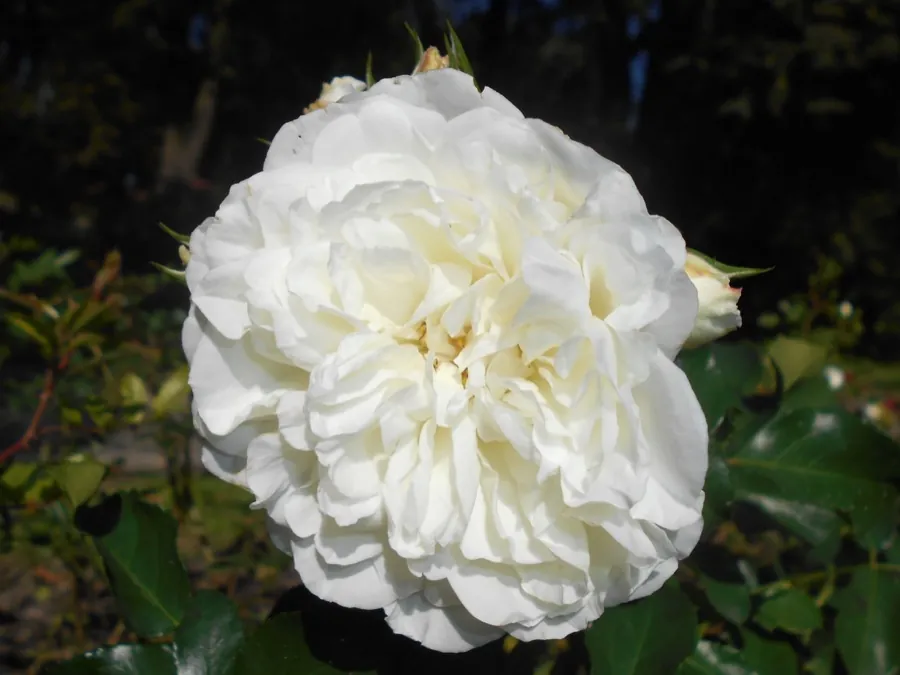
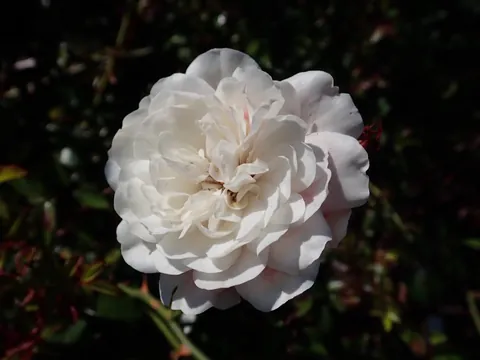
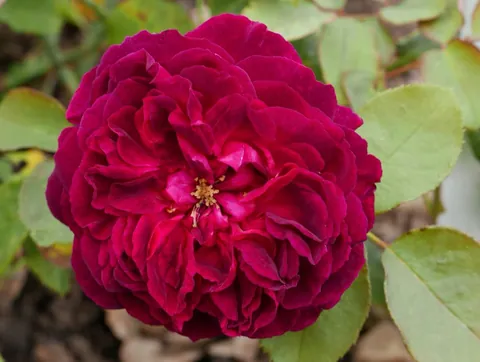
Pure white, very double with 60–70 petals in large clusters; one of the most 'spreading' roses in the Meidiland family (with Bonica, Scarlet Meidiland, Swany, Pink Meidiland); USDA 4b-9b — record hardiness; resistant without chemical treatments — a benchmark for organic gardens; tolerates partial shade.

One of the most prostrate in the Meidiland family · USDA 4b — record winter hardiness

Variety profile

Flowering

Repeat flowering

Long, May–June, + occasional repeat later until the frosts — repeat flowering in clusters. Months are approximate, for the climate of Ukraine.

Legacy

PP6,088

Bonica family · landscape

Winter hardiness

−32 °C

USDA zone 4b. All of Ukraine, without winter protection.

Compare reference temperatures

Plant size

35–140 × 120–215 cm
person 170 cm35–140 cm
Habit
One of the most 'spreading' in the Meidiland family: wider than tall, it stays low to the ground
Dimensions
35–140 cm tall × 120–215 cm wide (typically 60–90 × 150 cm); spreads out to 2 m wide and stays low
Support
Not needed — self-supporting
Shoots
Flexible, spreading across the ground — good for covering soil
Branching
Densely branched, with horizontal canes

Flower

≈ 8 cm

60-70 petals.

Bud shape
Small round white, sometimes with a pink tinge
Open flower
Very double: ~8 cm, 60–70 petals — a rarity for ground cover roses (they usually have few petals)
Centre
Densely packed
Fullness
60–70 petals (very full)
Flower carriage
In large clusters — a continuous white carpet on the ground

Fragrance

No fragrance

None — a deliberate, typical choice by Meilland for the Meidiland series (priority given to flower numbers and resistance, not fragrance).

Disease resistance

5 out of 5

Outstanding 5/5 against black spot and powdery mildew — a benchmark for organic gardens without chemical treatments. USDA 4b-9b — one of the hardiest ground cover roses: all of Ukraine without protection; tolerates partial shade.

Sun

Sun and shade

Tolerates partial shade.

Thorns

Few
thornlessfewmoderatemanyvery many

Few thorns — typical for the Meidiland family.

Foliage

Glossy dark green with 3–7 leaflets — healthy, typical Meidiland-quality.

Other names

Blanc Meillandécor, Super Swany, White Meilland, Alba Meidiland, Diamond Dad
All characteristics in a table
Group
Shrub / Ground Cover; white ground cover from the Bonica family
Breeder
Marie-Louise (Louisette) Meilland; Meilland, France
Bud shape
Small round white, sometimes with a pink tinge
Open flower
Very double: ~8 cm, 60–70 petals — a rarity for ground cover roses (they usually have few petals)
Centre
Densely packed
Colour
Pure white, sometimes with pale pink edges
Fullness
60–70 petals (very full)
Flower carriage
In large clusters — a continuous white carpet on the ground
Flowering
Long, May–June, + occasional repeat later until the frosts — repeat flowering in clusters
Fragrance
None — a deliberate, typical choice by Meilland for the Meidiland series (priority given to flower numbers and resistance, not fragrance)
Hips
Small red hips in autumn — adds decorative interest
Habit
One of the most 'spreading' in the Meidiland family: wider than tall, it stays low to the ground
Branching
Densely branched, with horizontal canes
Shoots
Flexible, spreading across the ground — good for covering soil
Thorns
Few thorns — typical for the Meidiland family.
Dimensions
35–140 cm tall × 120–215 cm wide (typically 60–90 × 150 cm); spreads out to 2 m wide and stays low
Support
Not needed — self-supporting
Foliage
Glossy dark green with 3–7 leaflets — healthy, typical Meidiland-quality
Resistance
Outstanding 5/5 against black spot and powdery mildew — a benchmark for organic gardens without chemical treatments. USDA 4b-9b — one of the hardiest ground cover roses: all of Ukraine without protection; tolerates partial shade
Variations of the variety
Code MEIcoublan. Bred 1986, registered 1987; US Patent PP6,088 (26 January 1988). Breeder: Marie-Louise (Louisette) Meilland-Paolino. Parentage: 'Temple Bells' × 'Coppélia '76' — the confirmed official version (NOT R. sempervirens, which is the parentage of Swany). Synonyms: Blanc Meillandécor, Super Swany, White Meilland, Alba Meidiland, Diamond Dad

Colour scheme

Pure white, sometimes with pale pink edges

Rose neighbours

Perennials to plant nearby

Neighbouring roses

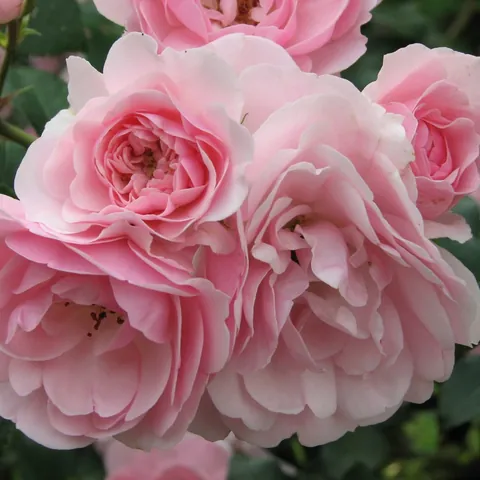
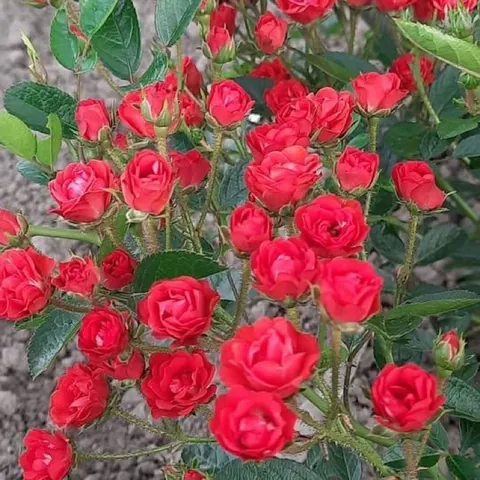
The Meidiland family creates a multicoloured carpet:

Companion perennials

Structural plants for landscape masses — drought-tolerant:

lavenderornamental grassesstonecropcatmint

Availability worldwide

⭐⭐ A landscape-planting standard grown without chemical treatments:

🇫🇷 France: very high · home country🇪🇺 Europe: very high · parks and avenues🇺🇸 USA: high · organic gardens🇺🇦 Ukraine: moderate · landscape studios

More about the variety

Hips
Small red hips in autumn — adds decorative interest
Variations of the variety
Code MEIcoublan. Bred 1986, registered 1987; US Patent PP6,088 (26 January 1988). Breeder: Marie-Louise (Louisette) Meilland-Paolino. Parentage: 'Temple Bells' × 'Coppélia '76' — the confirmed official version (NOT R. sempervirens, which is the parentage of Swany). Synonyms: Blanc Meillandécor, Super Swany, White Meilland, Alba Meidiland, Diamond Dad

How to grow

Where to plant. In drifts on slopes to bind the soil; along fences as a low white border; in municipal parks (its typical use); in organic gardens, thanks to its 5/5 resistance without treatments; under trees and shrubs — it tolerates partial shade; as ground cover to cover large areas.

Climate. All of Ukraine without protection (USDA 4b — one of the hardiest groundcover roses); tolerates partial shade; copes well with summer heat.

Care. Minimal — sun or light shade; secateur pruning once every 2–3 years; feed 1× per season; no chemical treatments needed thanks to its 5/5 resistance.

About the name

Name. 'White Meidiland'. 'Meidiland' is the brand name of Meilland's series of landscape roses (from 'Mei' — Meilland — plus '-land', signifying a park or landscape function). The series was developed as a replacement for traditional shrub roses in public spaces and parks. Names in other countries: Blanc Meillandécor (France), Super Swany (as an 'improved Swany'), Alba Meidiland.

Breeding. Bred by Marie-Louise (Louisette) Meilland-Paolino at Meilland (Antibes, France). Code MEIcoublan. Bred 1986, registered 1987; US Patent PP6,088 (26 January 1988). Parentage: 'Temple Bells' × 'Coppélia '76'. NOT R. sempervirens (that is the parentage of Swany 1977, its predecessor in the same series).

Significance. One of the most 'spreading' roses in the Meidiland family — its spread (up to 2 m) with a small height (60–90 cm) makes it an ideal ground cover. Disease resistance without chemical treatments 5/5 — a benchmark for organic gardens. USDA 4b — record hardiness for ground cover roses: all of Ukraine without protection. The Meidiland Marie-Louise Meilland family: together with Bonica (WFRS HoF 2003!), Scarlet Meidiland, Swany, Magic Meidiland and Pink Meidiland, they form a full set of standard landscape roses. 60–70 petals in a very double form — a rarity for ground cover roses (they usually have 5–15 petals). Glossy dark green leaves of 3–7 leaflets — an extra decorative element. Tolerates partial shade — a rarity for roses. No fragrance — a deliberate choice for the Meidiland series (priority on resistance and flower numbers). Not in the WFRS Hall of Fame: the list has HoF Bonica '82 (its 'older sister'), not White Meidiland.

Frequently asked questions about White Meidiland

Does White Meidiland need winter protection?

The cultivar’s reference temperature is −32 °C (USDA zone 4b). Overwintering depends on the conditions. All of Ukraine, without winter protection.

How many times a season does White Meidiland flower?

Long, May–June, + occasional repeat later until the frosts — repeat flowering in clusters.

How big does White Meidiland grow?

35–140 cm tall, 120–215 cm wide.

Which diseases affect White Meidiland?

Overall resistance: 5 out of 5. A benchmark for organic gardens — no chemical treatments.

How much sun does White Meidiland need?

Sun and shade; tolerates partial shade.

What does White Meidiland smell like?

None — a deliberate, typical choice by Meilland for the Meidiland series (priority given to flower numbers and resistance, not fragrance).

Gardeners' photos and reviews

My climate

Choose a reference temperature to compare with the cultivar’s data. This is not an overwintering forecast or advice on winter protection; consider wind, moisture and the duration of frost.

Regional data are generalised. USDA describes average annual extreme minima, not a forecast; the values in the list are rounded. Check the conditions at your site. More information: Roses in Ukraine's climate.