



Back to catalogue
Large-flowered climber (Large-Flowered Climber)Meilland, 2010Red

Inès Sastre

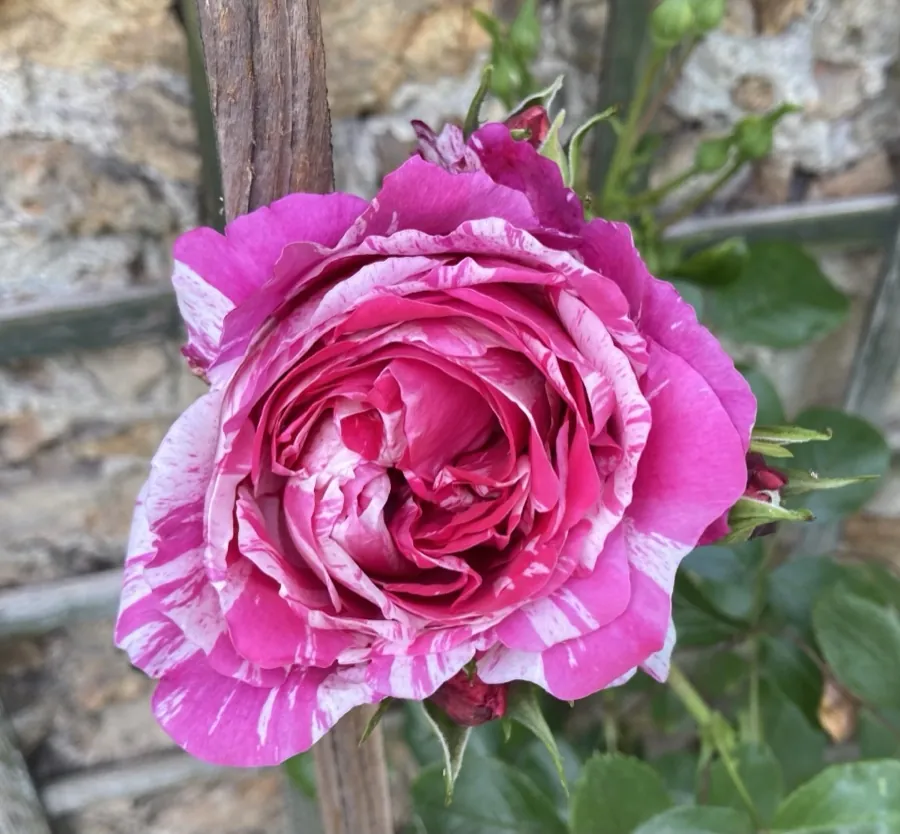
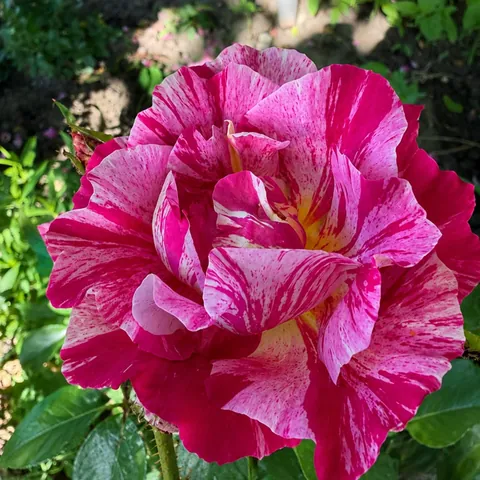
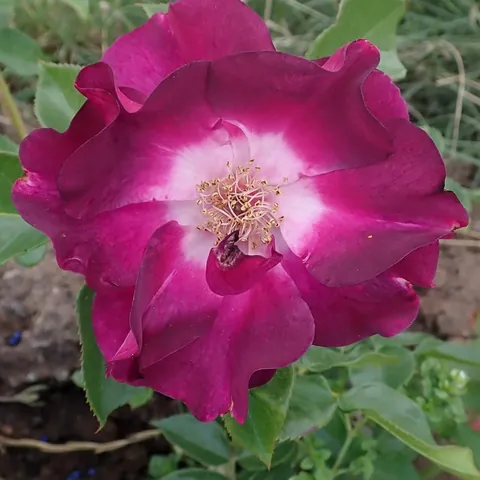
A crimson-pink STRIPED climber, the first striped rose with an exhibition-type flower.

The first striped climber with an exhibition-type flower

Variety profile

Flowering

Repeat-flowering all summer

Awards

First striped

1st prize Hradec Králové 2012 · Gold Standard 2013

Winter hardiness

−23 °C

USDA zone 6+. Down to about −23 °C; in our climate with winter protection. To ≈ −23 °C · in Ukraine, with winter protection.

Compare reference temperatures

Plant size

200–360 × 120–150 cm
person 170 cm200–360 cm
Habit
A strong climber
Dimensions
200–360 cm × 120–150 cm
Support
Support needed: arch, pergola, wall
Shoots
Sturdy
Branching
Good

Flower

8–11 cm
Bud shape
Round, striped
Open flower
Very dense cupped quartered rosette; 8–11 cm
Centre
Tightly quartered
Fullness
Exceptionally double, 100–118 petals
Flower carriage
Singly and in small clusters
Flower durability
The stripes do not fade; the colour holds

Fragrance

Light

Light, fresh: apple and freshly mown grass.

Disease resistance

4 out of 5
Rustresistant

4/5: a rarity among striped varieties.

Sun

Repeat-flowering

The stripes stay bright all season.

Foliage

Dark green, healthy.

Other names

Raspberry Cream Twirl, Colibri 2010

Breeder's code MEIteratol.

All characteristics in a table
Group
Large-flowered climber (Large-Flowered Climber)
Breeder
Meilland, France, 2010
Bud shape
Round, striped
Open flower
Very dense cupped quartered rosette; 8–11 cm
Centre
Tightly quartered
Colour
Crimson-pink, clearly striped with cream-white and purple
Fullness
Exceptionally double, 100–118 petals
Flower carriage
Singly and in small clusters
Flowering
Repeat-flowering all summer
Fragrance
Light, fresh: apple and freshly mown grass
Flower durability
The stripes do not fade; the colour holds
Habit
A strong climber
Branching
Good
Shoots
Sturdy
Thorns
Almost thornless: a great advantage for a climber.
Dimensions
200–360 cm × 120–150 cm
Support
Support needed: arch, pergola, wall
Foliage
Dark green, healthy
Resistance
4/5: a rarity among striped varieties
Use
Arches, pergolas, walls; a bright accent

Colour scheme

Crimson-pink, clearly striped with cream-white and purple

Rose neighbours

Perennials to plant nearby

Rose neighbours

Striped and deep-coloured varieties echo the striking Inès Sastre.

Companion perennials

Calm blue and silver perennials balance the striped flower:

catmintsagelavendergermander

Contrasting accents

A striped flower needs a calm backdrop: blue and silver:

catmintlavendergermander

More about the variety

Use
Arches, pergolas, walls; a bright accent

How to grow

Where to plant. Arches, pergolas, walls, where the stripes can be seen up close and from a distance.

Climate. USDA zone 6+ (down to about −23 °C); in our climate, with winter protection. Almost thornless, so it is easy to tie in.

Care. Healthier than most striped roses; normal climber care.

About the name

Name. Named after the Spanish model and actress Inés Sastre.

Breeding. Meilland (France), not Delbard!; 2010; code MEIteratol. Synonyms: Raspberry Cream Twirl, Colibri 2010.

Significance. The first striped climber with an exhibition-type flower; exceptional double flowers (over 100 petals) with good health.

Frequently asked questions about Inès Sastre

Does Inès Sastre need winter protection?

The cultivar’s reference temperature is −23 °C (USDA zone 6+). Overwintering depends on the conditions. Down to about −23 °C; in our climate with winter protection.

How many times a season does Inès Sastre flower?

Repeat-flowering all summer.

How big does Inès Sastre grow?

200–360 cm tall, 120–150 cm wide.

Which diseases affect Inès Sastre?

Overall resistance: 4 out of 5. A rarity among striped varieties: resistant to mildew, black spot and rust.

How much sun does Inès Sastre need?

Sun; repeat-flowering; the stripes stay bright all season.

What does Inès Sastre smell like?

Light, fresh: apple and freshly mown grass.

Gardeners' photos and reviews

My climate

Choose a reference temperature to compare with the cultivar’s data. This is not an overwintering forecast or advice on winter protection; consider wind, moisture and the duration of frost.

Regional data are generalised. USDA describes average annual extreme minima, not a forecast; the values in the list are rounded. Check the conditions at your site. More information: Roses in Ukraine's climate.