



Back to catalogue
Shrub rose (Strauchrose); park rose; can be trained on a low supportReimer Kordes, 1966Yellow

Lichtkönigin Lucia

One of the best-known yellow shrub roses by Kordes; ADR since 1968 — the only one of that year's award winners to keep its status; one of the most winter-hardy yellow roses (RHS H7); «Queen of Light Lucia» — named after the Scandinavian feast of St Lucia.

ADR 1968 — holds its status for over half a century

Variety profile

Flowering

Repeat, in flushes

Repeat-flowering, from summer to autumn, in waves; rain-resistant. Months are approximate, for the climate of Ukraine.

Awards

ADR 1968

Holds its status for over half a century

Winter hardiness

−25 °C

RHS H7 · one of the most winter-hardy yellows.

Compare reference temperatures

Plant size

120–150 × 70–90 cm
person 170 cmon a supportup to 2 m120–150 cm
Habit
Upright, bushy, vigorous; can be trained as a small climber on a low support
Dimensions
120–150 cm as a shrub (up to 185–200 cm when trained on a support) × 70–90 cm wide
Support
As a shrub it needs no support; can be trained as a small climber on a low support or a fence
Shoots
Sturdy, upright
Branching
Strong upright canes, well branched

Flower

≈ 10 cm

Up to 30 petals.

Bud shape
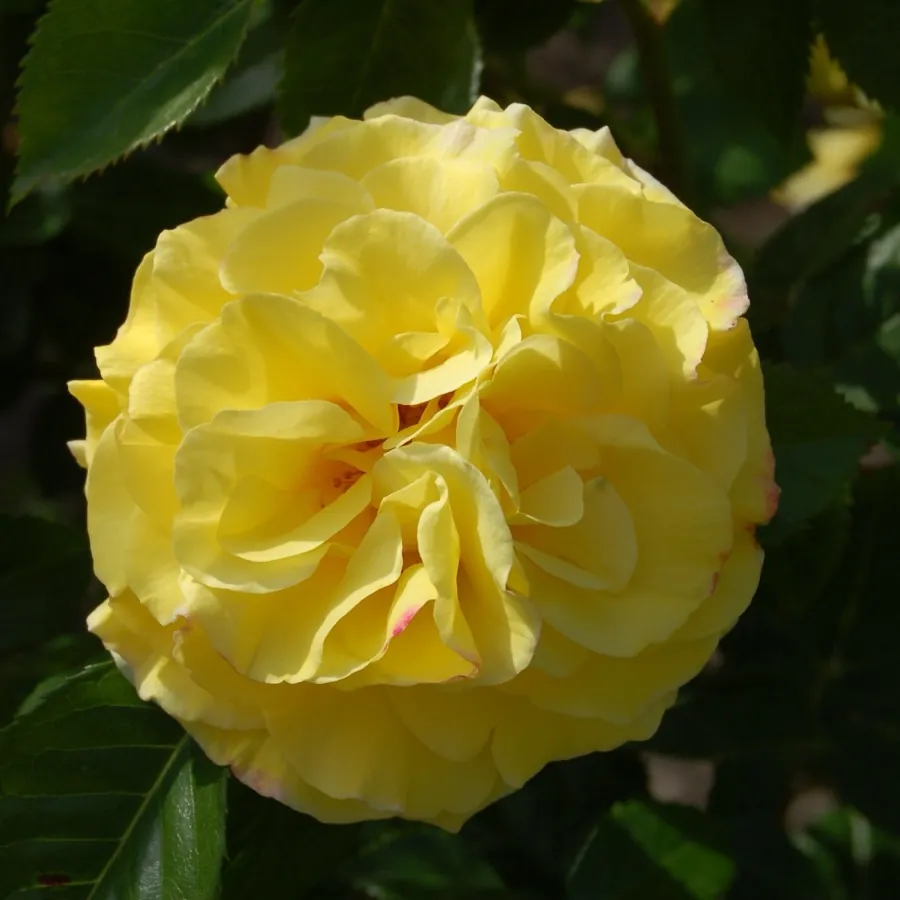
Large, pointed, lemon yellow
Open flower
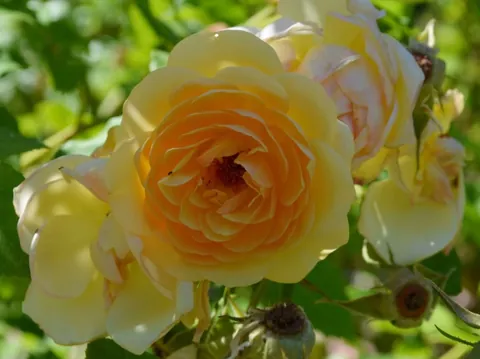
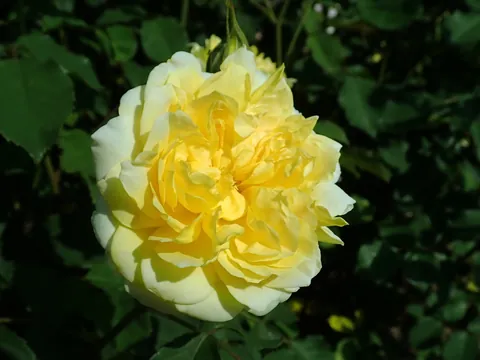
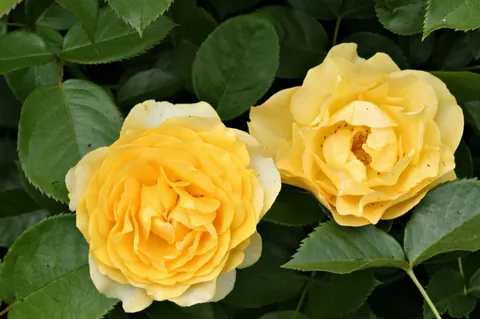
Cupped, double; large buds open spectacularly
Centre
Open when fully expanded
Fullness
Double / very double — up to about 30 petals
Flower carriage
In small clusters (several flowers each)

Fragrance

Moderate

Moderate (3/5) — the variety is known precisely for its fragrance.

Disease resistance

5 out of 5

Very high (4–5/5) — it is precisely for its health that it has kept its ADR status for more than half a century.

Sun

Full sun

Tolerates various soils.

Thorns

Many
thornlessfewmoderatemanyvery many

A prickly variety — many thorns (RHS/HMF: «thorny»).

Foliage

Healthy, glossy, dark green — typical healthy Kordes foliage.

Other names

Reine Lucia, Lucia
All characteristics in a table
Group
Shrub rose (Strauchrose); park rose; can be trained on a low support
Breeder
Reimer Kordes, Germany, 1966
Bud shape
Large, pointed, lemon yellow
Open flower
Cupped, double; large buds open spectacularly
Centre
Open when fully expanded
Colour
Deep lemon yellow, clean and bright; fades slightly to creamy yellow as the flowers age in the sun
Fullness
Double / very double — up to about 30 petals
Flower carriage
In small clusters (several flowers each)
Flowering
Repeat-flowering, from summer to autumn, in waves; rain-resistant
Fragrance
Moderate (3/5) — the variety is known precisely for its fragrance
Hips
Sets only a few hips during repeat flowering
Habit
Upright, bushy, vigorous; can be trained as a small climber on a low support
Branching
Strong upright canes, well branched
Shoots
Sturdy, upright
Thorns
A prickly variety — many thorns (RHS/HMF: «thorny»).
Dimensions
120–150 cm as a shrub (up to 185–200 cm when trained on a support) × 70–90 cm wide
Support
As a shrub it needs no support; can be trained as a small climber on a low support or a fence
Foliage
Healthy, glossy, dark green — typical healthy Kordes foliage
Resistance
Very high (4–5/5) — it is precisely for its health that it has kept its ADR status for more than half a century
Variations of the variety
Code KORlillub (variant KORlilub). Synonyms: Reine Lucia, Lucia. Parentage: Zitronenfalter × Cläre Grammerstorf

Colour scheme

Deep lemon yellow, clean and bright; fades slightly to creamy yellow as the flowers age in the sun

Rose neighbours

Perennials to plant nearby

Neighbouring roses

The yellow family — from the legendary Austin roses to the Kordes classics:

Companion perennials

Blue and lilac perennials — a classic contrast to pure yellow:

lavenderwoodland sagecatmintlady's mantle

Why it is legendary

⭐⭐⭐ A symbol of lasting quality:

🏅 ADR since 1968 — over half a century❄️ one of the most winter-hardy yellows (H7)💪 needs almost no fungicides🇺🇦 Ukraine: reliable for harsh winters

More about the variety

Hips
Sets only a few hips during repeat flowering
Variations of the variety
Code KORlillub (variant KORlilub). Synonyms: Reine Lucia, Lucia. Parentage: Zitronenfalter × Cläre Grammerstorf

How to grow

Where to plant. As a specimen, in a mixed border, or as a low «wall» on a support; spacing between bushes about 70–90 cm.

Climate. Very winter-hardy (RHS H7, tolerates below −20 °C) — one of the most reliable yellows for Ukraine's harsh winters; tolerates various soils (chalk, clay, loam, sand).

Care. Full sun for at least 5–6 hours; spring pruning by ⅓, feeding in spring; thanks to its exceptional health it needs almost no fungicide treatment.

About the name

Name. «Lichtkönigin Lucia» = «Queen of Light Lucia». Named after the feast of St Lucia (Luciafest) — a Scandinavian (chiefly Swedish) tradition on 13 December, when a girl in a white gown with a crown of candles personifies the «queen of light» amid winter darkness. The name echoes the bright yellow, «light» colour of the flower.

Breeding. Raised by Reimer Kordes (W. Kordes' Söhne, Germany), 1966, code KORlillub. Parentage: Zitronenfalter (Tantau) × Cläre Grammerstorf (Kordes). The House of Kordes (Sparrieshoop) is one of the world's leading breeding families.

Significance. ADR 1968 — and the only variety that kept its ADR status among that year's award winners, a symbol of durable quality. One of Kordes' best-known yellow shrub roses and one of the most winter-hardy yellow roses of all — for more than half a century it has remained a benchmark of health and reliability.

Frequently asked questions about Lichtkönigin Lucia

Does Lichtkönigin Lucia need winter protection?

The cultivar’s reference temperature is −25 °C. Overwintering depends on the conditions.

How many times a season does Lichtkönigin Lucia flower?

Repeat-flowering, from summer to autumn, in waves; rain-resistant.

How big does Lichtkönigin Lucia grow?

120–150 cm tall, 70–90 cm wide. On a support — up to 200 cm.

Which diseases affect Lichtkönigin Lucia?

Overall resistance: 5 out of 5. Very high; healthy glossy foliage.

How much sun does Lichtkönigin Lucia need?

Sun; full sun; tolerates various soils.

What does Lichtkönigin Lucia smell like?

Moderate (3/5) — the variety is known precisely for its fragrance.

Gardeners' photos and reviews

My climate

Choose a reference temperature to compare with the cultivar’s data. This is not an overwintering forecast or advice on winter protection; consider wind, moisture and the duration of frost.

Regional data are generalised. USDA describes average annual extreme minima, not a forecast; the values in the list are rounded. Check the conditions at your site. More information: Roses in Ukraine's climate.