Back to catalogue
FloribundaPeter JamesLilac and purple

Blue for You

A floribunda with semi-double flowers that change from purple-mauve to blue-grey. Also known as Honky Tonk Blues, Pacific Dream and Ellerines Rose.

Compact, upright floribunda

Variety profile

Flowering

Repeat flowering from summer to autumn; timing depends on the climate

Awards

RHS AGM 2012

Award of Garden Merit, 2012 — according to the official RHS list for Blue for You (‘Pejamblu’).

Winter hardiness

RHS H6

Rating for UK growing conditions: −20…−15 °C. Overwintering depends on the microclimate and growing conditions. For overwintering, consider local winter minima, wind and soil moisture.

Plant size

90–120 × 80 cm

According to patent USPP20325P3; size depends on growing conditions.

person 170 cm90–120 cm
Habit
Rounded, upright
Dimensions
The patent description gives a height of 90–120 cm and a width of about 80 cm. RHS gives a different estimate: 50–100 cm in both height and spread. These are guides, not guaranteed growth limits.
Support
An upright bush floribunda. Neither the patent description nor RHS specifies that support is required.
Shoots
Strong, straight
Branching
Well branched

Flower

≈ 8 cm

13–26 petals.

According to patent USPP20325P3, the table gives a diameter of 8 cm and 13–26 petals; the text gives 7.5–10 cm and 12–16 petals.

Bud shape
Oval, with a pointed tip — according to the patent description.
Open flower
Semi-double; flat when fully open, with prominent stamens — according to the RHS description and patent USPP20325P3.
Centre
Yellow filaments and greyish-orange anthers — according to the patent description.
Fullness
Semi-double. The table in patent USPP20325P3 gives 13–26 petals; the text gives 12–16.
Flower carriage
The table in patent USPP20325P3 gives 15–20 flowers per cluster on a stem; another row gives 15 or more.

Fragrance

The table in patent USPP20325P3 describes the fragrance as moderately strong, while the text describes it as very strong, sweet and citrus-like. The David Austin catalogue rates it as medium and sweet; RHS notes a sweet scent. Descriptions of intensity differ between sources.

Disease resistance

The detailed table in patent USPP20325P3 reports slight resistance to black spot and powdery mildew. Downy mildew and rust were not observed on the trial plants; this does not establish immunity. The patent gives no five-point score.

Sun

Full sun

As recommended by RHS for this cultivar.

Thorns

Patent USPP20325P3 notes very few small prickles on the individual flower stalks. This is not an assessment of the number of prickles on the whole bush.

Foliage

According to the patent description, the foliage is dark green; the upper surface is semi-glossy or shiny, and the lower surface is matte.

Other names

Honky Tonk Blues, Pacific Dream, Ellerines Rose

Breeder's code PEJamblu.

All characteristics in a table
Group
Floribunda
Breeder
Peter James, United Kingdom
Bud shape
Oval, with a pointed tip — according to the patent description.
Open flower
Semi-double; flat when fully open, with prominent stamens — according to the RHS description and patent USPP20325P3.
Centre
Yellow filaments and greyish-orange anthers — according to the patent description.
Colour
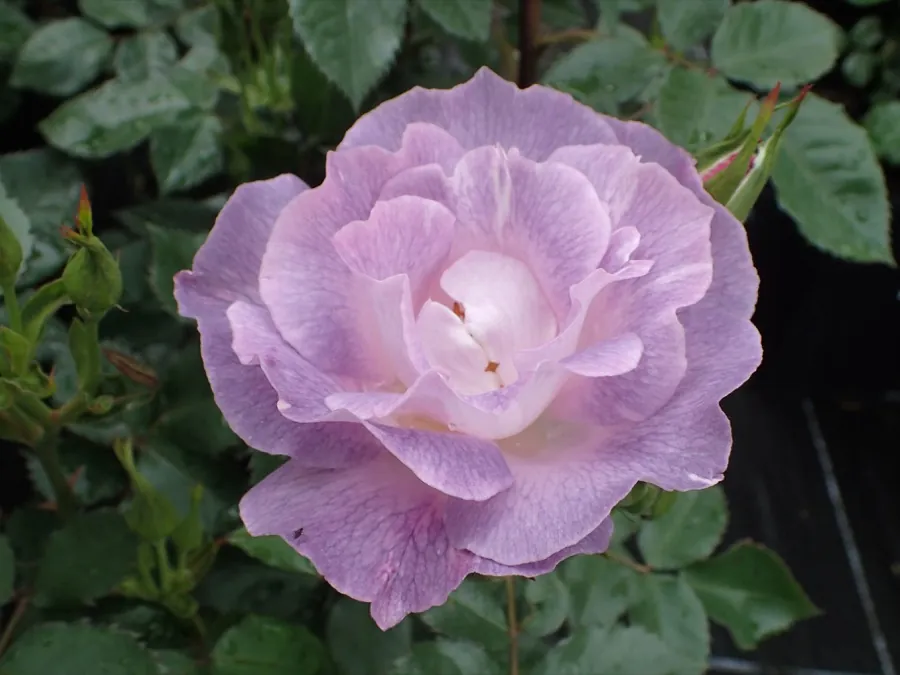
Rich purple – lilac-violet – fading to blue-grey with age; the reverse of the petal is lighter
Fullness
Semi-double. The table in patent USPP20325P3 gives 13–26 petals; the text gives 12–16.
Flower carriage
The table in patent USPP20325P3 gives 15–20 flowers per cluster on a stem; another row gives 15 or more.
Flowering
Repeat flowering from summer to autumn; timing depends on the climate
Fragrance
The table in patent USPP20325P3 describes the fragrance as moderately strong, while the text describes it as very strong, sweet and citrus-like. The David Austin catalogue rates it as medium and sweet; RHS notes a sweet scent. Descriptions of intensity differ between sources.
Hips
Medium to large according to the patent description; the frequency of fruit set is not specified.
Habit
Rounded, upright
Branching
Well branched
Shoots
Strong, straight
Thorns
Patent USPP20325P3 notes very few small prickles on the individual flower stalks. This is not an assessment of the number of prickles on the whole bush.
Dimensions
The patent description gives a height of 90–120 cm and a width of about 80 cm. RHS gives a different estimate: 50–100 cm in both height and spread. These are guides, not guaranteed growth limits.
Support
An upright bush floribunda. Neither the patent description nor RHS specifies that support is required.
Foliage
According to the patent description, the foliage is dark green; the upper surface is semi-glossy or shiny, and the lower surface is matte.
Resistance
The detailed table in patent USPP20325P3 reports slight resistance to black spot and powdery mildew. Downy mildew and rust were not observed on the trial plants; this does not establish immunity. The patent gives no five-point score.
Variations of the variety
Eyes for You (PEJBIGEYE) is a separate cultivar bred by Peter James through a controlled cross between two unnamed seedlings in 2004.
Colour scheme

Rich purple – lilac-violet – fading to blue-grey with age; the reverse of the petal is lighter

Rose neighbours

Perennials to plant nearby

Neighbouring roses

A violet-wine palette holds a dramatic mood around Blue for You.

Perennial companions

Silver foliage and chartreuse lady's mantle lighten the dark purple:

catmint (Nepeta)salvia 'Caradonna'lamb's earlady's mantle (Alchemilla)

Contrasting accents

For a play of warm and cool tones — lemon and apricot accents:

Achillea MoonshineGeum Mai TaiAllium Globemaster

More about the variety

Hips
Medium to large according to the patent description; the frequency of fruit set is not specified.
Variations of the variety
Eyes for You (PEJBIGEYE) is a separate cultivar bred by Peter James through a controlled cross between two unnamed seedlings in 2004.
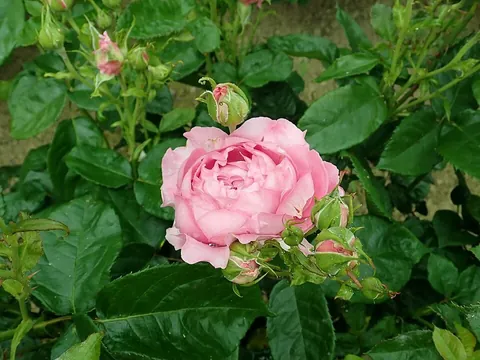
How to grow

Where to plant. Borders, group plantings at the front, containers; as an accent among silver foliage.

Climate. For overwintering, consider local winter minima, wind and soil moisture.

Care. General RHS guidance for floribundas: fertile, humus-rich, moist, well-drained soil. As spring growth resumes, remove dead, diseased and crossing stems (group 16). Apply balanced fertiliser and mulch in spring, with another feed in early summer. Water new plantings until established and mature bushes during drought, directing water to the base.

About the name

Name. Blue for You is the trade name of the cultivar ‘Pejamblu’.

Breeding. Peter James, United Kingdom. According to patent USPP20325P3, cross-pollination began in June 2000; the seed parent was Natural Beauty (‘ROGSCRIV’), and the pollen parent was a seedling from Summer Wine × SCRIVBELL.

Significance. The code ‘Pejamblu’ helps match the trade names Blue for You, Honky Tonk Blues, Pacific Dream and Ellerines Rose. The David Austin catalogue gives 2007 as the year of introduction, while Peter Beales gives 2006; these dates are reported according to the respective catalogues.

Frequently asked questions about Blue for You

Does Blue for You need winter protection?

RHS H6. Rating for UK growing conditions: −20…−15 °C. Overwintering depends on the microclimate and growing conditions. For overwintering, consider local winter minima, wind and soil moisture.

How many times a season does Blue for You flower?

Repeat flowering from summer to autumn; timing depends on the climate.

How big does Blue for You grow?

90–120 cm tall, about 80 cm wide. According to patent USPP20325P3; size depends on growing conditions.

Which diseases affect Blue for You?

The detailed table in patent USPP20325P3 reports slight resistance to black spot and powdery mildew. Downy mildew and rust were not observed on the trial plants; this does not establish immunity. The patent gives no five-point score.

How much sun does Blue for You need?

Full sun; as recommended by RHS for this cultivar.

What does Blue for You smell like?

The table in patent USPP20325P3 describes the fragrance as moderately strong, while the text describes it as very strong, sweet and citrus-like. The David Austin catalogue rates it as medium and sweet; RHS notes a sweet scent. Descriptions of intensity differ between sources.

Gardeners' photos and reviews

My climate

Choose a reference temperature to compare with the cultivar’s data. This is not an overwintering forecast or advice on winter protection; consider wind, moisture and the duration of frost.

Regional data are generalised. USDA describes average annual extreme minima, not a forecast; the values in the list are rounded. Check the conditions at your site. More information: Roses in Ukraine's climate.