




Back to catalogue
Shrub; Landscape; ground coverAlain Meilland; Meilland International, 1992Pink

Magic Meidiland

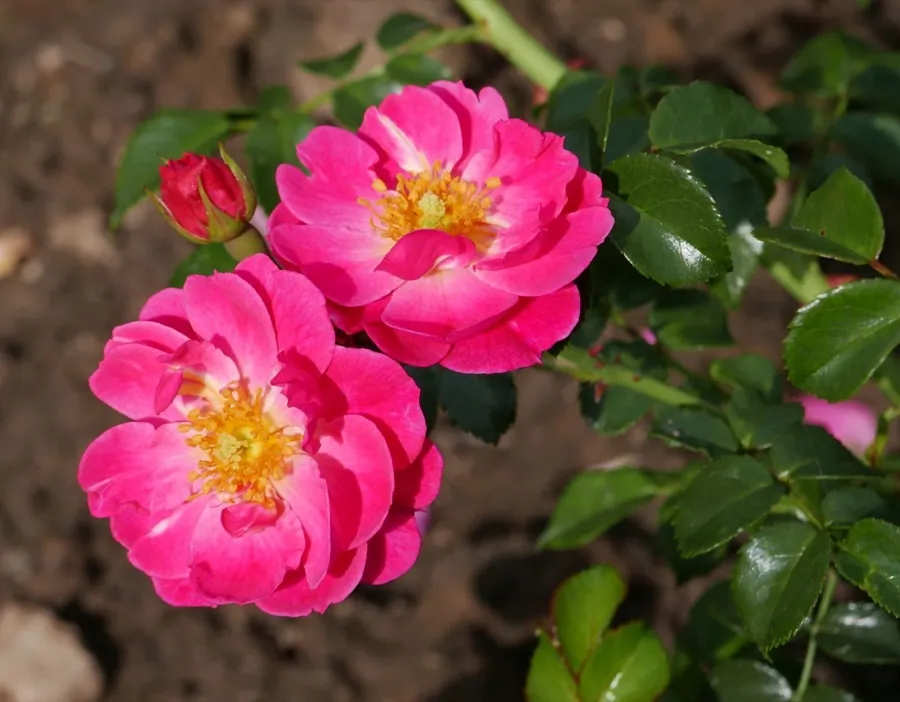
Bright fuchsia-magenta pink with contrasting yellow stamens; ADR 1995; 5/5 self-cleaning — a bestseller of the Meidiland series; spreads like a «rose carpet».

Meidiland series · Paysager

Variety profile

Flowering

Repeat flowering

Self-cleaning — the petals drop on their own, no need to remove spent flowers; repeat flowering is abundant from June to the first frosts. Months are approximate, for the climate of Ukraine.

Awards

ADR 1995

German certificate · bestseller of the Meidiland series

Winter hardiness

−20 °C

USDA zone 5–6b. Throughout Ukraine with minimal protection.

Compare reference temperatures

Plant size

50–70 × 90–120 cm
person 170 cm50–70 cm
Habit
Spreading, trailing — width 1.5–2 times greater than height; ground cover
Dimensions
50–70 × 90–120 cm — spreading
Support
No support needed — a self-supporting ground cover
Shoots
Flexible, with a prostrate habit — fill the ground well
Branching
Very good, from the base

Flower

≈ 6 cm

17–25 petals according to HMF; Meilland states up to 50 given the pompon form petals.

Bud shape
Small round, richly fuchsia
Open flower
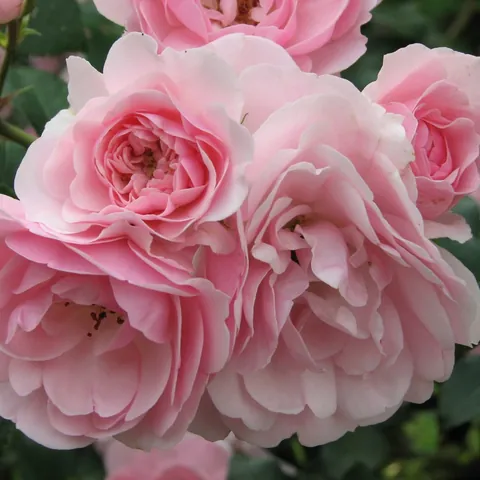
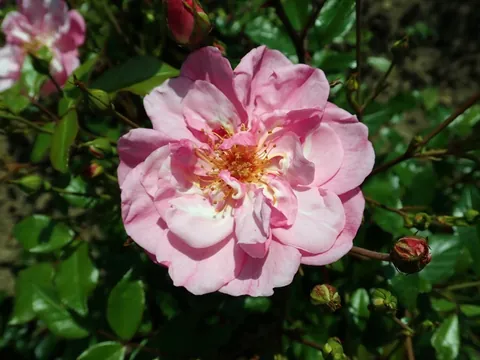
Semi-double, pompon-type, with an open centre — the yellow stamens contrast clearly
Centre
Open yellow — golden stamens against a fuchsia background
Fullness
17–25 petals according to HMF; Meilland states up to 50 given the pompon form
Flower carriage
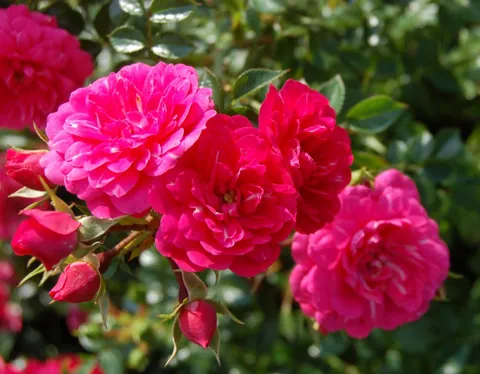
In large clusters of 10–20 flowers — creates the effect of a «rose carpet»

Fragrance

Light; hawthorn + lily-of-the-valley + freesia

Light — hawthorn + lily-of-the-valley + freesia (according to Meilland's description); it is often described as «unscented» — incorrect.

Disease resistance

5 out of 5
Black spotresistantPowdery mildewresistant

5/5 — one of the most resistant landscape varieties in the world, no treatments against black spot and powdery mildew.

Sun

Full sun

Tolerates partial shade.

Thorns

Moderate
thornlessfewmoderatemanyvery many

Moderate number, typical of shrub and landscape roses.

Foliage

Medium green, small, glossy — an extra decorative effect; with resistance inherited from Rosa sempervirens.

Other names

Magic Meillandecor, Magic Meidiland
All characteristics in a table
Group
Shrub; Landscape; ground cover
Breeder
Alain Meilland; Meilland International, France, 1992
Bud shape
Small round, richly fuchsia
Open flower
Semi-double, pompon-type, with an open centre — the yellow stamens contrast clearly
Centre
Open yellow — golden stamens against a fuchsia background
Colour
Bright fuchsia-magenta pink — rich, does not fade; a «natural» intensity characteristic of the Meidiland series
Fullness
17–25 petals according to HMF; Meilland states up to 50 given the pompon form
Flower carriage
In large clusters of 10–20 flowers — creates the effect of a «rose carpet»
Flowering
Self-cleaning — the petals drop on their own, no need to remove spent flowers; repeat flowering is abundant from June to the first frosts
Fragrance
Light — hawthorn + lily-of-the-valley + freesia (according to Meilland's description); it is often described as «unscented» — incorrect
Hips
Not documented
Habit
Spreading, trailing — width 1.5–2 times greater than height; ground cover
Branching
Very good, from the base
Shoots
Flexible, with a prostrate habit — fill the ground well
Thorns
Moderate number, typical of shrub and landscape roses.
Dimensions
50–70 × 90–120 cm — spreading
Support
No support needed — a self-supporting ground cover
Foliage
Medium green, small, glossy — an extra decorative effect; with resistance inherited from Rosa sempervirens
Resistance
5/5 — one of the most resistant landscape varieties in the world, no treatments against black spot and powdery mildew
Variations of the variety
Code MEIbonrib; US Patent PP 15,487. Synonyms: Magic Meillandecor (Europe), Magic Meidiland (US/EN). CORRECTION of a myth: often confused with Alba Meidiland (MEIflopan) — a different variety of the series.

Colour scheme

Bright fuchsia-magenta pink — rich, does not fade; a «natural» intensity characteristic of the Meidiland series

Rose neighbours

Perennials to plant nearby

Neighbouring roses

Landscape family — undemanding shrub roses with ADR certification:

Companion perennials

A classic landscape family for mass planting:

lavendersoft lady's mantlecatmintlamb's ear

Availability worldwide

One of the world's bestselling landscape roses:

🇫🇷 France: very high · Meilland🇩🇪 Germany: very high · ADR 1995🇺🇸 USA: high · Star Roses🇺🇦 Ukraine: high · via European nurseries

More about the variety

Hips
Not documented
Variations of the variety
Code MEIbonrib; US Patent PP 15,487. Synonyms: Magic Meillandecor (Europe), Magic Meidiland (US/EN). CORRECTION of a myth: often confused with Alba Meidiland (MEIflopan) — a different variety of the series.

How to grow

Where to plant. Mass plantings, slopes, urban spaces, around tree trunks, along fences and paths; ideal as a «rose carpet» for low-maintenance landscaping.

Climate. To −20 °C — throughout Ukraine with minimal protection; in the south, no protection needed.

Care. Minimal — self-cleaning (no need to remove spent flowers); pruning once every 3 years; no compulsory disease treatments.

About the name

Name. «Magic» — for the bright, unexpected contrast of fuchsia petals with open yellow stamens; «Meidiland» = Meilland + land, the Meilland brand for low-maintenance landscape roses. The series was created in the 1980s (the first was Bonica '82) as a response to market demand for a «rose without care» for city and public landscaping.

Breeding. Raised by Alain Meilland at Meilland International (Provence, France), bred and released on the market in 1992. Code MEIbonrib. US Patent PP 15,487. Parentage: Rosa sempervirens × (Milrose × Bonica '82) — a direct daughter of Bonica (our pilot and benchmark!) through the maternal line. The blood of the evergreen Mediterranean rose (R. sempervirens) explains its trailing habit and glossy leaves.

Significance. ADR 1995 — a prestigious German certificate for low-maintenance landscape roses (awarded only after 3 years of trials without treatments). The 5th Meilland work in our catalogue, alongside Bonica, Marie Curie, Jean Cocteau, Mimi Eden, Astronomia, Jubilé du Prince de Monaco, Leonardo da Vinci, Alexandrine and Jean Giono. The 2nd landscape Meidiland series in our catalogue (alongside Lavender Meidiland and Astronomia). One of the most commercially successful landscape varieties of the last 30 years — mass planted in cities in France, Germany and the USA.

Frequently asked questions about Magic Meidiland

Does Magic Meidiland need winter protection?

The cultivar’s reference temperature is −20 °C (USDA zone 5–6b). Overwintering depends on the conditions. Throughout Ukraine with minimal protection.

How many times a season does Magic Meidiland flower?

Self-cleaning — the petals drop on their own, no need to remove spent flowers; repeat flowering is abundant from June to the first frosts.

How big does Magic Meidiland grow?

50–70 cm tall, 90–120 cm wide.

Which diseases affect Magic Meidiland?

Overall resistance: 5 out of 5. One of the most resistant landscape roses in the world; no treatments needed.

How much sun does Magic Meidiland need?

Sun; full sun; tolerates partial shade.

What does Magic Meidiland smell like?

Light — hawthorn + lily-of-the-valley + freesia (according to Meilland's description); it is often described as «unscented» — incorrect.

Gardeners' photos and reviews

My climate

Choose a reference temperature to compare with the cultivar’s data. This is not an overwintering forecast or advice on winter protection; consider wind, moisture and the duration of frost.

Regional data are generalised. USDA describes average annual extreme minima, not a forecast; the values in the list are rounded. Check the conditions at your site. More information: Roses in Ukraine's climate.