



Back to catalogue
Ground cover; ShrubW. Kordes' SöhnePink

Knirps

ADR 2004 + Gold Baden-Baden + Silver Adelaide 1999; compact, 30 × 60 cm; rich pink; 'little tot' (German Knirps) — the name describes the silhouette exactly.

Kleinstrauchrose · Kordes Resistenzzucht

Variety profile

Flowering

Continuous, very profuse

Awards

ADR 2004

+ Gold Baden-Baden · Silver Adelaide 1999 · Cert. Orléans 2001

Winter hardiness

−29 °C

USDA zone 5a. All of Ukraine without winter protection.

Compare reference temperatures

Plant size

30 × 50–60 cm
person 170 cm30 cm
Habit
Ultra-low ground cover — 2 times lower than its width; a 'cushion' shape
Dimensions
30 cm × 50–60 cm — a compact 'cushion'
Support
No support needed; often grafted onto a standard for an 80 cm 'mini tree'
Shoots
Flexible, low, trailing in habit
Branching
Excellent, from the base in all directions

Flower

3–4 cm
Bud shape
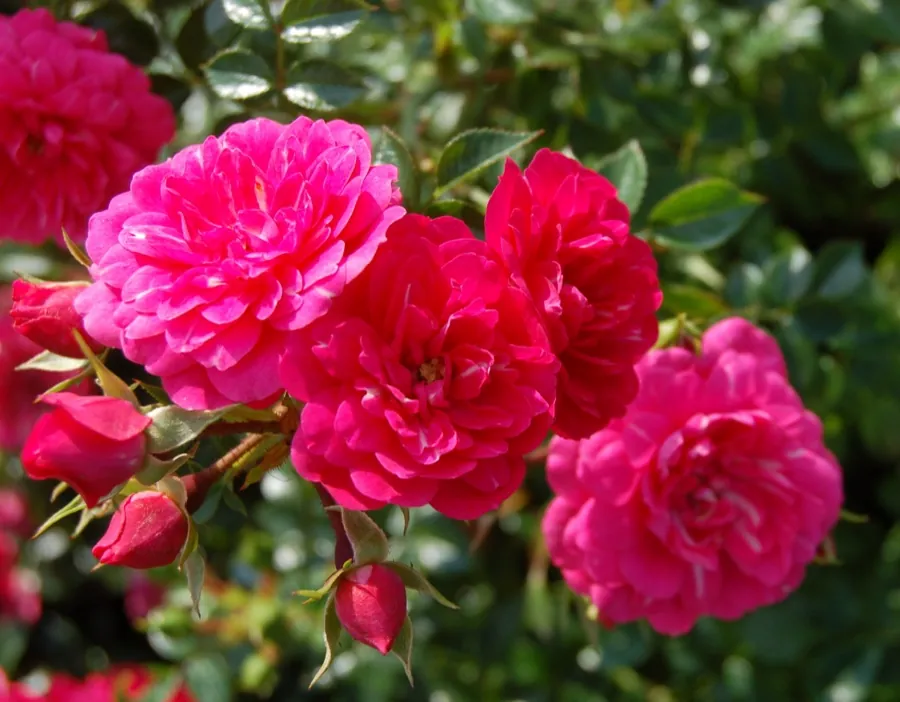
Round, rich pink
Open flower
Semi-open cup-shaped, compact 3–4 cm — typical of landscape roses
Centre
Densely packed, in the same pink tone
Fullness
Double, ~40 petals — a lot for such a small flower
Flower carriage
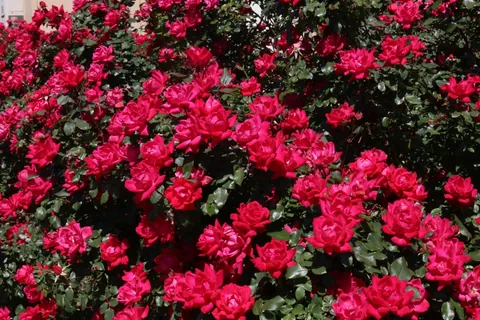
Profuse clusters of 5–15 flowers — 'a solid pink carpet' from spring to the frosts

Fragrance

No scent

No scent — Kordes describes it as 'slight', HMF as 'none'; in practice no noticeable smell. The variety's strength is its visual abundance, not its scent.

Disease resistance

5 out of 5

5/5 — ADR-certified (2004); Kordes Resistenzzucht programme; the leaves recover by themselves after stress.

Sun

Full sun

Recovers by itself after stress.

Thorns

Few
thornlessfewmoderatemanyvery many

Few thorns — typical of modern Kordes landscape roses.

Foliage

Dark green, small, glossy, leathery; disease-resistant.

All characteristics in a table
Group
Ground cover; Shrub
Breeder
W. Kordes' Söhne, Germany
Bud shape
Round, rich pink
Open flower
Semi-open cup-shaped, compact 3–4 cm — typical of landscape roses
Centre
Densely packed, in the same pink tone
Colour
Rich pink ('deep pink'), even over the whole petal, without transitions or ombré; does not fade in the sun — an important commercial advantage
Fullness
Double, ~40 petals — a lot for such a small flower
Flower carriage
Profuse clusters of 5–15 flowers — 'a solid pink carpet' from spring to the frosts
Flowering
Continuous, very profuse
Fragrance
No scent — Kordes describes it as 'slight', HMF as 'none'; in practice no noticeable smell. The variety's strength is its visual abundance, not its scent.
Hips
Not documented — profuse flowering crowds out fruiting
Habit
Ultra-low ground cover — 2 times lower than its width; a 'cushion' shape
Branching
Excellent, from the base in all directions
Shoots
Flexible, low, trailing in habit
Thorns
Few thorns — typical of modern Kordes landscape roses.
Dimensions
30 cm × 50–60 cm — a compact 'cushion'
Support
No support needed; often grafted onto a standard for an 80 cm 'mini tree'
Foliage
Dark green, small, glossy, leathery; disease-resistant
Resistance
5/5 — ADR-certified (2004); Kordes Resistenzzucht programme; the leaves recover by themselves after stress
Variations of the variety
Code KORverlandus; working code KO 87/1583-01; parentage not published by Kordes; many trade names: County of Hampshire® (UK), Hot Pink Balconia® (DE balcony series), Little Chap™ / Little Chap Vigorosa (US/AU)

Colour scheme

Rich pink ('deep pink'), even over the whole petal, without transitions or ombré; does not fade in the sun — an important commercial advantage

Rose neighbours

Perennials to plant nearby

Neighbouring roses

The 'trouble-free heroes' family — landscape and ground-cover roses:

Companion perennials

Low silvery-purple accents bring out the rich pink:

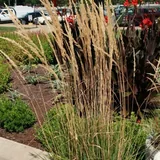
lavenderlamb's earlady's mantleornamental grasses

Availability worldwide

A classic Kordes landscape rose with many trade names:

  • 🇩🇪 Germany: high · as Knirps / Hot Pink Balconia
  • 🇬🇧 UK: high · as County of Hampshire
  • 🇺🇸 USA/🇦🇺 Australia: high · as Little Chap
  • 🇺🇦 Ukraine: moderate · through Kordes dealers

More about the variety

Hips
Not documented — profuse flowering crowds out fruiting
Variations of the variety
Code KORverlandus; working code KO 87/1583-01; parentage not published by Kordes; many trade names: County of Hampshire® (UK), Hot Pink Balconia® (DE balcony series), Little Chap™ / Little Chap Vigorosa (US/AU)

How to grow

Where to plant. City borders, balcony containers, mini standards (80 cm), the front of mixed borders, lawn edges; ideal on a standard — a 'mini tree' with a round pink crown. Often used in commercial plantings thanks to its 5/5 health.

Climate. To −29 °C — all of Ukraine without winter protection; exceptional winter hardiness for a landscape rose.

Care. Minimal — pruning in autumn or spring; does not need seasonal disease prevention (ADR-certificate); the leaves recover by themselves after stress.

About the name

Name. 'Knirps' — German for 'little tot', 'toddler', 'tiny one'. The name describes the variety's silhouette exactly: height 30 cm, 2 times lower than its width of 60 cm — a solid low 'cushion'. One of the most 'childlike' name choices in the Kordes catalogue — alongside the more formal 'Märchenrosen', 'Vigorosa' and 'Parfuma' series.

Breeding. Bred at W. Kordes' Söhne (Sparrieshoop, Schleswig-Holstein, Germany), 1987 (working code KO 87/1583-01), market introduction 1997. Code KORverlandus. Parentage not published (a Kordes trade secret). Part of the wide range of Kordes ground-cover roses of the 1990s, bred in the Resistenzzucht programme (breeding for disease resistance).

Significance. ADR 2004 (Allgemeine Deutsche Rosenneuheitenprüfung — the German benchmark for resistance and quality). Also: Gold Medal Baden-Baden, Silver Medal Australian National Rose Trials Adelaide 1999, Certificate of Merit Orléans 2001. One of Kordes' best-selling ground-cover varieties. Recommended for containers, borders, mini standards. Many trade names in different countries: County of Hampshire® (UK), Hot Pink Balconia® (German balcony series), Little Chap™ / Little Chap Vigorosa (US/AU) — all the same KORverlandus. Often confused with Sweet Knirps® (KORzalicha, Kordes 2014, a soft pink polyantha) and Rugelda® (KORruge, Kordes 1989, a yellow-red rugosa hybrid) — these are different Kordes varieties.

Frequently asked questions about Knirps

Does Knirps need winter protection?

The cultivar’s reference temperature is −29 °C (USDA zone 5a). Overwintering depends on the conditions. All of Ukraine without winter protection.

How many times a season does Knirps flower?

Continuous, very profuse.

How big does Knirps grow?

About 30 cm tall, 50–60 cm wide.

Which diseases affect Knirps?

Overall resistance: 5 out of 5. ADR-certified; low susceptibility to black spot and powdery mildew.

How much sun does Knirps need?

Sun; full sun; recovers by itself after stress.

What does Knirps smell like?

No scent — Kordes describes it as 'slight', HMF as 'none'; in practice no noticeable smell. The variety's strength is its visual abundance, not its scent.

Gardeners' photos and reviews

My climate

Choose a reference temperature to compare with the cultivar’s data. This is not an overwintering forecast or advice on winter protection; consider wind, moisture and the duration of frost.

Regional data are generalised. USDA describes average annual extreme minima, not a forecast; the values in the list are rounded. Check the conditions at your site. More information: Roses in Ukraine's climate.