- Group
- Shrub; landscape
- Breeder
- Meilland, 1981
- Bud shape
- Small, oval to egg-shaped; deeper pink than the open flower
- Open flower
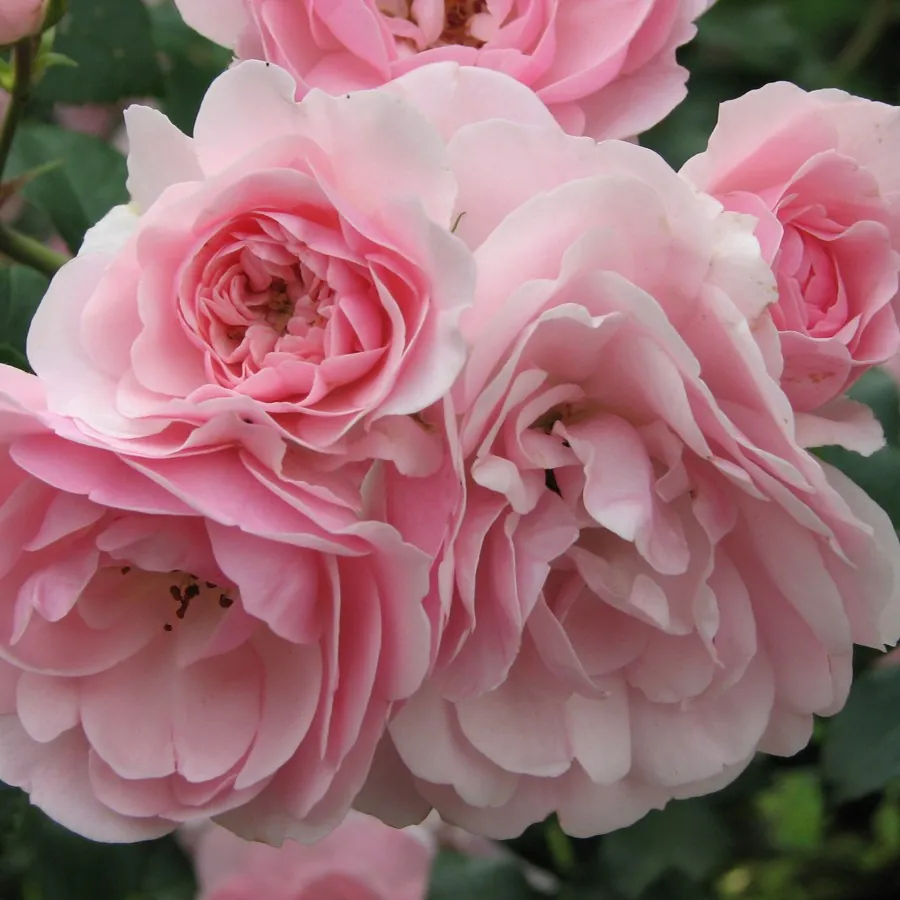
- Cup-shaped, slightly wavy petals; diameter 5–7.5 cm
- Centre
- According to the patent description, the flower is initially a shallow cup and becomes flatter before the petals fall
- Colour
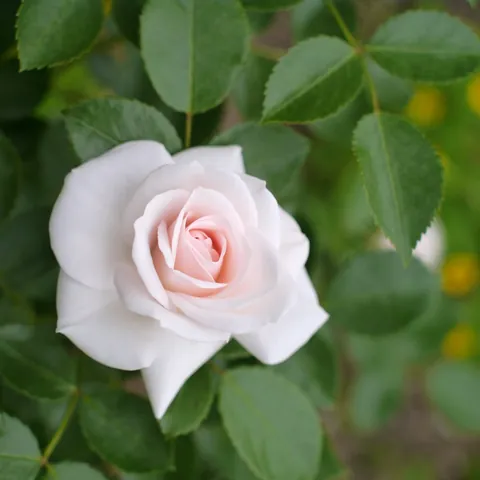
- Soft pink; fades to almost white in heat
- Fullness
- Double; Meilland and the patent description give about 53 petals. Star Roses gives a different figure: 25–30
- Flower carriage
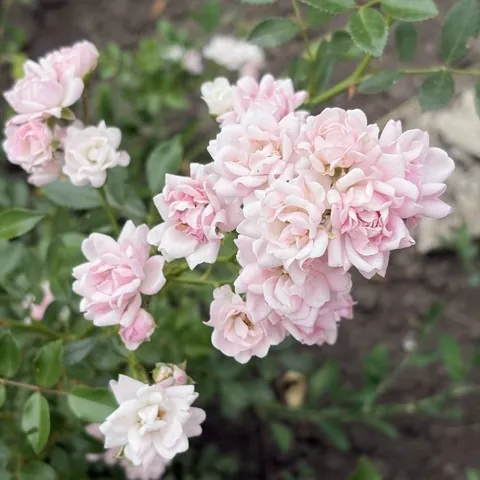
- In clusters of 5–15 flowers per stem
- Flowering
- Abundant repeat flowering in flushes, May – October
- Fragrance
- Light, soft, slightly sweet
- Hips
- If not cut, it forms bright red rose hips by winter
- Habit
- Spreading bush with arching canes; usually wider than tall
- Branching
- Dense; the bush is thick even without formative pruning
- Shoots
- Flexible, semi-stiff
- Number of thorns
- Moderate – thorns are present, but not too stiff
- Dimensions
- 90–150 cm tall × 120–180 cm wide; more compact with formative pruning
- Support
- No support needed – the bush is self-supporting and holds its shape without a trellis or arch (support is only needed for climbing varieties, which Bonica is not)
- Foliage
- Dark green, semi-glossy, dense; leaves with 5–7 leaflets
- Resistance
- Very resistant to black spot and powdery mildew (benchmark 5/5)
- Variations of the variety
- Royal Bonica; White Bonica; Vanilla Bonica; Climbing Bonica