



About the name
Name. 'Pascali', after a character in the Belgian novel 'Pascali' by Georges Simenon. Simenon (1903–1989) was the best-known Belgian writer of the twentieth century, author of a series of novels about Inspector Maigret. A poetic tribute to French-language Belgian literature that fits the variety's Belgian origin perfectly.
Breeding. Bred by Louis Lens (1924–2001) at Lens Roses (Belgium). Code LENip. Bred before 1963, introduced 1963; in the UK through Dickson Nurseries in 1963. Parentage: 'Queen Elizabeth' (Lammerts 1954, WFRS HoF 1979, mother of the Grandiflora class!) × 'White Butterfly'. Louis Lens was a leading Belgian breeder of the twentieth century, also known for his Hybrid Musk varieties.
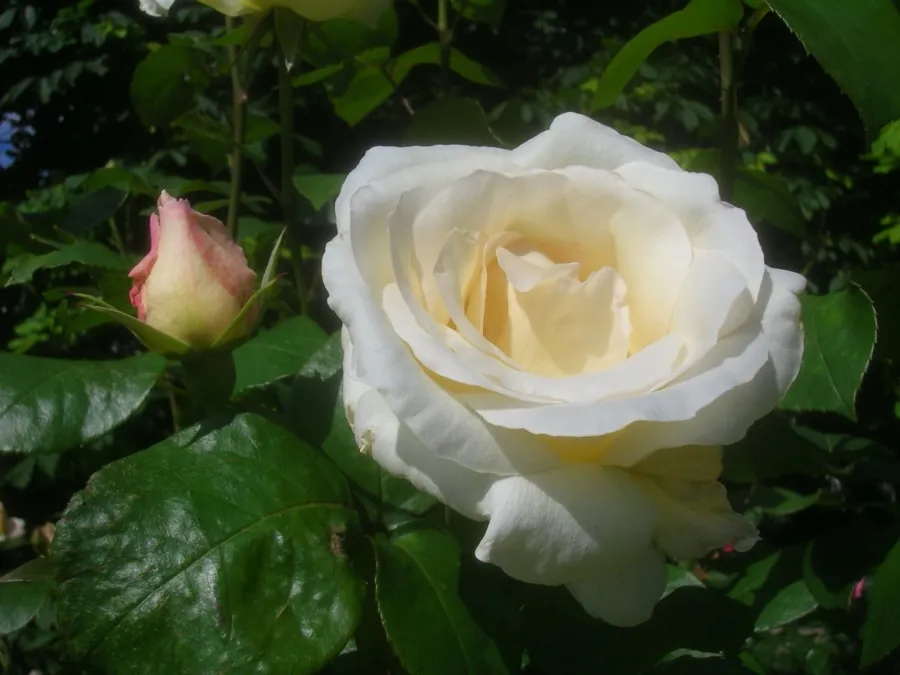
Significance. WFRS HALL OF FAME 1991, chosen at the 9th World Rose Convention in Belfast. THE ONLY BELGIAN ROSE IN THE WFRS HALL OF FAME. AARS 1969 (All-America Rose Selections). Portland Gold Medal 1967. Hague Gold Medal 1963 + Hamburg 1963 + Baden-Baden 1964 + Kortrijk 1965 = 7+ international awards for one variety. The colour holds even in scorching sun, a rare quality for white Hybrid Teas (most turn yellowish or greyish in heat). A daughter of Queen Elizabeth (WFRS HoF 1979), a genealogical link to its mother, a WFRS Hall of Fame rose. Lens's legacy: after 1968 Louis Lens switched to Hybrid Musks, but Pascali remained his best-known Hybrid Tea.