



Back to catalogue
Gallica; 'Apothecary's Rose'; 'Rose of Provins'Pink

R. gallica officinalis

'Apothecary's Rose' — the apothecary rose, the basis of Provins's medicinal industry since the XIII century; WFRS HoF 2012 + RHS AGM; the red rose of the House of Lancaster in the Wars of the Roses; its petals keep their scent even when dried — hence its value in perfumery; the mother of Rosa Mundi (its sport).

WFRS Old Rose Hall of Fame 2012 + RHS AGM

Variety profile

Flowering

A single, powerful flush of 3–4 weeks in summer

Awards

WFRS HoF 2012

Old Rose Hall of Fame · RHS AGM

Winter hardiness

−34 °C

USDA zone 4–9. One of the hardiest roses; all of Ukraine without winter protection. One of the most winter-hardy roses · all of Ukraine without cover.

Compare reference temperatures

Plant size

90–120 × 90–120 cm
person 170 cm90–120 cm
Habit
Compact, rounded bush — the classic gallica form
Dimensions
90–120 cm high × 90–120 cm wide — compact
Support
Not needed — self-supporting
Shoots
Medium-hard; on their own roots they produce abundant root suckers (this is how they were historically propagated in monasteries)
Branching
Well branched, becoming dense with age

Flower

7–8 cm
Bud shape
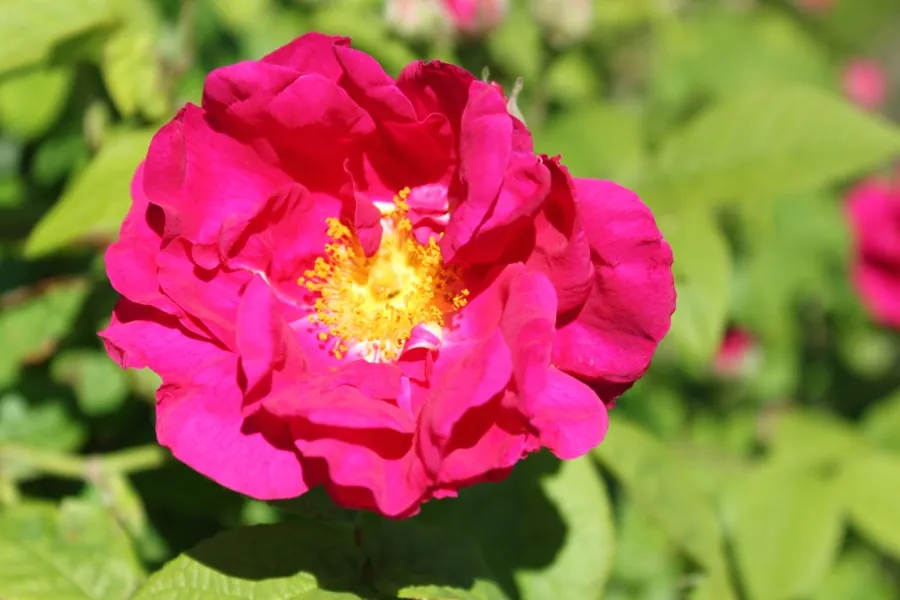
Round, deep pink
Open flower
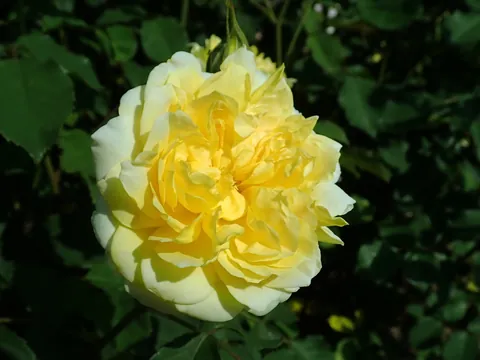
Semi-double, 12–18 petals, about 7–8 cm, with prominent golden stamens in the centre
Centre
Bright golden stamens — the main visual accent
Fullness
Semi-double — 12–18 petals
Flower carriage
Mostly solitary large flowers, or in clusters of 2–3

Fragrance

Strong; classic old rose

Strong, classic old rose / damask-like — the benchmark 'rose' perfume.

Disease resistance

5 out of 5

Extremely tough — grown without chemicals for 800+ years; USDA 4; tolerates poor soils well.

Sun

Sun + shade

Tolerates poor soils and partial shade.

Thorns

Moderate
thornlessfewmoderatemanyvery many

Fine, frequent prickles on the canes — typical of gallicas.

Foliage

Matt green, rough — typical gallica texture.

All characteristics in a table
Group
Gallica; 'Apothecary's Rose'; 'Rose of Provins'
Breeder
France
Bud shape
Round, deep pink
Open flower
Semi-double, 12–18 petals, about 7–8 cm, with prominent golden stamens in the centre
Centre
Bright golden stamens — the main visual accent
Colour
Deep rose-carmine (cerise-pink). The petals keep their scent even when dried — a unique feature that made the variety the basis of the perfume and pharmaceutical industries
Fullness
Semi-double — 12–18 petals
Flower carriage
Mostly solitary large flowers, or in clusters of 2–3
Flowering
A single, powerful flush of 3–4 weeks in summer
Fragrance
Strong, classic old rose / damask-like — the benchmark 'rose' perfume
Hips
Round dark red hips in autumn — used in medicine
Habit
Compact, rounded bush — the classic gallica form
Branching
Well branched, becoming dense with age
Shoots
Medium-hard; on their own roots they produce abundant root suckers (this is how they were historically propagated in monasteries)
Thorns
Fine, frequent prickles on the canes — typical of gallicas.
Dimensions
90–120 cm high × 90–120 cm wide — compact
Support
Not needed — self-supporting
Foliage
Matt green, rough — typical gallica texture
Resistance
Extremely tough — grown without chemicals for 800+ years; USDA 4; tolerates poor soils well
Variations of the variety
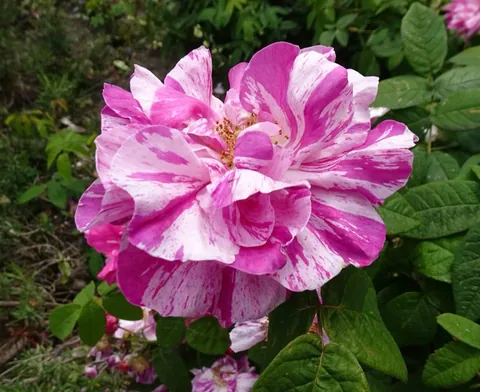
Sport Rosa Mundi (R. gallica versicolor) — its striped descendant. Also known as 'Rose of Provins', 'Apothecary's Rose', 'Red Rose of Lancaster'

Colour scheme

Deep rose-carmine (cerise-pink). The petals keep their scent even when dried — a unique feature that made the variety the basis of the perfume and pharmaceutical industries

Rose neighbours

Perennials to plant nearby

Neighbouring roses

Other old roses — for the atmosphere of a monastic garden:

Companion perennials

Medicinal herbs and aromatic plants — continuing the apothecary tradition of Provins:

lavendersalviarosemarycalendula

Contrast accents

Silver and white spires — to lighten the deep pink:

white foxglovewoolly betony (Stachys)white phloxsilver artemisia

More about the variety

Hips
Round dark red hips in autumn — used in medicine
Variations of the variety
Sport Rosa Mundi (R. gallica versicolor) — its striped descendant. Also known as 'Rose of Provins', 'Apothecary's Rose', 'Red Rose of Lancaster'

How to grow

Where to plant. Apothecary and medicinal gardens (a literal continuation of a thousand-year-old tradition); monastery corners and historic flower gardens; as a hedge, thanks to its toughness and root suckers; for 'permanent' borders — it needs no care or feeding.

Climate. All of Ukraine without winter protection (USDA 4–9); ideal for cold regions; undemanding of soil — grows even on poor soils.

Care. Minimal — old gallicas are naturally tough. Prune only sanitarily after flowering; keep root suckers in check (otherwise it spreads); petals are picked at dawn for perfumery, tea and jam.

About the name

Name. 'Officinalis' — Latin for 'of the apothecary' (from officina, pharmacy or workshop). 'Apothecary's Rose' — English for 'the apothecary rose'. 'Rose of Provins' — after the town of Provins in France, where a whole industry of apothecaries trading in dried petals for medicines and perfume had existed since the XIII century.

Breeding. An ancient cultivated form, known since classical times. In Europe it is documented from around 1240, when Thibault IV Chansonnier (Thibault IV, Count of Champagne, King of Navarre) brought it from the Sixth Crusade to the town of Provins in France, along with a fragment of the 'True Cross'. The sport of this rose is Rosa Mundi (R. gallica versicolor), a striped child of Officinalis.

Significance. WFRS Old Rose Hall of Fame 2012; RHS Award of Garden Merit. The red rose of the House of Lancaster — Shakespeare's 'red rose of Lancaster' in the Wars of the Roses (1455–1487) — was this very variety. 800+ years of pharmaceutical history: used to treat gout, skin and eye diseases, and as a calming remedy. The basis of Provins's perfume industry — the petals keep their scent even when dried, which made the town the European centre of 'rose water' in the Middle Ages. A living legend of gardening: a plant that has remained in cultivation without a break since the XIII century.

Frequently asked questions about R. gallica officinalis

Does R. gallica officinalis need winter protection?

The cultivar’s reference temperature is −34 °C (USDA zone 4–9). Overwintering depends on the conditions. One of the hardiest roses; all of Ukraine without winter protection.

How many times a season does R. gallica officinalis flower?

A single, powerful flush of 3–4 weeks in summer.

How big does R. gallica officinalis grow?

90–120 cm tall, 90–120 cm wide.

Which diseases affect R. gallica officinalis?

Overall resistance: 5 out of 5. Extremely tough; grown without chemicals for 800+ years.

How much sun does R. gallica officinalis need?

Sun + shade; tolerates poor soils and partial shade.

What does R. gallica officinalis smell like?

Strong, classic old rose / damask-like — the benchmark 'rose' perfume.

Gardeners' photos and reviews

My climate

Choose a reference temperature to compare with the cultivar’s data. This is not an overwintering forecast or advice on winter protection; consider wind, moisture and the duration of frost.

Regional data are generalised. USDA describes average annual extreme minima, not a forecast; the values in the list are rounded. Check the conditions at your site. More information: Roses in Ukraine's climate.