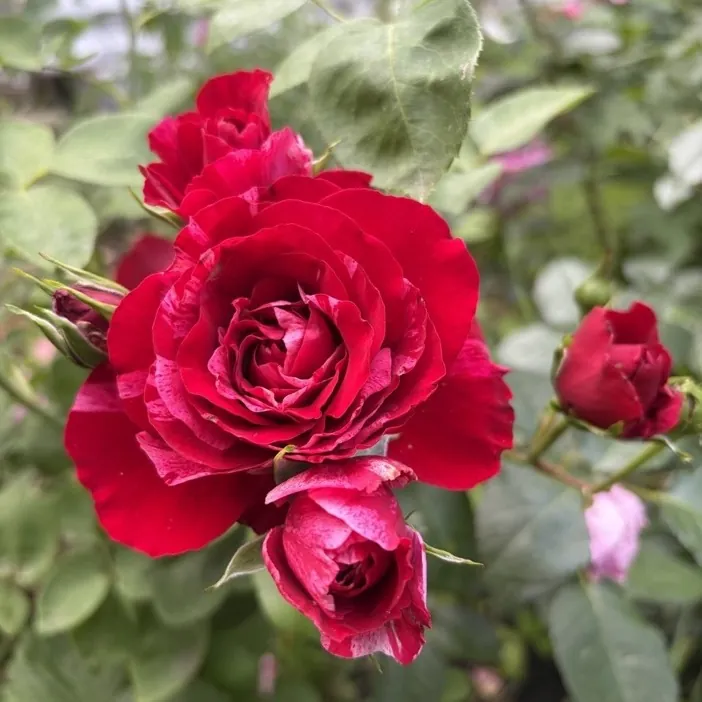
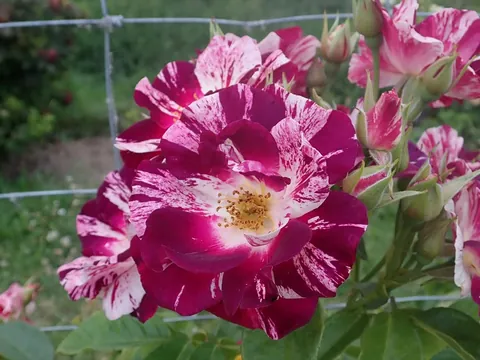




Red Intuition, close-up of the flower
Back to catalogue
Hybrid Tea; striped; sport of Belle RougeGuy Delbard; Georges DelbardBicolour

Red Intuition

Pure red with darker claret-purple stripes — a 'flame' effect; International Cut Flower of the Year 2000; a spontaneous sport of Belle Rouge, found in a greenhouse at Hyères, France; a partner to Pink Intuition (pink with stripes) in the Intuition series.

International Cut Flower of the Year 2000 · US PP13086

Variety profile

Flowering

Repeat flowering

Repeat-flowering from June to October. Months are approximate, for the climate of Ukraine.

Legacy

Cut Flower 2000

International Cut Flower of the Year

Winter hardiness

−20 °C

USDA zone 6b–9b. Central/Southern Ukraine, with light protection.

Compare reference temperatures

Plant size

70–150 × 50–70 cm
person 170 cm70–150 cm
Habit
Upright, vigorous HT
Dimensions
70–150 cm tall × 50–70 cm wide — a typical HT
Support
Not needed — self-supporting
Shoots
Sturdy, straight — good for cutting
Branching
Well branched, with strong stems

Flower

10–12 cm
Bud shape
Elongated, with clear stripes
Open flower
Goblet-shaped striped flower: 10–12 cm, 31–40 petals, slow to open
Centre
Tightly packed, with hidden stamens
Fullness
31–40 petals (full)
Flower carriage
Mostly singly, on long stems — good for cutting

Fragrance

Very light; faint tea note

Very light, with a faint tea note.

Disease resistance

3 out of 5
Black spotsusceptiblePowdery mildewsusceptible

Good in heat and rain; moderately susceptible to black spot and powdery mildew in a cool, damp climate; USDA 6b–9b.

Sun

Good in heat and rain

Thorns

Few
thornlessfewmoderatemanyvery many

Almost thornless — a distinctive trait among HTs.

Foliage

Dark green, semi-glossy.

All characteristics in a table
Group
Hybrid Tea; striped; sport of Belle Rouge
Breeder
Guy Delbard; Georges Delbard, France
Bud shape
Elongated, with clear stripes
Open flower
Goblet-shaped striped flower: 10–12 cm, 31–40 petals, slow to open
Centre
Tightly packed, with hidden stamens
Colour
Pure red with darker claret-purple stripes; a 'flame' effect across the petals. A unique striped range — rare among modern HTs (most striped roses are two-tone, with white or yellow)
Fullness
31–40 petals (full)
Flower carriage
Mostly singly, on long stems — good for cutting
Flowering
Repeat-flowering from June to October
Fragrance
Very light, with a faint tea note
Hips
Not documented — spent blooms are cut for repeat flowering
Habit
Upright, vigorous HT
Branching
Well branched, with strong stems
Shoots
Sturdy, straight — good for cutting
Thorns
Almost thornless — a distinctive trait among HTs.
Dimensions
70–150 cm tall × 50–70 cm wide — a typical HT
Support
Not needed — self-supporting
Foliage
Dark green, semi-glossy
Resistance
Good in heat and rain; moderately susceptible to black spot and powdery mildew in a cool, damp climate; USDA 6b–9b
Variations of the variety
Code DELstriro. US Plant Patent PP13086. Spontaneous sport of 'Belle Rouge' (Delego, Delbard 1996), found in a greenhouse at Hyères (France) in 1999. Market introduction 2001. Partner to Pink Intuition (pink striped) — the Intuition Delbard series

Colour scheme

Pure red with darker claret-purple stripes; a 'flame' effect across the petals. A unique striped range — rare among modern HTs (most striped roses are two-tone, with white or yellow)

Rose neighbours

Perennials to plant nearby

Neighbouring roses

Striped and bright bicolour family — a 'carnival collection':

Perennial companions

Neutral silvery perennials highlight the striped effect:

lamb's ear (Stachys)gypsophilalavenderartemisia

Availability worldwide

Popular as a cut flower and collectors' rose:

🇫🇷 France: high · Delbard🇪🇺 Europe: high · cut flowers🇺🇸 USA: moderate · collector demand🇺🇦 Ukraine: moderate · via Delbard partners

More about the variety

Hips
Not documented — spent blooms are cut for repeat flowering
Variations of the variety
Code DELstriro. US Plant Patent PP13086. Spontaneous sport of 'Belle Rouge' (Delego, Delbard 1996), found in a greenhouse at Hyères (France) in 1999. Market introduction 2001. Partner to Pink Intuition (pink striped) — the Intuition Delbard series

How to grow

Where to plant. As a striking solo accent in HT borders; in a collection of striped varieties alongside Purple Splash and Papagena; as a cut-flower bush for home bouquets — the striped 'flame' effect is especially striking in a vase.

Climate. Central/Southern Ukraine, with light winter protection (USDA 6b); copes well with summer heat and rain.

Care. Full sun; a well-ventilated spot; preventive treatment against black spot and powdery mildew (especially in a damp, cool climate); feed 3× per season; prune ⅓ in spring.

About the name

Name. 'Red Intuition' — 'red intuition'. From Delbard's Intuition series (with Pink Intuition, the pink striped one), where the stripes appeared 'intuitively' in nature through a spontaneous sport mutation. A poetic French name that highlights the random, striking character of the variety — genetics 'decided on its own' to add stripes.

Breeding. Spontaneous sport of 'Belle Rouge' (DELego, Delbard 1996), found in a greenhouse at Hyères (France) in 1999. Market introduction 2001. Breeder: Guy Delbard at Georges Delbard (France) — one of the leading French rose nurseries. Code DELstriro. US Plant Patent PP13086.

Significance. International Cut Flower of the Year 2000 — a prestigious floristry award, received before the official 2001 release. Show awards in 2005. A unique red-on-red striped range — rare: most striped varieties are two-tone with white (Fourth of July, Stars 'n' Stripes), yellow (Papagena) or another contrasting colour. Red Intuition is a pure red with darker claret 'flame' stripes. Partner to Pink Intuition in the Intuition Delbard series. No major official awards (AARS, ADR not awarded), but International Cut Flower of the Year confirms its commercial value.

Frequently asked questions about Red Intuition

Does Red Intuition need winter protection?

The cultivar’s reference temperature is −20 °C (USDA zone 6b–9b). Overwintering depends on the conditions. Central/Southern Ukraine, with light protection.

How many times a season does Red Intuition flower?

Repeat-flowering from June to October.

How big does Red Intuition grow?

70–150 cm tall, 50–70 cm wide.

Which diseases affect Red Intuition?

Overall resistance: 3 out of 5. Moderately susceptible to black spot in a cool, damp climate.

How much sun does Red Intuition need?

Sun; good in heat and rain.

What does Red Intuition smell like?

Very light, with a faint tea note.

Gardeners' photos and reviews

My climate

Choose a reference temperature to compare with the cultivar’s data. This is not an overwintering forecast or advice on winter protection; consider wind, moisture and the duration of frost.

Regional data are generalised. USDA describes average annual extreme minima, not a forecast; the values in the list are rounded. Check the conditions at your site. More information: Roses in Ukraine's climate.