


Back to catalogue
Shrub / Floribunda; striped; brightSam McGredy IV; McGredy Roses International, 1985Apricot and orange

Papagena

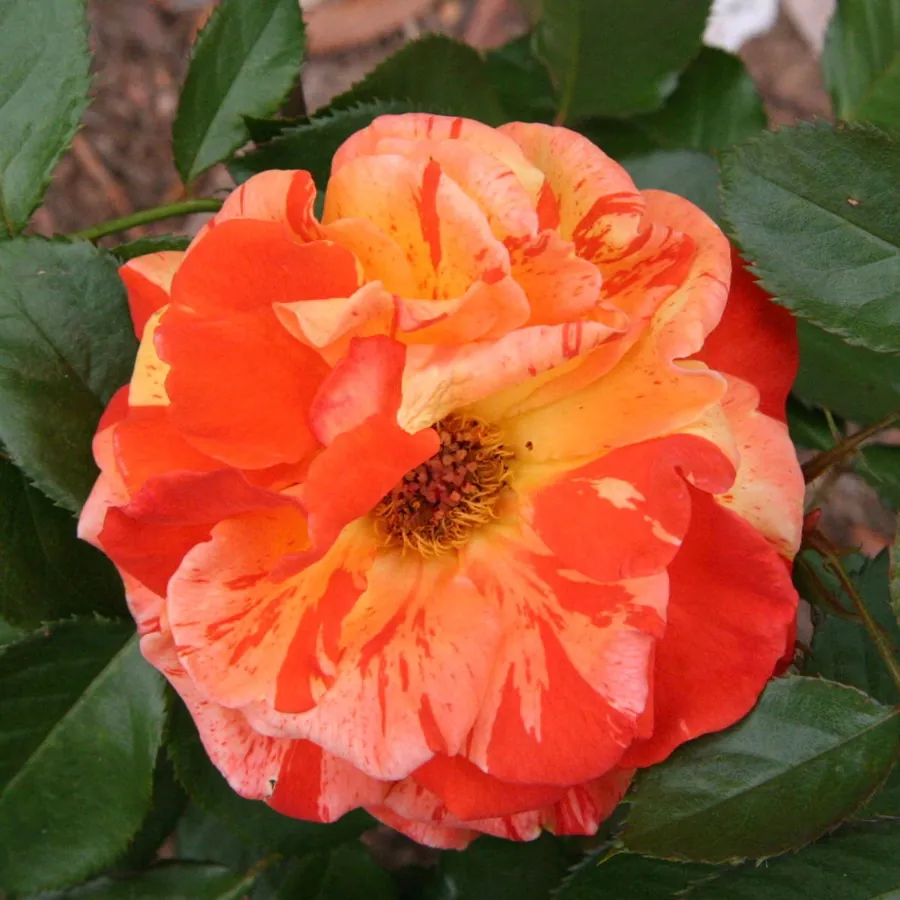
An orange-golden-yellow striped variety with stripes and streaks; the main name is 'Oranges 'n' Lemons'; Papagena is the European synonym, named after Papageno's bride in Mozart's 'The Magic Flute'; a pair with Papageno (McGredy 1982, red-and-cream striped), McGredy's operatic theme.

Breeder McGredy (NOT Kordes — a common myth due to the Mozartian theme)

Variety profile

Flowering

Repeat flowering

Repeat flowering from June to October. Months are approximate, for the climate of Ukraine.

Legacy

McGredy 1985

Companion to Papageno · operatic theme

Winter hardiness

−15 °C

USDA zone 7b. Southern Ukraine without winter protection; Central/Northern Ukraine with winter protection. South without winter protection · Centre/North with winter protection.

Compare reference temperatures

Plant size

90–180 × 100 cm
person 170 cm90–180 cm
Habit
Tall and arching; typical of McGredy Shrub/Floribunda
Dimensions
90–180 cm tall × up to 100 cm wide; sometimes up to 3 m as a small climber
Support
Not needed as a shrub; if grown larger, optionally as a small climber
Shoots
Strong and flexible
Branching
Well branched, with sturdy stems

Flower

8–9 cm
Bud shape
Round, orange-yellow with striped markings
Open flower
Striped: 8–9 cm, very full, with noticeable stripes and streaks
Centre
Tightly packed
Fullness
About 40 petals (full)
Flower carriage
In small clusters of 3–5, typical of Shrub/Floribunda

Fragrance

Light; fruity

Disease resistance

3 out of 5
Black spotsusceptible

Moderate, 3/5: susceptible to black spot; winter hardiness USDA 7b, Central/Northern Ukraine needs winter protection.

Sun

Full sun

The stripes are more pronounced in cool weather.

Thorns

Moderate
thornlessfewmoderatemanyvery many

Average number of thorns; typical of McGredy.

Foliage

Dark green, semi-glossy.

Other names

Oranges 'n' Lemons, Papagena, Fifty-Fifty
All characteristics in a table
Group
Shrub / Floribunda; striped; bright
Breeder
Sam McGredy IV; McGredy Roses International, New Zealand, 1985
Bud shape
Round, orange-yellow with striped markings
Open flower
Striped: 8–9 cm, very full, with noticeable stripes and streaks
Centre
Tightly packed
Colour
Orange-golden-yellow with stripes and streaks, the typical striped colouring; with age it fades to peach, a soft gradient. 'Oranges and lemons': the name conveys the colour play of yellow-orange fruit
Fullness
About 40 petals (full)
Flower carriage
In small clusters of 3–5, typical of Shrub/Floribunda
Flowering
Repeat flowering from June to October
Fragrance
Light fruity
Hips
Not documented; typically cut
Habit
Tall and arching; typical of McGredy Shrub/Floribunda
Branching
Well branched, with sturdy stems
Shoots
Strong and flexible
Thorns
Average number of thorns; typical of McGredy.
Dimensions
90–180 cm tall × up to 100 cm wide; sometimes up to 3 m as a small climber
Support
Not needed as a shrub; if grown larger, optionally as a small climber
Foliage
Dark green, semi-glossy
Resistance
Moderate, 3/5: susceptible to black spot; winter hardiness USDA 7b, Central/Northern Ukraine needs winter protection
Variations of the variety
Official name 'Oranges 'n' Lemons™' (main); Papagena is the European synonym. Others: Fifty-Fifty®, MACoranlem, Oranges and Lemons. Code MACoranlem. Introduced 1985, in the USA through Weeks Roses 1995, in France through Meilland. Parentage: 'New Year' × unnamed seedling (McGredy 1982, code name 'Umbrella')

Colour scheme

Orange-golden-yellow with stripes and streaks, the typical striped colouring; with age it fades to peach, a soft gradient. 'Oranges and lemons': the name conveys the colour play of yellow-orange fruit

Rose neighbours

Perennials to plant nearby

Rose neighbours

Striped and bright sunny ones — create a 'carnival corner':

Perennial companions

A sunny palette with purple accents:

coreopsislavenderstachyssedum

Availability worldwide

Widely grown in the English-speaking world:

  • 🇬🇧 UK: high · as Oranges 'n' Lemons
  • 🇦🇺🇳🇿: very high · McGredy's home
  • 🇺🇸 USA: high · via Weeks Roses
  • 🇺🇦 Ukraine: rare · mostly as Oranges and Lemons

More about the variety

Hips
Not documented; typically cut
Variations of the variety
Official name 'Oranges 'n' Lemons™' (main); Papagena is the European synonym. Others: Fifty-Fifty®, MACoranlem, Oranges and Lemons. Code MACoranlem. Introduced 1985, in the USA through Weeks Roses 1995, in France through Meilland. Parentage: 'New Year' × unnamed seedling (McGredy 1982, code name 'Umbrella')

How to grow

Where to plant. As a striking solo accent thanks to its unique striped colouring; in 'carnival' beds with other striped and bright varieties; in 'operatic' corners alongside Papageno, a pair of themed McGredy roses.

Climate. USDA 7b; southern Ukraine can grow it in open ground, while Central, Eastern and Northern Ukraine need winter protection. The stripes are more pronounced in cool weather.

Care. Full sun; a well-ventilated site; prevention against black spot; feed 3 times per season; prune one third in spring.

About the name

Name. 'Papagena', after Papagena, the bride of the bird-catcher Papageno in Wolfgang Amadeus Mozart's opera 'Die Zauberflöte' (The Magic Flute, 1791). Papagena and Papageno are a comic pair of bird-catchers in the opera, and their famous duet 'Pa-Pa-Pa' is one of the best-known comic duets in classical opera. Sam McGredy IV created a pair of themed roses: 'Papageno' (MACgoofy, 1982, red-and-cream striped) and 'Papagena' (MACoranlem, 1985, orange-yellow striped). The main trade name is 'Oranges 'n' Lemons', for its striped yellow-orange colouring, after the old English children's rhyme about church bells ('Oranges and lemons, say the bells of St. Clement's').

Breeding. Bred by Sam McGredy IV (1932–2019) at McGredy Roses International (Auckland, New Zealand), the same breeder as Olympiad (AARS 1984), fourth generation of the famous McGredy dynasty from Northern Ireland. Code MACoranlem. Introduced 1985, in the USA through Weeks Roses in 1995, in France through Meilland. Parentage: 'New Year' × unnamed seedling (McGredy 1982, code name 'Umbrella'). A common myth credits Kordes (through the Mozart theme, Mozart's Sarastro); this is wrong, the true breeder is McGredy.

Significance. The pair with Papageno (McGredy 1982), both striped and both named after characters of 'The Magic Flute'; a unique example of an operatic series from a single opera. 'Sub-tropical' striping is rare: striped varieties are mostly red-and-white (Fourth of July) or purple-and-white (Purple Splash); Papagena, with its orange-yellow striping, has a unique palette. HelpMeFind rating 'EXCELLENT-'. No major official awards (AARS, ADR and RNRS Gold not given). Synonyms are often confused: Oranges 'n' Lemons (main name), Papagena (Europe), Fifty-Fifty (another market), MACoranlem (code). They are all one rose.

Frequently asked questions about Papagena

Does Papagena need winter protection?

The cultivar’s reference temperature is −15 °C (USDA zone 7b). Overwintering depends on the conditions. Southern Ukraine without winter protection; Central/Northern Ukraine with winter protection.

How many times a season does Papagena flower?

Repeat flowering from June to October.

How big does Papagena grow?

90–180 cm tall, about 100 cm wide.

Which diseases affect Papagena?

Overall resistance: 3 out of 5. Moderate; susceptible to black spot.

How much sun does Papagena need?

Sun; full sun; the stripes are more pronounced in cool weather.

What does Papagena smell like?

Light fruity.

Gardeners' photos and reviews

My climate

Choose a reference temperature to compare with the cultivar’s data. This is not an overwintering forecast or advice on winter protection; consider wind, moisture and the duration of frost.

Regional data are generalised. USDA describes average annual extreme minima, not a forecast; the values in the list are rounded. Check the conditions at your site. More information: Roses in Ukraine's climate.