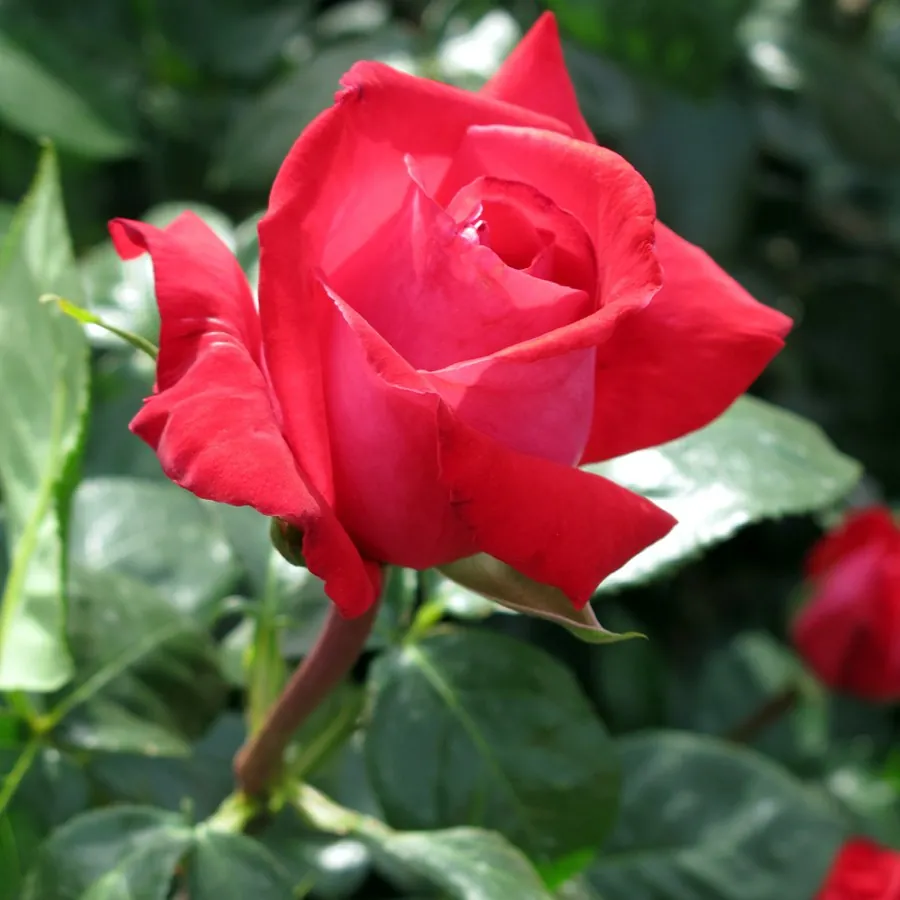
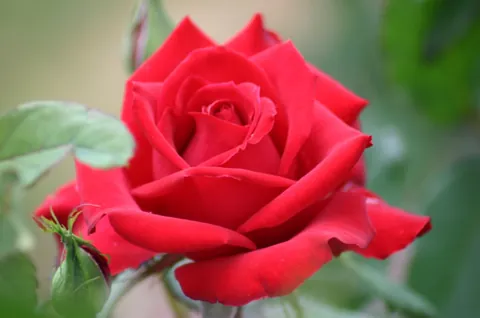
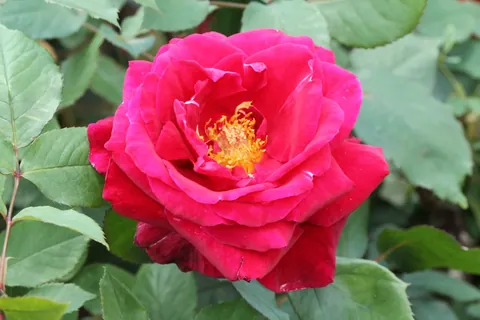
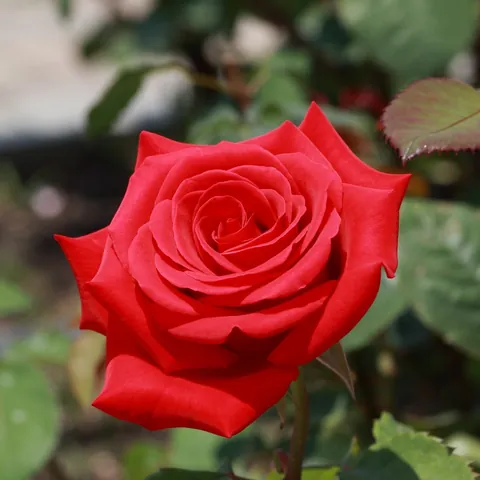




Red Devil, close-up of the flower
Photo: T.Kiya, CC BY-SA 2.0
Back to catalogue
Hybrid Tea; exhibition rosePatrick Dickson; Alex Dickson & SonsBicolour

Red Devil

Bright scarlet red with a lighter silvery reverse to the petals — a striking two-tone contrast; a very double (72–75 petals) exhibition flower about 14 cm across; strong sweet fragrance; awards from Tokyo, Belfast and Portland; the Dickson dynasty (from 1836).

Parentage: Silver Lining × Prima Ballerina

Variety profile

Flowering

Repeat, in flushes

Repeat-flowering, in flushes through summer and autumn. Months are approximate, for the climate of Ukraine.

Awards

RNRS · Tokyo · Belfast · Portland

Certificate of Merit 1965 · Monza fragrance 1966 · Tokyo Gold 1967 · Belfast Gold + Best HT 1969 · Portland Gold 1970

Plant size

90–150 × 50–100 cm
person 170 cm90–150 cm
Habit
Upright bush
Dimensions
90–150 cm tall × 50–100 cm wide
Support
Not needed — the stems are sturdy and hold the large flower up on their own

Flower

≈ 14 cm

72–75 petals.

Bud shape
Egg-shaped, solitary on a sturdy stem
Open flower
Tall, high-centred exhibition form, ~14 cm across — large and striking
Fullness
72–75 petals — very double
Flower carriage
Solitary flowers on sturdy stems — exhibition type

Fragrance

Strong; sweet with a delicate spicy note; fragrance award at Monza 1966

Strong, sweet, with a delicate spicy note — awarded a fragrance prize at Monza (1966).

Disease resistance

5 out of 5

Very resistant to disease (4–5/5).

Sun

No data

There is no information on fading of the bright red with the silvery reverse.

Thorns

Moderate
thornlessfewmoderatemanyvery many

There is no specific data on thorns — the moderate amount typical of Hybrid Teas is noted.

Other names

Coeur d'Amour, J.P. Red Devil
All characteristics in a table
Group
Hybrid Tea; exhibition rose
Breeder
Patrick Dickson; Alex Dickson & Sons, Northern Ireland
Bud shape
Egg-shaped, solitary on a sturdy stem
Open flower
Tall, high-centred exhibition form, ~14 cm across — large and striking
Colour
Bright scarlet red with a lighter silvery reverse to the petals — as the flower opens, it shows a two-tone contrast between the front and back of the petals. No data on fading
Fullness
72–75 petals — very double
Flower carriage
Solitary flowers on sturdy stems — exhibition type
Flowering
Repeat-flowering, in flushes through summer and autumn
Fragrance
Strong, sweet, with a delicate spicy note — awarded a fragrance prize at Monza (1966)
Hips
No data
Habit
Upright bush
Dimensions
90–150 cm tall × 50–100 cm wide
Support
Not needed — the stems are sturdy and hold the large flower up on their own
Thorns
There is no specific data on thorns — the moderate amount typical of Hybrid Teas is noted.
Stems
Sturdy and straight — each stem carries a solitary flower
Resistance
Very resistant to disease (4–5/5)
Variations of the variety
Registration code DICam; synonyms Coeur d'Amour, J.P. Red Devil (NOT 'Coeur en Fête')

Colour scheme

Bright scarlet red with a lighter silvery reverse to the petals — as the flower opens, it shows a two-tone contrast between the front and back of the petals. No data on fading

Rose neighbours

Perennials to plant nearby

Neighbouring roses

Bright red exhibition Hybrid Teas — the family of 'blazing' red:

Perennial companions

Silver foliage and cool blue tones highlight the silvery reverse and scarlet:

lamb's ear (Stachys byzantina)salviacatmint (Nepeta)gypsophila

Awards

One of the most decorated red exhibition varieties of its time:

🏅 RNRS Certificate of Merit 1965🌸 Monza (fragrance) 1966🥇 Tokyo Gold 1967🥇 Belfast Gold + Best HT 1969🥇 Portland Gold 1970

More about the variety

Hips
No data
Stems
Sturdy and straight — each stem carries a solitary flower
Variations of the variety
Registration code DICam; synonyms Coeur d'Amour, J.P. Red Devil (NOT 'Coeur en Fête')

How to grow

Where to plant. An exhibition Hybrid Tea for a sunny spot and fertile soil. The upright bush (90–150 × 50–100 cm) carries large double flowers on sturdy stems without support. A striking solo plant in a bed, and a cut flower for bouquets. Companions: the silvery foliage of lamb's ear (Stachys byzantina) and the cool blue tones of salvia and catmint (Nepeta) bring out the silvery reverse of the petals and the rich scarlet; gypsophila adds lightness next to the heavy double bloom.

Climate. USDA 4b–9b, RHS H6 (~−20…−15 °C) — it overwinters in Ukraine under standard Hybrid Tea winter protection. Very resistant to disease (4–5/5). There is no data on how it copes with rain — large double flowers usually ball in wet weather, but this is not documented for Red Devil, so we do not claim it.

About the name

Name. 'Red Devil' — for its intense scarlet and large, 'blazing' flowers that stand out in the garden.

Breeding. Bred by Patrick Dickson at Alex Dickson & Sons (Northern Ireland) — before 1965; introduced around 1967–1970. Parents: Silver Lining × Prima Ballerina. Registration code DICam; synonyms Coeur d'Amour and J.P. Red Devil (not to be confused with 'Coeur en Fête').

Significance. A classic exhibition Hybrid Tea — very double (72–75 petals), large (~14 cm), strongly fragrant. It won a series of awards: RNRS Certificate of Merit 1965, a fragrance prize at Monza 1966, gold at Tokyo 1967, gold and Best HT at Belfast 1969, gold at Portland 1970. It belongs to the Dickson dynasty — a family of rose breeders working since 1836.

Frequently asked questions about Red Devil

How many times a season does Red Devil flower?

Repeat-flowering, in flushes through summer and autumn.

How big does Red Devil grow?

90–150 cm tall, 50–100 cm wide.

Which diseases affect Red Devil?

Overall resistance: 5 out of 5. 4–5 / 5; very resistant; rain: no data (large double flowers usually ball in wet weather, but this is not documented for Red Devil).

How much sun does Red Devil need?

No data; there is no information on fading of the bright red with the silvery reverse.

What does Red Devil smell like?

Strong, sweet, with a delicate spicy note — awarded a fragrance prize at Monza (1966).

Gardeners' photos and reviews

My climate

Choose a reference temperature to compare with the cultivar’s data. This is not an overwintering forecast or advice on winter protection; consider wind, moisture and the duration of frost.

Regional data are generalised. USDA describes average annual extreme minima, not a forecast; the values in the list are rounded. Check the conditions at your site. More information: Roses in Ukraine's climate.