


Back to catalogue
English Shrub RoseDavid Austin, 2008Pink

Sir John Betjeman

Ausvivid; named after the British poet laureate; one of the longest-flowering and healthiest Austin varieties.

English Rose Collection · exceptionally healthy

Variety profile

Flowering

Repeat, in flushes

Repeat flowering in flushes from early summer to late autumn: one of the longest flowering periods. Months are approximate, for the climate of Ukraine.

Feature

Very healthy

One of the longest-flowering Austin varieties — it blooms when others have finished

Winter hardiness

−23 °C

USDA zone 5–11. All of Ukraine; in the north, with light winter protection. All of Ukraine · in the north with light winter cover.

Compare reference temperatures

Plant size

100–125 × 90–125 cm
person 170 cm100–125 cm
Habit
Very bushy, neat, rounded bush
Dimensions
100–125 cm tall × 90–125 cm wide
Support
No support needed: a self-supporting, rounded bush
Shoots
Sturdy, arching
Branching
Good; the shoots are slightly arching and the shape is even

Flower

≈ 7 cm

130 petals.

Bud shape
Small, rich pink
Open flower
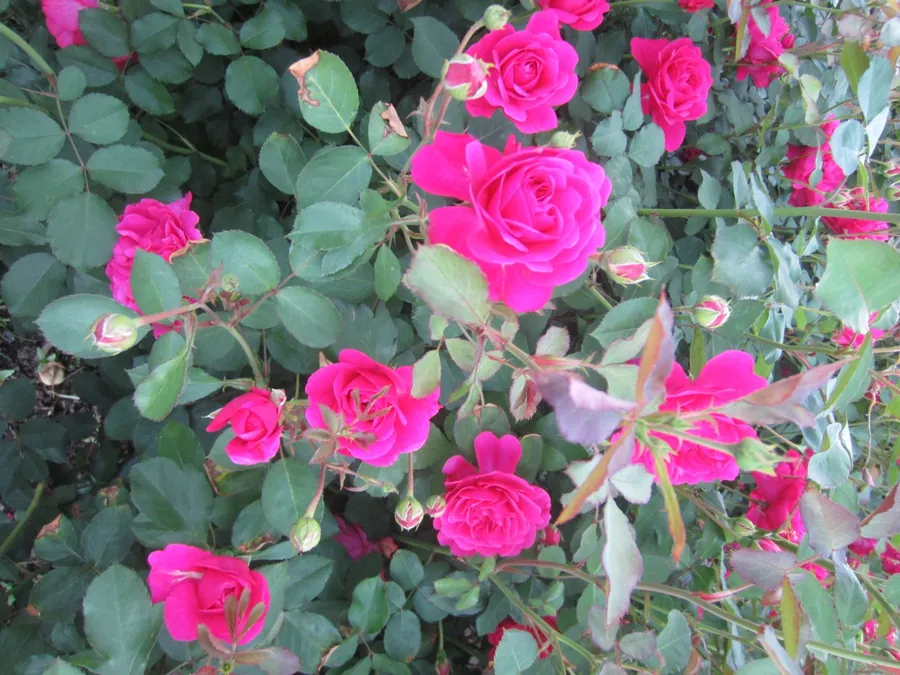
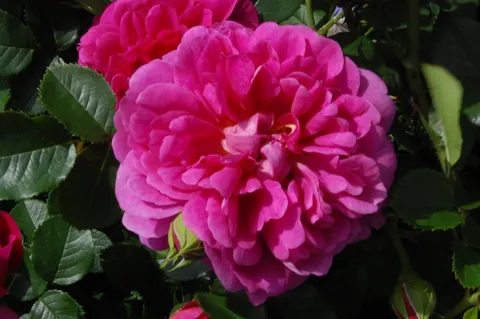
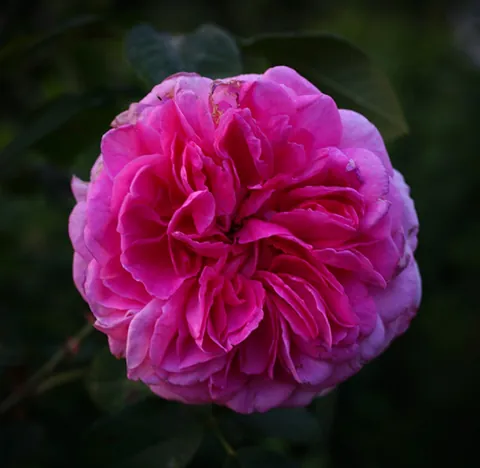
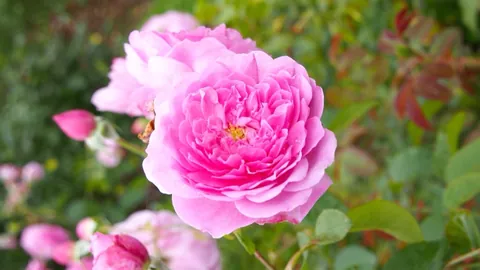
Full, wide-open rosette; becoming domed with age; diameter around 7 cm
Centre
Dense, many-petalled rosette
Fullness
Very double, around 130 petals
Flower carriage
In clusters, very abundantly

Fragrance

Light; fresh, with an apple tint

Light: fresh, with a 'green' / apple tint.

Disease resistance

4 out of 5

Exceptionally high: David Austin describes the variety as 'exceptionally healthy'.

Sun

5–6 hours

Full sun; at least 5–6 hours of direct light.

Thorns

Moderate
thornlessfewmoderatemanyvery many

About 6 downward-curved thorns per 10 cm of shoot.

Foliage

Dark green, medium-sized, semi-glossy, leathery, healthy.

All characteristics in a table
Group
English Shrub Rose
Breeder
David Austin, 2008
Bud shape
Small, rich pink
Open flower
Full, wide-open rosette; becoming domed with age; diameter around 7 cm
Centre
Dense, many-petalled rosette
Colour
Bright, rich pink (crimson-pink); unusual for English roses: with age it does not fade but darkens to a raspberry-purple
Fullness
Very double, around 130 petals
Flower carriage
In clusters, very abundantly
Flowering
Repeat flowering in flushes from early summer to late autumn: one of the longest flowering periods
Fragrance
Light: fresh, with a 'green' / apple tint
Hips
Usually none form; flowers are cut off to encourage repeat flowering
Habit
Very bushy, neat, rounded bush
Branching
Good; the shoots are slightly arching and the shape is even
Shoots
Sturdy, arching
Thorns
About 6 downward-curved thorns per 10 cm of shoot.
Dimensions
100–125 cm tall × 90–125 cm wide
Support
No support needed: a self-supporting, rounded bush
Foliage
Dark green, medium-sized, semi-glossy, leathery, healthy
Resistance
Exceptionally high: David Austin describes the variety as 'exceptionally healthy'
Variations of the variety
The colour deepens with age to a deep raspberry-purple; one of the latest varieties, extending the flowering season

Colour scheme

Bright, rich pink (crimson-pink); unusual for English roses: with age it does not fade but darkens to a raspberry-purple

Rose neighbours

Perennials to plant nearby

Neighbouring roses

Other rich pink and raspberry varieties keep a deep, striking tone around Sir John Betjeman.

Perennial companions

Blue-violet flowers and silver foliage balance the rich pink:

catmint (Nepeta)sage 'Caradonna'lavender 'Munstead'geranium 'Rozanne'

Contrasting accents

Silver, lime and a sheer “haze” freshen the deep pink:

Stachys byzantinaAlchemilla mollisVerbena bonariensis

More about the variety

Hips
Usually none form; flowers are cut off to encourage repeat flowering
Variations of the variety
The colour deepens with age to a deep raspberry-purple; one of the latest varieties, extending the flowering season

How to grow

Where to plant. Ideal for a mixed border, as a specimen bush, or as a low flowering hedge. Because it flowers very late and for a long time, it beautifully extends the season when other roses have already finished.

Climate. All of Ukraine; in the north, with light winter protection (USDA zone 5).

Care. Cut back by a third in spring, remove spent flowers, feed twice. Thanks to its exceptional health it needs minimal treatments.

About the name

Name. After Sir John Betjeman (John Betjeman, 1906–1984), the British poet laureate, writer and television presenter. The name was requested from David Austin by his daughter Candida Lycett Green and The Betjeman Society.

Breeding. Bred by David C. H. Austin (David Austin Roses) around 2000, presented in 2008. Patent code: Ausvivid. Parentage: unnamed seedling × unnamed seedling.

Significance. Betjeman 'opened people's eyes to the beauty of the architecture and landscape around them', and is commemorated in the Poets' Corner of Westminster Abbey. The rose was bred as an exceptionally healthy, long-flowering variety, a symbolic tribute to the poet.

Frequently asked questions about Sir John Betjeman

Does Sir John Betjeman need winter protection?

The cultivar’s reference temperature is −23 °C (USDA zone 5–11). Overwintering depends on the conditions. All of Ukraine; in the north, with light winter protection.

How many times a season does Sir John Betjeman flower?

Repeat flowering in flushes from early summer to late autumn: one of the longest flowering periods.

How big does Sir John Betjeman grow?

100–125 cm tall, 90–125 cm wide.

Which diseases affect Sir John Betjeman?

Overall resistance: 4 out of 5. Exceptionally healthy (David Austin): powdery mildew, black spot, rust.

How much sun does Sir John Betjeman need?

Full sun; at least 5–6 hours of direct light.

What does Sir John Betjeman smell like?

Light: fresh, with a 'green' / apple tint.

Gardeners' photos and reviews

My climate

Choose a reference temperature to compare with the cultivar’s data. This is not an overwintering forecast or advice on winter protection; consider wind, moisture and the duration of frost.

Regional data are generalised. USDA describes average annual extreme minima, not a forecast; the values in the list are rounded. Check the conditions at your site. More information: Roses in Ukraine's climate.