

Back to catalogue
The FIRST Pernetiana — the ancestor of the whole subclassJoseph Pernet-Ducher; Lyon, 1900Yellow

Soleil d'Or

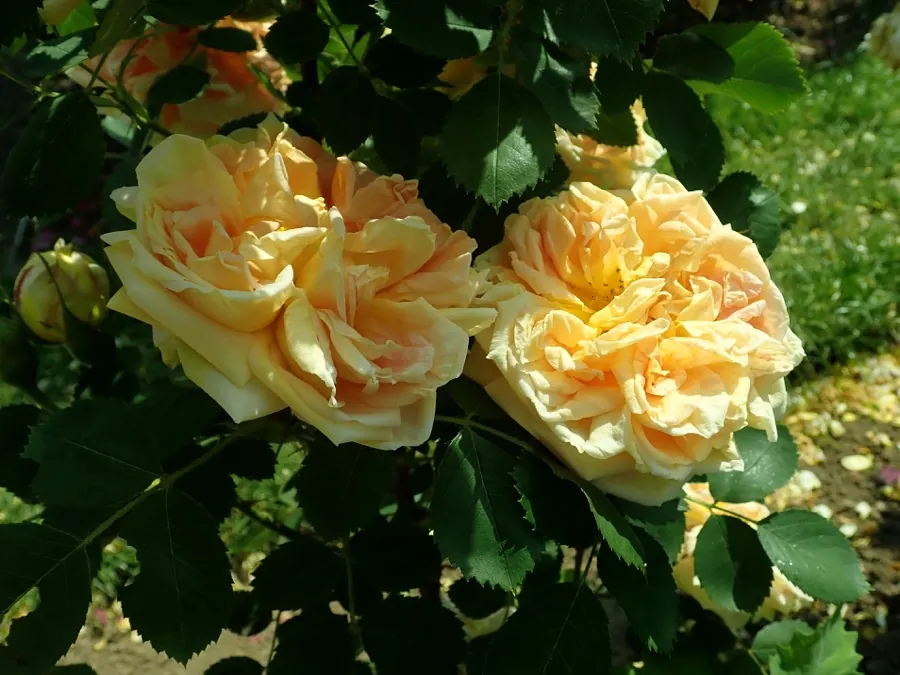
THE MOTHER OF ALL MODERN YELLOW ROSES; THE FIRST Pernetiana — the ancestor of the whole subclass; without Soleil d'Or there would be no Peace, Gloria Dei, Mister Lincoln, or apricot and orange HTs; 🇫🇷 bred by Pernet-Ducher (Lyon), the 'Lyon wizard', after more than 20 years of crossing; introduced 1 November 1900.

MOTHER OF ALL YELLOW ROSES · founder of the whole Pernetiana class

Variety profile

Flowering

Repeat flowering

Repeat-flowering from June to October. Months are approximate, for the climate of Ukraine.

Legacy

First Pernetiana

Mother of yellow roses · founder of the class

Winter hardiness

−20 °C

USDA zone 6b. In Ukraine, with winter protection.

Compare reference temperatures

Plant size

60–150 × 90 cm
person 170 cm60–150 cm
Habit
Compact and upright — typical of Pernetiana
Dimensions
60–150 cm tall × ~90 cm wide — compact
Support
Not needed — self-supporting
Shoots
Medium stiffness
Branching
Moderately branched

Flower

≈ 10 cm

26-40 petals.

Bud shape
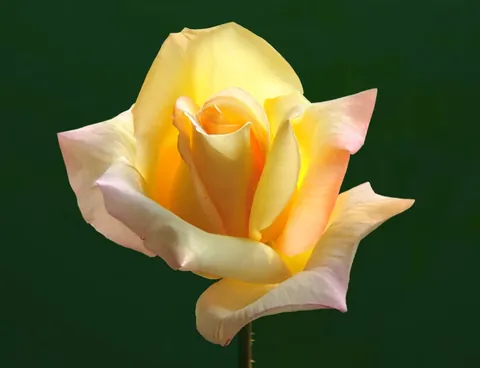
Round, with a golden-yellow tint
Open flower
Flat, globular, double: ~10 cm, 26–40 petals
Centre
Tightly packed
Fullness
26–40 petals (full)
Flower carriage
Mostly singly or in small clusters

Fragrance

Strong; spicy; 'foxy' Foetida

Strong, spicy, with a characteristic 'foxy' note — inherited from R. foetida persiana (Persian Yellow). The scent is distinctive and not to everyone's taste.

Disease resistance

2 out of 5
Black spotsusceptible

Weak, 2/5, to black spot — a 'hereditary disease' inherited from R. foetida persiana, which passed to all modern yellow HTs and is still a problem in modern breeding. An exceptional historical sacrifice for the breakthrough in yellow colour.

Sun

Full sun

Thorns

Many
thornlessfewmoderatemanyvery many

Many prickles — typical of the R. foetida family.

Foliage

Light green, semi-glossy.

Other names

Goldsonne
All characteristics in a table
Group
The FIRST Pernetiana — the ancestor of the whole subclass
Breeder
Joseph Pernet-Ducher; Lyon, France, 1900
Bud shape
Round, with a golden-yellow tint
Open flower
Flat, globular, double: ~10 cm, 26–40 petals
Centre
Tightly packed
Colour
Golden yellow with pink or reddish-orange tints, darker at the centre — something between yellow and orange that did not exist in garden roses before her. For the first time in history, a rose of a bright yellow colour
Fullness
26–40 petals (full)
Flower carriage
Mostly singly or in small clusters
Flowering
Repeat-flowering from June to October
Fragrance
Strong, spicy, with a characteristic 'foxy' note — inherited from R. foetida persiana (Persian Yellow). The scent is distinctive and not to everyone's taste
Hips
Not documented — rare for Pernetiana flowering
Habit
Compact and upright — typical of Pernetiana
Branching
Moderately branched
Shoots
Medium stiffness
Thorns
Many prickles — typical of the R. foetida family.
Dimensions
60–150 cm tall × ~90 cm wide — compact
Support
Not needed — self-supporting
Foliage
Light green, semi-glossy
Resistance
Weak, 2/5, to black spot — a 'hereditary disease' inherited from R. foetida persiana, which passed to all modern yellow HTs and is still a problem in modern breeding. An exceptional historical sacrifice for the breakthrough in yellow colour
Variations of the variety
No official code (1900 — the coding system was not yet in use). Synonym: Goldsonne. Breeder: Joseph Pernet-Ducher ('the Lyon wizard'). Bred around 1885, introduced 1 November 1900 (some sources cite 1898 as the year of the first showing). Parentage: seedling 'Antoine Ducher' (Hybrid Perpetual) × R. foetida persiana (Persian Yellow). More than 20 years of crossing — Pernet-Ducher obtained a single seedling that flowered yellow; this is the same 'breakthrough' that changed rose growing

Colour scheme

Golden yellow with pink or reddish-orange tints, darker at the centre — something between yellow and orange that did not exist in garden roses before her. For the first time in history, a rose of a bright yellow colour

Rose neighbours

Perennials to plant nearby

Neighbouring roses

Descendants and yellow genealogy — the 'genealogical' group of the XX-XXI centuries:

Perennial companions

A sunny palette with purple accents:

coreopsislavenderStachyssedum

Availability worldwide

A collector's historic variety — essential in every 'genealogical' garden:

🇫🇷 France: high · home of Pernet-Ducher🇪🇺 Europe: moderate · 'old roses' segment🇺🇸 USA: moderate · Antique Rose Emporium🇺🇦 Ukraine: rare · collector nurseries

More about the variety

Hips
Not documented — rare for Pernetiana flowering
Variations of the variety
No official code (1900 — the coding system was not yet in use). Synonym: Goldsonne. Breeder: Joseph Pernet-Ducher ('the Lyon wizard'). Bred around 1885, introduced 1 November 1900 (some sources cite 1898 as the year of the first showing). Parentage: seedling 'Antoine Ducher' (Hybrid Perpetual) × R. foetida persiana (Persian Yellow). More than 20 years of crossing — Pernet-Ducher obtained a single seedling that flowered yellow; this is the same 'breakthrough' that changed rose growing

How to grow

Where to plant. In historic cottage-style plantings; as a 'genealogical' solo accent — the mother of all yellow roses; in Old Garden Roses collections; in 'botanical' corners with a historical theme.

Climate. In central and southern Ukraine with winter protection (USDA 6b); tolerates summer heat well.

Care. Full sun; regular prevention of black spot is essential — an 'inherited disease'; feed 3× per season; prune by ⅓ in spring.

About the name

Name. 'Soleil d'Or' = 'Golden Sun'. For its unprecedented, vivid yellow colour at the time. A poetic French name that conveys the sensational character of the variety. Synonym 'Goldsonne' (German).

Breeding. A revolutionary story. Bred by Joseph Pernet-Ducher (1859–1928, 'the Lyon wizard') at Pernet-Ducher (Lyon, France). For more than 20 years Pernet-Ducher crossed Hybrid Perpetuals with R. foetida (Persian Yellow) and obtained a single seedling, which flowered yellow. Flowering took place around 1885. Parentage: seedling 'Antoine Ducher' (HP) × R. foetida persiana. Official introduction on 1 November 1900 (some sources cite 1898 as the year of the first showing).

Significance. The FIRST Pernetiana, the ancestor of the whole subclass of roses. THE MOTHER OF ALL YELLOW ROSES: without Soleil d'Or there would be no modern yellow, orange or apricot roses — neither Peace (Gloria Dei), nor Mister Lincoln (the red one carries its genes), nor Just Joey, nor thousands of others. Pernetiana as a separate class officially existed until 1930, after which it was absorbed into the Hybrid Tea. Modern yellow rose breeding (Kordes, Meilland, Austin) descends directly, genetically, from this bush. 'Hereditary disease': along with the yellow colour, it passed on to all its descendants a weak resistance to black spot — still a problem in modern breeding. An exceptional historical sacrifice for the breakthrough in colour; without it, twentieth-century breeding would have been impossible. NOT in the WFRS Old Rose Hall of Fame (a common myth): the Old Rose HoF list contains only 5 varieties — Cécile Brünner, Gloire de Dijon, Gruss an Teplitz, Old Blush and Souvenir de la Malmaison. Soleil d'Or is genetically extremely important, but formally it is not inducted into the HoF.

Frequently asked questions about Soleil d'Or

Does Soleil d'Or need winter protection?

The cultivar’s reference temperature is −20 °C (USDA zone 6b). Overwintering depends on the conditions. In Ukraine, with winter protection.

How many times a season does Soleil d'Or flower?

Repeat-flowering from June to October.

How big does Soleil d'Or grow?

60–150 cm tall, about 90 cm wide.

Which diseases affect Soleil d'Or?

Overall resistance: 2 out of 5. Weak to black spot — a 'hereditary disease' passed on to all modern yellow HTs.

How much sun does Soleil d'Or need?

Sun; full sun.

What does Soleil d'Or smell like?

Strong, spicy, with a characteristic 'foxy' note — inherited from R. foetida persiana (Persian Yellow). The scent is distinctive and not to everyone's taste.

Gardeners' photos and reviews

My climate

Choose a reference temperature to compare with the cultivar’s data. This is not an overwintering forecast or advice on winter protection; consider wind, moisture and the duration of frost.

Regional data are generalised. USDA describes average annual extreme minima, not a forecast; the values in the list are rounded. Check the conditions at your site. More information: Roses in Ukraine's climate.