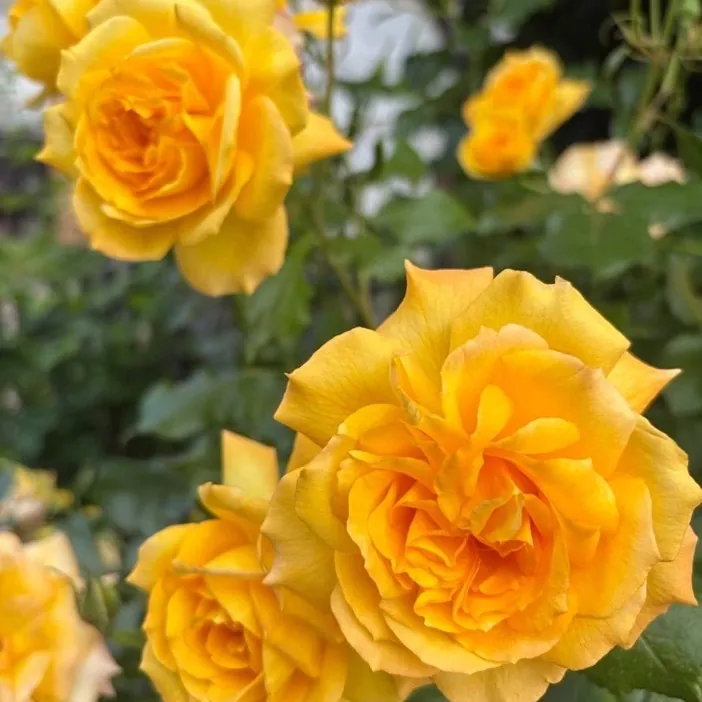
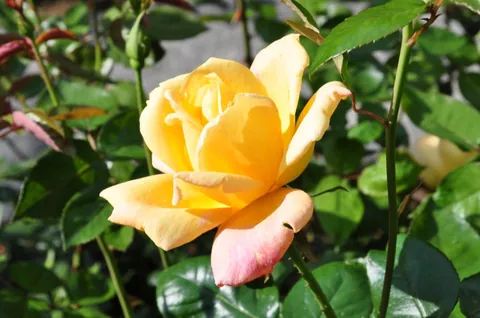
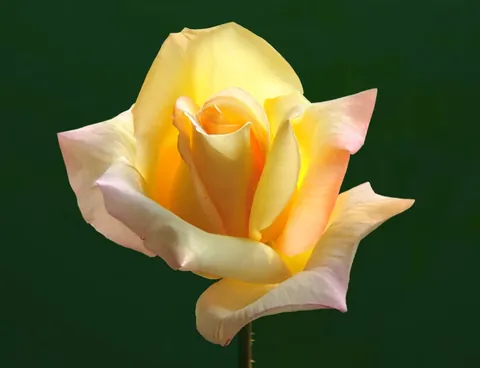
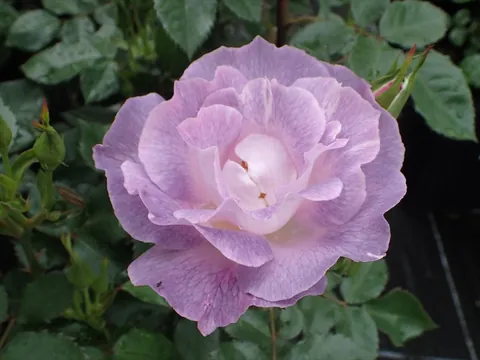


Sahara, close-up of the flower
Back to catalogue
Shrub; golden-copper desert shrub roseHans Jürgen Evers; Rosen TantauYellow

Sahara

Golden-yellow with copper-red tones on the outer petals — a “desert” palette; named after the Sahara desert; 5/5 resistance (very disease resistant per HMF) — typical Tantau-quality; a shrub of 90–150 cm, ideal for mixed borders.

Entered in the Monza Competition 1996

Variety profile

Flowering

Repeat flowering

Generous repeat-flowering from June to October. Months are approximate, for the climate of Ukraine.

Legacy

Monza 1996

Tantau Evers · 5/5 resistance

Winter hardiness

−23 °C

USDA zone 6b-9b. Ukraine, Central/South.

Compare reference temperatures

Plant size

90–150 × 150 cm
person 170 cm90–150 cm
Habit
Spreading shrub — wider than tall
Dimensions
90–150 cm tall × up to 150 cm wide — a medium shrub for mixed borders and landscape masses
Support
Not needed — self-supporting
Shoots
Flexible, with a moderate spread
Branching
Well branched

Flower

7-10 cm
Bud shape
Round, golden-copper
Open flower
Semi-double, cup-shaped: 7–10 cm, up to 15 petals
Centre
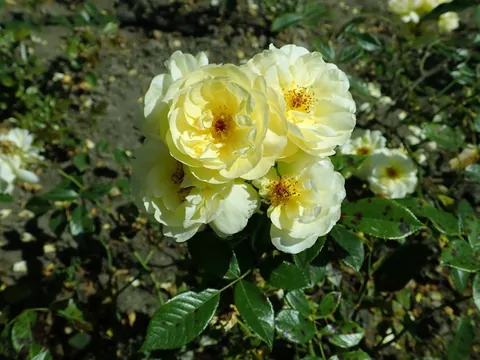
When open, stamens are visible against the yellow background
Fullness
Up to 15 petals (semi-double)
Flower carriage
In sprays

Fragrance

Absent or very light

Disease resistance

5 out of 5

Very high, 5/5 for disease resistance — per HMF “very disease resistant”. USDA 6b–9b — Ukraine Central/South without cover.

Sun

Full sun

Thorns

Few
thornlessfewmoderatemanyvery many

Few thorns — typical of modern Tantau-shrubs.

Foliage

Dark green, glossy, healthy.

All characteristics in a table
Group
Shrub; golden-copper desert shrub rose
Breeder
Hans Jürgen Evers; Rosen Tantau, Germany
Bud shape
Round, golden-copper
Open flower
Semi-double, cup-shaped: 7–10 cm, up to 15 petals
Centre
When open, stamens are visible against the yellow background
Colour
Golden-yellow with copper-red tones on the outer petals — a “desert” palette. In different lighting it shifts from pure gold to orange
Fullness
Up to 15 petals (semi-double)
Flower carriage
In sprays
Flowering
Generous repeat-flowering from June to October
Fragrance
Absent or very light
Hips
Not documented
Habit
Spreading shrub — wider than tall
Branching
Well branched
Shoots
Flexible, with a moderate spread
Thorns
Few thorns — typical of modern Tantau-shrubs.
Dimensions
90–150 cm tall × up to 150 cm wide — a medium shrub for mixed borders and landscape masses
Support
Not needed — self-supporting
Foliage
Dark green, glossy, healthy
Resistance
Very high, 5/5 for disease resistance — per HMF “very disease resistant”. USDA 6b–9b — Ukraine Central/South without cover
Variations of the variety
Code TANarasah. Bred 1988, introduced 1996 via Rosen Tantau. Breeder: Hans-Jürgen Evers — the same breeder who created Santana, Sonnenschirm and Schneewalzer. This is a shrub, not a climber — in some legacy catalogues it is wrongly classified as a climber

Colour scheme

Golden yellow with copper-red tones on the outer petals — a “desert” palette. In different lighting it shifts from pure gold to orange

Rose neighbours

Perennials to plant nearby

Neighbouring roses

Warm golden-orange tones — a 'desert' corner:

Perennial companions

Sunny palette + silver accents:

Coreopsislavenderlamb's ears (Stachys)sedum (stonecrop)

Availability worldwide

A classic Tantau shrub rose of the '90s:

  • 🇩🇪 Germany: high · home country
  • 🇪🇺 Europe: high
  • 🇺🇸 USA: moderate
  • 🇺🇦 Ukraine: moderate · through modern nurseries

More about the variety

Hips
Not documented
Variations of the variety
Code TANarasah. Bred 1988, introduced 1996 via Rosen Tantau. Breeder: Hans-Jürgen Evers — the same breeder who created Santana, Sonnenschirm and Schneewalzer. This is a shrub, not a climber — in some legacy catalogues it is wrongly classified as a climber

How to grow

Where to plant. In warm mixed borders with orange and golden neighbours; as an accent in a landscape mass; in “desert”, dry parts of the garden; beside stones and gravel for its warm palette.

Climate. Ukraine Central/South without cover (USDA 6b–9b); 5/5 resistance makes it easy to care for.

Care. Minimal — full sun; feed 1–2× per season; prune once every 2–3 years with secateurs; needs no chemical treatments thanks to its high resistance.

About the name

Name. “Sahara” — after the largest hot desert in the world (the Sahara in North Africa). The poetic name describes the warm golden-copper palette of the flower, like the sand dunes of the Sahara at dawn. Typical of Tantau-marketing in the 1990s: bright geographic names for recognisability.

Breeding. Bred by Hans-Jürgen Evers at Rosen Tantau (Uetersen, Germany). Code TANarasah. Bred 1988, commercial introduction 1996. Evers was one of the most influential Tantau breeders of the late twentieth century, the creator of Santana (1985), Schneewalzer (1987), Sonnenschirm (1988/1993) and other landmark varieties.

Significance. 5/5 disease resistance (“very disease resistant” per HMF) — the key quality that makes Sahara suitable for gardens without chemical treatments. Took part in the Monza Competition 1996, a prestigious Italian rose competition. A unique “desert” palette: golden-yellow with copper-red outer petals — a rare colour transition in the shrub class. Evers' legacy: together with Santana and Sonnenschirm Sahara, it represents the classic Tantau line of the 1980s–90s. It is a shrub, not a climber — some secondary catalogues wrongly classify it as one. There are no major international awards (ADR, AARS, RHS AGM): Sahara is valued above all for its resistance and colour rather than for competition results.

Frequently asked questions about Sahara

Does Sahara need winter protection?

The cultivar’s reference temperature is −23 °C (USDA zone 6b−9b). Overwintering depends on the conditions. Ukraine, Central/South.

How many times a season does Sahara flower?

Generous repeat-flowering from June to October.

How big does Sahara grow?

90–150 cm tall, about 150 cm wide.

Which diseases affect Sahara?

Overall resistance: 5 out of 5. Very disease resistant — Tantau standard.

How much sun does Sahara need?

Sun; full sun.

What does Sahara smell like?

Absent or very light.

Gardeners' photos and reviews

My climate

Choose a reference temperature to compare with the cultivar’s data. This is not an overwintering forecast or advice on winter protection; consider wind, moisture and the duration of frost.

Regional data are generalised. USDA describes average annual extreme minima, not a forecast; the values in the list are rounded. Check the conditions at your site. More information: Roses in Ukraine's climate.