


About the name
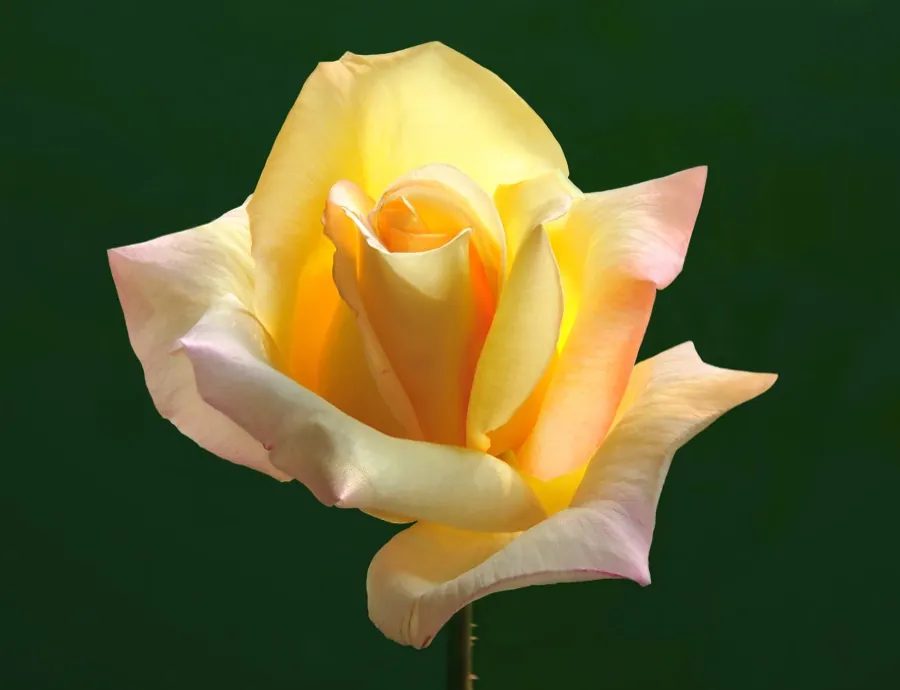
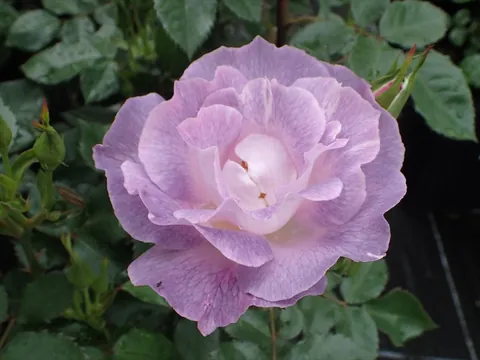
Name. "Peace" — "peace". The name was given by Conard-Pyle (Pennsylvania, USA) and publicly announced on 29 April 1945 — the day Berlin fell. Field Marshal Alan Brooke (British army) gave up his right to the name, proposing "Peace" as the more "eternal" one. In different countries the variety has 4 names: 🇫🇷 Mme A. Meilland (in honour of Francis Meilland's late mother, Claudia Dubreuil Meilland), 🇩🇪🇻🇦 Gloria Dei (Latin "Glory of God"), 🇮🇹 Gioia (Italian "Joy").
Breeding. Bred by Francis Meilland (1912–1958) at Meilland International (France). Hybridising 1935–1939. A dramatic story of rescue: anticipating the Nazi occupation of France, Meilland secretly sent cuttings to partners in Italy, Turkey, Germany and the USA in 1939. The last plane out of occupied France carried cuttings to Robert Pyle (Conard-Pyle Co., Pennsylvania). Because communication between countries was lost, the rose got its own name in each country. Introduced in France in 1942, in the USA in 1945. Parentage: ((George Dickson × Souvenir de Claudius Pernet) × (Joanna Hill × Charles P. Kilham)) × Margaret McGredy. US Patent No. PP 591 (15.06.1943) — one of the earliest rose patents in the USA.
Significance. WFRS Hall of Fame 1976 — the FIRST variety ever selected by the World Federation of Rose Societies, which started the tradition itself. At the founding UN conference in San Francisco (April 1945), every delegate was given a Peace rose with the message: "We hope the rose Peace will influence people's thinking about lasting world peace." Over 100 million bushes sold by 1992 — the most commercially successful rose in history. 8 major international awards: Portland Gold 1944, AARS 1946, ADR 1947, ARS Gold 1947, UK RNRS Gold 1947, Golden Rose of The Hague 1965, RHS AGM 1993, WFRS HoF 1976. Its father Francis Meilland died in 1958 at the age of 45 — Peace became his greatest legacy. Without Peace there would be no modern commercial rose breeding.