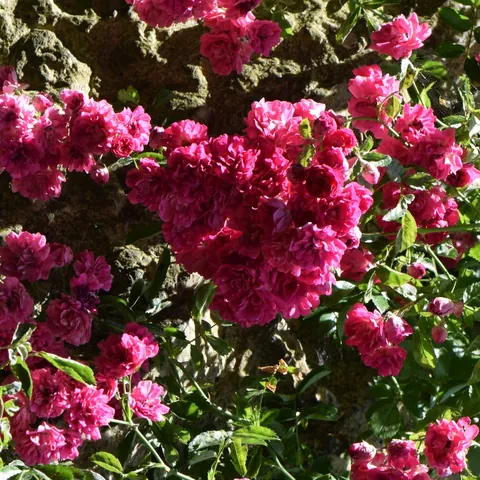
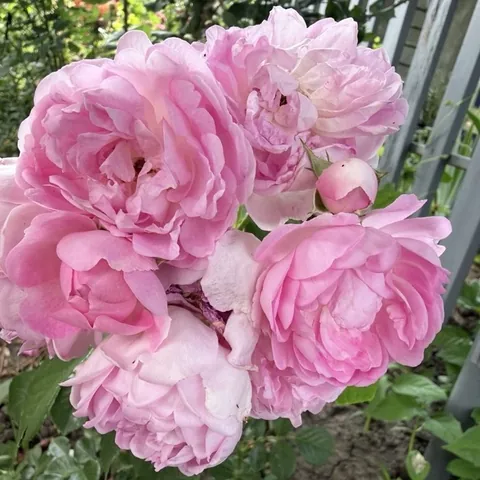
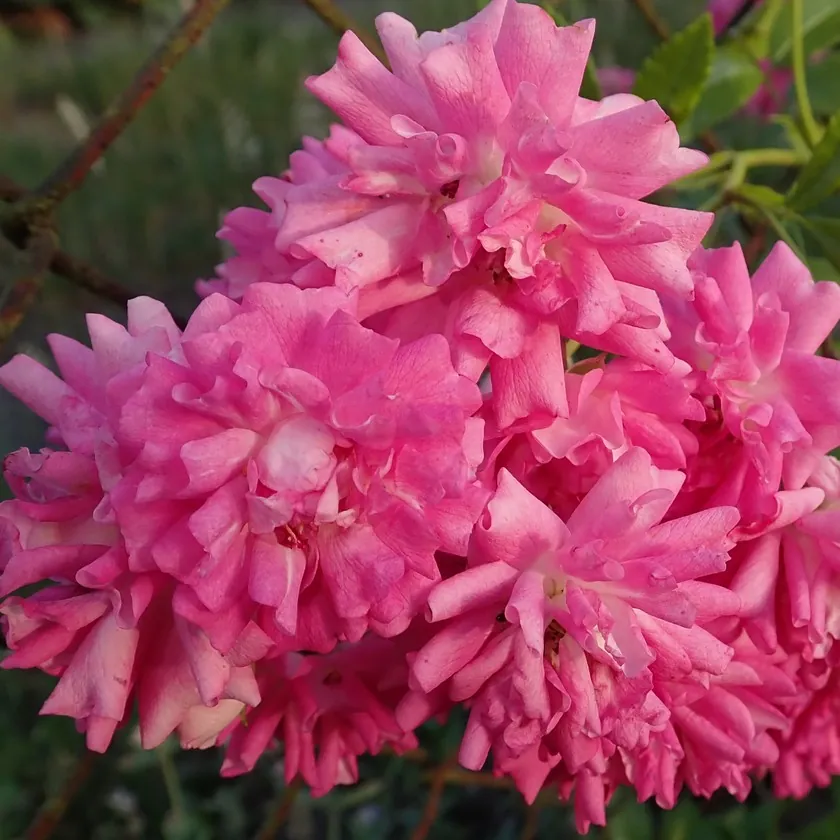
Super Dorothy, close-up of the flower
Back to catalogue
Rambler; climberHetzel, 1986Pink

Super Dorothy

A repeat-flowering pink rambler — an improved 'Dorothy Perkins'.

Repeat-flowering Dorothy Perkins

Variety profile

Flowering

Repeat, in flushes

Repeat flowering in flushes from early summer until the frosts. Months are approximate, for the climate of Ukraine.

Feature

Repeat-flowering

Blooms again until the frosts — unlike the old Dorothy Perkins

Winter hardiness

−29 °C

USDA zone 5. Down to ≈ −29 °C; very hardy, reliable in Ukraine. To ≈ −29 °C · very winter-hardy, reliable in Ukraine.

Compare reference temperatures

Plant size

250–450 cm
person 170 cm250–450 cm
Habit
Flexible slender, manageable shoots; lax, drooping — less aggressive than typical ramblers
Dimensions
2.5–4.5 m depending on the support and conditions
Support
Needed: arches, pergolas, fences, pillars, obelisks; without support — a weeping/groundcover form
Shoots
Long, flexible — easy to bend along a support
Branching
Dense

Flower

3,5–4 cm
Bud shape
Small, pink
Open flower
Small, double, pompon ('powder-puff'); diameter ~3.5–4 cm
Centre
Densely filled with small petals
Fullness
Double, 17–25 petals
Flower carriage
In large, fluffy clusters of 30–40 flowers
Flower durability
Exceptionally abundant, long-lasting flowering

Fragrance

Light

Light (some sources note a slight apple note).

Disease resistance

4 out of 5
Powdery mildewresistant

Good, resistant to powdery mildew.

Sun

Sun and partial shade

Flowers in light shade too; more shade-tolerant than many climbers.

Thorns

Few
thornlessfewmoderatemanyvery many

Few prickles (typical of wichurana ramblers).

Foliage

Dark green, glossy, healthy.

Other names

Breeder's code HELdoro.

All characteristics in a table
Group
Rambler; climber
Breeder
Hetzel, 1986
Bud shape
Small, pink
Open flower
Small, double, pompon ('powder-puff'); diameter ~3.5–4 cm
Centre
Densely filled with small petals
Colour
Medium pink; reverse and edges lighten to almost white
Fullness
Double, 17–25 petals
Flower carriage
In large, fluffy clusters of 30–40 flowers
Flowering
Repeat flowering in flushes from early summer until the frosts
Fragrance
Light (some sources note a slight apple note)
Flower durability
Exceptionally abundant, long-lasting flowering
Habit
Flexible slender, manageable shoots; lax, drooping — less aggressive than typical ramblers
Branching
Dense
Shoots
Long, flexible — easy to bend along a support
Thorns
Few prickles (typical of wichurana ramblers).
Dimensions
2.5–4.5 m depending on the support and conditions
Support
Needed: arches, pergolas, fences, pillars, obelisks; without support — a weeping/groundcover form
Foliage
Dark green, glossy, healthy
Resistance
Good, resistant to powdery mildew
Use
Arches, pergolas, fences, standard cascades
Colour scheme

Medium pink; the reverse and edges fade to almost white

Rose neighbours

Perennials to plant nearby

Neighbouring roses

Other climbers and ramblers — company for large vertical arrangements around Super Dorothy.

Perennial companions

Clematis and blue perennials — classic partners for climbing roses on the same support:

clematisdelphiniumcatmint (Nepeta)lavender

Contrast accents

For contrast beside the pink rambler — deep red or blue accents:

Flammentanzclematis 'Jackmanii'delphinium

More about the variety

Use
Arches, pergolas, fences, standard cascades
How to grow

Where to plant. Arches, pergolas, fences, pillars, obelisks; striking as a weeping standard. Its flexible shoots are easy to train.

Climate. Very hardy (USDA 5, down to ≈ −29 °C) — overwinters reliably throughout Ukraine.

Care. Undemanding and healthy; after flowering, old spent shoots are removed. Resistant to powdery mildew — unlike its parent 'Dorothy Perkins'.

About the name

Name. 'Super Dorothy' — 'an improved Dorothy Perkins'. Trade name in parts of Europe — Superb Dorothy.

Breeding. Bred by Karl Hetzel (Germany), code HELdoro, 1986 — a descendant of the old rambler 'Dorothy Perkins'.

Significance. Part of Hetzel's series of improved ramblers (together with Super Excelsa, Super Fairy) — all repeat-flowering and much more disease-resistant versions of the old once-flowering ramblers. Its main advantage is flowering all summer until the frosts.

Frequently asked questions about Super Dorothy

Does Super Dorothy need winter protection?

The cultivar’s reference temperature is −29 °C (USDA zone 5). Overwintering depends on the conditions. Down to ≈ −29 °C; very hardy, reliable in Ukraine.

How many times a season does Super Dorothy flower?

Repeat flowering in flushes from early summer until the frosts.

How big does Super Dorothy grow?

250–450 cm tall.

Which diseases affect Super Dorothy?

Overall resistance: 4 out of 5. Resistant to powdery mildew — much better than 'Dorothy Perkins'.

How much sun does Super Dorothy need?

Sun and partial shade; flowers in light shade too; more shade-tolerant than many climbers.

What does Super Dorothy smell like?

Light (some sources note a slight apple note).

Gardeners' photos and reviews

My climate

Choose a reference temperature to compare with the cultivar’s data. This is not an overwintering forecast or advice on winter protection; consider wind, moisture and the duration of frost.

Regional data are generalised. USDA describes average annual extreme minima, not a forecast; the values in the list are rounded. Check the conditions at your site. More information: Roses in Ukraine's climate.