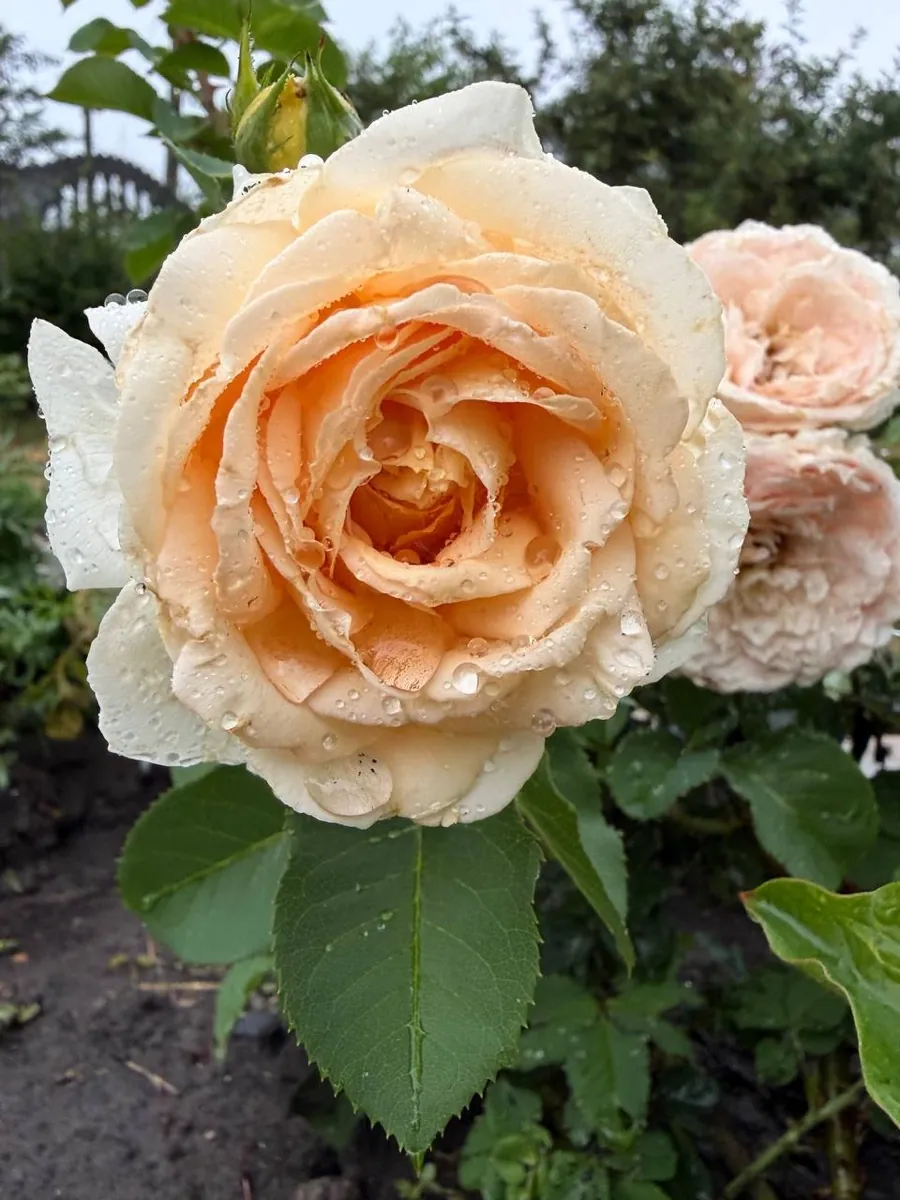
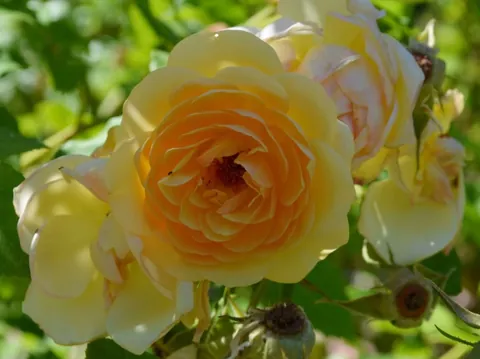
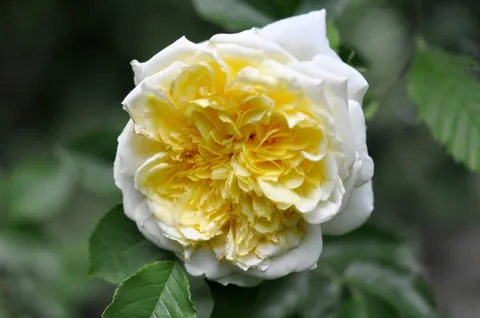
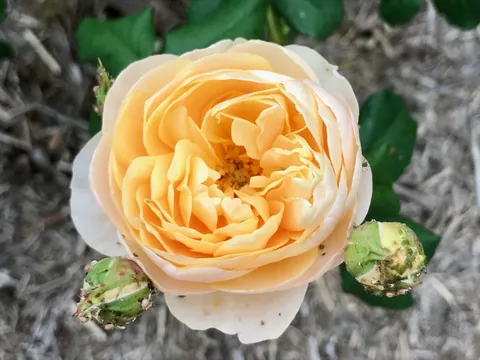




Teasing Georgia, close-up of the flower
Photo: Nataliia (own garden)
Back to catalogue
English Shrub / English Climbing Rose; universal yellow-apricotDavid Austin; David Austin RosesBicolour

Teasing Georgia

Deep yellow centre with pale cream outer petals that curl back — a two-tone effect; RNRS Henry Edland Fragrance Medal 2000 (best fragrance among all new varieties of the RNRS-season) + Baden-Baden Gold 2000 + RHS AGM; named after Georgia Meyer, wife of German media figure Ulrich Meyer; does not fade in the sun — rare for yellows.

Baden-Baden Gold 2000 + RNRS Henry Edland Fragrance Medal 2000 + RHS AGM

Variety profile

Flowering

Repeat flowering

Generous repeat flowering from June to October. Months are approximate, for the climate of Ukraine.

Legacy

Baden-Baden Gold

+ RNRS Edland + RHS AGM

Winter hardiness

−26 °C

USDA zone 5b-9b. Central Ukraine with moderate winter protection.

Compare reference temperatures

Plant size

105–150 cm
person 170 cmon a supportup to 3.6 m105–150 cm
Habit
Versatile — shrub or climber
Dimensions
As a shrub: 105–150 cm; as a climber: up to 360 cm tall × 200–265 cm wide (David Austin: 12 ft tall)
Support
Not needed as a shrub; as a climber, an arch, pergola or wall is essential
Shoots
Long and flexible — easy to train on a support
Branching
Well branched

Flower

8-10 cm
Bud shape
Round, deep yellow
Open flower
Very full rosette: 8–10 cm (3.25″), 110 petals
Centre
Tightly packed, golden
Fullness
110 petals (very full)
Flower carriage
Singly or in small clusters

Fragrance

Medium; Tea Rose; WINNER of the Edland Fragrance Medal 2000

Medium — Tea Rose (classic tea). RNRS Henry Edland Fragrance Medal 2000 — an award for the best fragrance among all new varieties of the RNRS-season 2000, i.e. Teasing Georgia outscored all other novelties that year for scent.

Disease resistance

4.5 out of 5
Black spotmoderate

Very good 4.5/5: HMF marks it “very blackspot resistant” — one of the healthiest yellow Austins. USDA 5b-9b — as a climbing form, Central Ukraine with moderate winter protection.

Sun

Full sun

Thorns

Few
thornlessfewmoderatemanyvery many

Few thorns — typical for Austin.

Foliage

Dark green, glossy, healthy.

All characteristics in a table
Group
English Shrub / English Climbing Rose; universal yellow-apricot
Breeder
David Austin; David Austin Roses, United Kingdom
Bud shape
Round, deep yellow
Open flower
Very full rosette: 8–10 cm (3.25″), 110 petals
Centre
Tightly packed, golden
Colour
Deep yellow centre with pale, almost cream outer petals that curl back at the edges — a distinctive two-tone effect. Does NOT fade in the sun — a rare quality for yellow roses (most modern yellows bleach to white in heat)
Fullness
110 petals (very full)
Flower carriage
Singly or in small clusters
Flowering
Generous repeat flowering from June to October
Fragrance
Medium — Tea Rose (classic tea). RNRS Henry Edland Fragrance Medal 2000 — an award for the best fragrance among all new varieties of the RNRS-season 2000, i.e. Teasing Georgia outscored all other novelties that year for scent
Hips
Not documented — typically cut
Habit
Versatile — shrub or climber
Branching
Well branched
Shoots
Long and flexible — easy to train on a support
Thorns
Few thorns — typical for Austin.
Dimensions
As a shrub: 105–150 cm; as a climber: up to 360 cm tall × 200–265 cm wide (David Austin: 12 ft tall)
Support
Not needed as a shrub; as a climber, an arch, pergola or wall is essential
Foliage
Dark green, glossy, healthy
Resistance
Very good 4.5/5: HMF marks it “very blackspot resistant” — one of the healthiest yellow Austins. USDA 5b-9b — as a climbing form, Central Ukraine with moderate winter protection
Variations of the variety
Code AUSbaker (formerly P/27/88). Bred 1987, introduced 1998 through David Austin Roses. Parentage: 'Charles Austin' (seed) × unnamed seedling (pollen) — partially disclosed

Colour scheme

Deep yellow centre with pale, almost cream outer petals that curl back at the edges — a distinctive two-tone effect. Does NOT fade in the sun — a rare quality for yellow roses (most modern yellows bleach to white in heat)

Rose neighbours

Perennials to plant nearby

Neighbouring roses

Warm yellow Austin English Roses:

Perennial companions

A sunny palette with purple accents:

lavendercoreopsislady's mantle (Alchemilla)salvia

Availability worldwide

⭐⭐ A top Austin for fragrant yellow gardens:

🇬🇧 UK: high · home of Austin🇩🇪 Germany: high · Baden-Baden Gold🇺🇸 USA: high🇺🇦 Ukraine: moderate · via collector nurseries

More about the variety

Hips
Not documented — typically cut
Variations of the variety
Code AUSbaker (formerly P/27/88). Bred 1987, introduced 1998 through David Austin Roses. Parentage: 'Charles Austin' (seed) × unnamed seedling (pollen) — partially disclosed

How to grow

Where to plant. As a shrub in a mixed border with pastel neighbours; as a climber on an arch or pergola once mature; beside a bench for its RNRS-award-winning fragrance; in a “sunny” corner — it does not fade in heat; give it space and air circulation.

Climate. Central Ukraine with moderate winter protection (USDA 5b-9b); tolerates summer heat well without the colour bleaching; in the south, mulch is useful.

Care. Full sun; high disease resistance 4.5/5 — minimal prevention; feed 2–3× per season; prune ⅓ in spring; as a climber, train it on a support.

About the name

Name. “Teasing Georgia” — named after Georgia Meyer, wife of German media figure Ulrich Meyer. The rose was ordered as a gift from husband to wife — a typical David Austin tradition of individual dedications (like Sally Holmes for the breeder's wife, or Gertrude Jekyll for the British gardener). Breeder: bred by David Austin at David Austin Roses (Albrighton, Shropshire, UK). Code AUSbaker (formerly P/27/88). Bred 1987, introduced 1998. Parentage: 'Charles Austin' (seed) × an unnamed seedling (pollen).

Significance. RNRS Henry Edland Fragrance Medal 2000 — an award for the best fragrance among all new varieties of the RNRS-season 2000; Teasing Georgia outscored all other novelties that year for scent. Baden-Baden Gold Medal 2000 (Goldene Rose von Baden-Baden). RHS Award of Garden Merit. RNRS Trial Ground Certificate 2000 and Rome Bronze Medal 2000. One of the few yellow varieties that keeps its colour in bright sun without bleaching to white — a rare quality for yellow roses. “Very blackspot resistant” — one of the healthiest yellow Austins. Versatile habit: shrub or climber. The ADR 2000 is NOT confirmed in the official list at welt-der-rosen.de — this is a common myth, due to its similarity to Baden-Baden Gold of the same year.

Frequently asked questions about Teasing Georgia

Does Teasing Georgia need winter protection?

The cultivar’s reference temperature is −26 °C (USDA zone 5b−9b). Overwintering depends on the conditions. Central Ukraine with moderate winter protection.

How many times a season does Teasing Georgia flower?

Generous repeat flowering from June to October.

How big does Teasing Georgia grow?

105–150 cm tall. On a support — up to 360 cm.

Which diseases affect Teasing Georgia?

Overall resistance: 4.5 out of 5. 4.5 / 5; very blackspot resistant — one of the healthiest yellow Austins.

How much sun does Teasing Georgia need?

Sun; full sun.

What does Teasing Georgia smell like?

Medium — Tea Rose (classic tea). RNRS Henry Edland Fragrance Medal 2000 — an award for the best fragrance among all new varieties of the RNRS-season 2000, i.e. Teasing Georgia outscored all other novelties that year for scent.

Gardeners' photos and reviews

My climate

Choose a reference temperature to compare with the cultivar’s data. This is not an overwintering forecast or advice on winter protection; consider wind, moisture and the duration of frost.

Regional data are generalised. USDA describes average annual extreme minima, not a forecast; the values in the list are rounded. Check the conditions at your site. More information: Roses in Ukraine's climate.