



Back to catalogue
English Shrub; from the David Austin English Roses collectionDavid C. H. Austin Sr.; David Austin Roses, 2016Apricot and orange

Roald Dahl

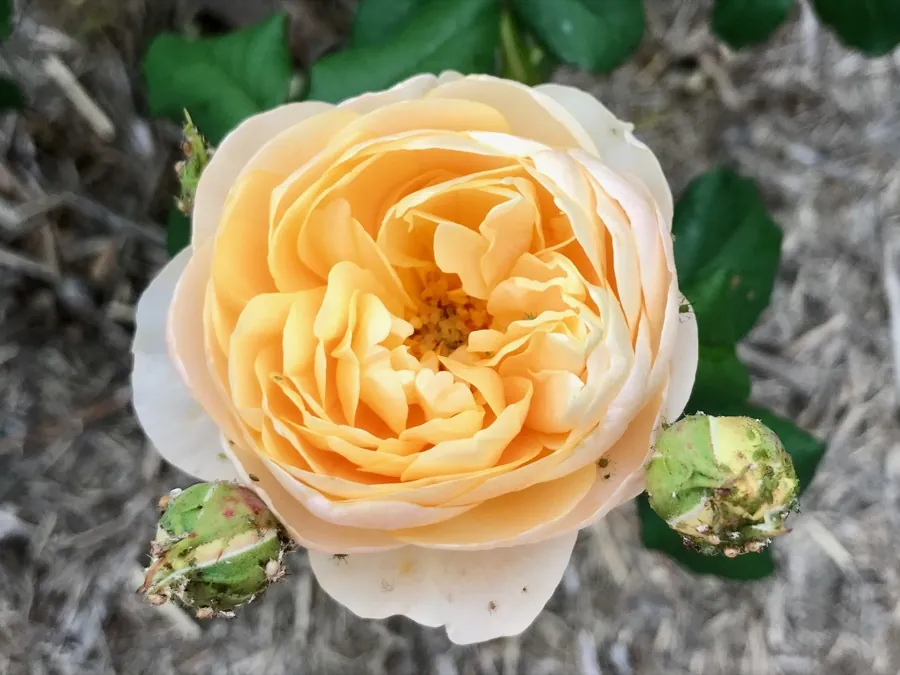
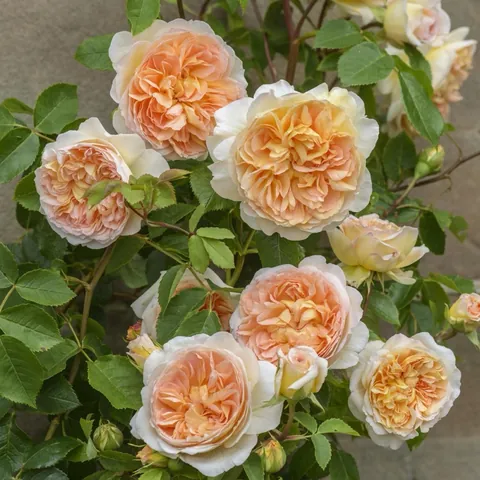
Peachy apricot English Shrub; named in 2016 for the 100th anniversary of the birth of British children's author Roald Dahl (1916–1990); the colour recalls the peach from 'James and the Giant Peach'; £100 000 raised for Roald Dahl's Marvellous Children's Charity; Austin's 'Best For Health' — one of the most resistant to black spot.

US PP29,927 · 'Best For Health' Austin · named after Roald Dahl

Variety profile

Flowering

Repeat flowering

Repeat-flowering from June to October — generous. Months are approximate, for the climate of Ukraine.

Legacy

Austin 2016

'Best For Health' · 100th anniversary of Roald Dahl

Winter hardiness

−20 °C

RHS H6 · all of Great Britain + Ukraine without winter protection.

Compare reference temperatures

Plant size

120 × 90 cm
person 170 cm120 cm
Habit
Compact-medium, rounded, bushy — typical of new Austin roses
Dimensions
Up to 120 cm tall × up to 90 cm wide — medium-compact for small beds and containers
Support
Not needed — self-supporting
Shoots
Strong, almost thornless
Branching
Well branched, with strong stems

Flower

6–9 cm
Bud shape
Soft orange-red — a contrasting base
Open flower
Cup-rosette: 6–9 cm, very double (41+ petals) — a characteristic Austin-form
Centre
Tightly packed
Fullness
~55 petals (very full, 41+)
Flower carriage
In small clusters

Fragrance

Medium; fruity tea with raspberry

Medium fruity 'raspberry tea' — a characteristic Austin-scent, rare for apricot varieties.

Disease resistance

5 out of 5
Black spotresistant

Austin's 'Best For Health' — one of the most resistant to black spot; RHS hardiness H6 (−20 to −15 °C).

Sun

Sun + shade

Full sun or light shade.

Thorns

Few
thornlessfewmoderatemanyvery many

Almost thornless — a distinctive trait of Roald Dahl.

Foliage

Dark green, glossy — healthy.

All characteristics in a table
Group
English Shrub; from the David Austin English Roses collection
Breeder
David C. H. Austin Sr.; David Austin Roses, United Kingdom, 2016
Bud shape
Soft orange-red — a contrasting base
Open flower
Cup-rosette: 6–9 cm, very double (41+ petals) — a characteristic Austin-form
Centre
Tightly packed
Colour
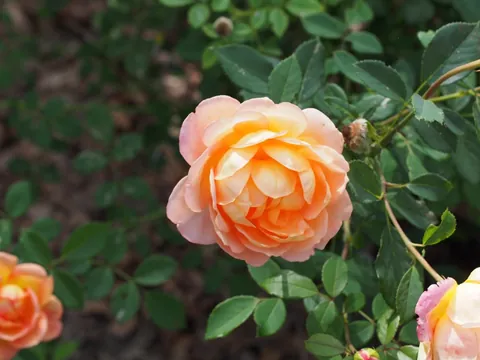
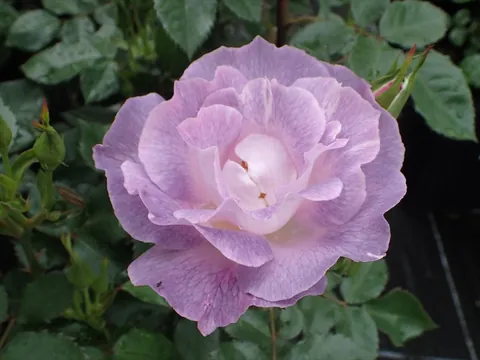
Peachy apricot — 'pure peach', a direct allusion to Dahl's 'James and the Giant Peach'. Buds are orange-red, opening to peach-coloured rosettes. It looks fairy-tale-like
Fullness
~55 petals (very full, 41+)
Flower carriage
In small clusters
Flowering
Repeat-flowering from June to October — generous
Fragrance
Medium fruity 'raspberry tea' — a characteristic Austin-scent, rare for apricot varieties
Hips
Not documented — cut for repeat flowering
Habit
Compact-medium, rounded, bushy — typical of new Austin roses
Branching
Well branched, with strong stems
Shoots
Strong, almost thornless
Thorns
Almost thornless — a distinctive trait of Roald Dahl.
Dimensions
Up to 120 cm tall × up to 90 cm wide — medium-compact for small beds and containers
Support
Not needed — self-supporting
Foliage
Dark green, glossy — healthy
Resistance
Austin's 'Best For Health' — one of the most resistant to black spot; RHS hardiness H6 (−20 to −15 °C)
Variations of the variety
Code AUSowlish, US Patent PP29,927. Bred in 2008–2009 from about 96 000 seedlings; introduced 2016 (for the 100th anniversary of Dahl's birth). Parentage not disclosed; according to press releases, genetic influences include 'Comte de Champagne', 'The Lark Ascending' and 'Jude the Obscure'

Colour scheme

Peachy apricot — 'pure peach', a direct allusion to Dahl's 'James and the Giant Peach'. Buds are orange-red, opening to peach-coloured rosettes. It looks fairy-tale-like

Rose neighbours

Perennials to plant nearby

Neighbouring roses

David Austin English Roses — they create a 'literary corner':

Perennial companions

A classic English cottage palette:

lavenderlady's mantle (Alchemilla)lamb's ear (Stachys)catmint (Nepeta)

Availability worldwide

One of the most popular modern Austin varieties:

🇬🇧 UK: very high · home🇺🇸 USA: high · Austin USA🇪🇺 Europe: high · via Austin Europe🇺🇦 Ukraine: moderate · via Austin partners

More about the variety

Hips
Not documented — cut for repeat flowering
Variations of the variety
Code AUSowlish, US Patent PP29,927. Bred in 2008–2009 from about 96 000 seedlings; introduced 2016 (for the 100th anniversary of Dahl's birth). Parentage not disclosed; according to press releases, genetic influences include 'Comte de Champagne', 'The Lark Ascending' and 'Jude the Obscure'

How to grow

Where to plant. In English cottage gardens, in borders with lavender; as a children's garden accent — a tribute to Roald Dahl; ideal for beginners thanks to 'Best For Health'; as a cut-flower bush for home bouquets.

Climate. All of Ukraine without protection (RHS H6, to −20 °C); copes well with summer heat.

Care. Full sun or light shade; minimal care thanks to its excellent resistance; feed 2× per season; prune ⅓ in spring.

About the name

Name. 'Roald Dahl' — named after Roald Dahl (1916–1990), the British children's author of 'Charlie and the Chocolate Factory', 'Matilda', 'James and the Giant Peach' and 'The BFG' (Big Friendly Giant). Introduced in 2016 for the 100th anniversary of the author's birth. The colour is a direct allusion to 'James and the Giant Peach' (1961, Dahl) — the hero travels in a giant peach. The name was approved by the writer's widow, Liccy Dahl.

Breeding. Bred by David C. H. Austin Sr. at David Austin Roses (Albrighton, UK). Code AUSowlish, US Patent PP29,927. Bred in 2008–2009 from about 96 000 seedlings (a characteristic figure for the scale of Austin breeding). Introduced 2016. Parentage not disclosed (a trade secret); according to Austin press releases, genetic influences include 'Comte de Champagne', 'The Lark Ascending' and 'Jude the Obscure'.

Significance. Austin's 'Best For Health' — one of the most black-spot-resistant varieties. £100 000 was raised for Roald Dahl's Marvellous Children's Charity from sales of the variety — a charitable story, rare for roses. The literary narrative makes the variety recognisable to a wider public (not just rose enthusiasts), especially to gardeners with children. Almost thornless — a distinctive trait, rare for shrub roses; good for family gardens. No major official awards (RHS AGM, ADR), but it has the internal Austin-branded distinctions 'Best For Health' and 'Best For Flowering'.

Frequently asked questions about Roald Dahl

Does Roald Dahl need winter protection?

The cultivar’s reference temperature is −20 °C. Overwintering depends on the conditions.

How many times a season does Roald Dahl flower?

Repeat-flowering from June to October — generous.

How big does Roald Dahl grow?

About 120 cm tall, about 90 cm wide.

Which diseases affect Roald Dahl?

Overall resistance: 5 out of 5. 'Best For Health'; excellent against black spot.

How much sun does Roald Dahl need?

Sun + shade; full sun or light shade.

What does Roald Dahl smell like?

Medium fruity 'raspberry tea' — a characteristic Austin-scent, rare for apricot varieties.

Gardeners' photos and reviews

My climate

Choose a reference temperature to compare with the cultivar’s data. This is not an overwintering forecast or advice on winter protection; consider wind, moisture and the duration of frost.

Regional data are generalised. USDA describes average annual extreme minima, not a forecast; the values in the list are rounded. Check the conditions at your site. More information: Roses in Ukraine's climate.