


Back to catalogue
Hybrid Musk; the Pax, Penelope, Moonlight, Felicia familyRev. Joseph Pemberton, 1918Yellow

Thisbe

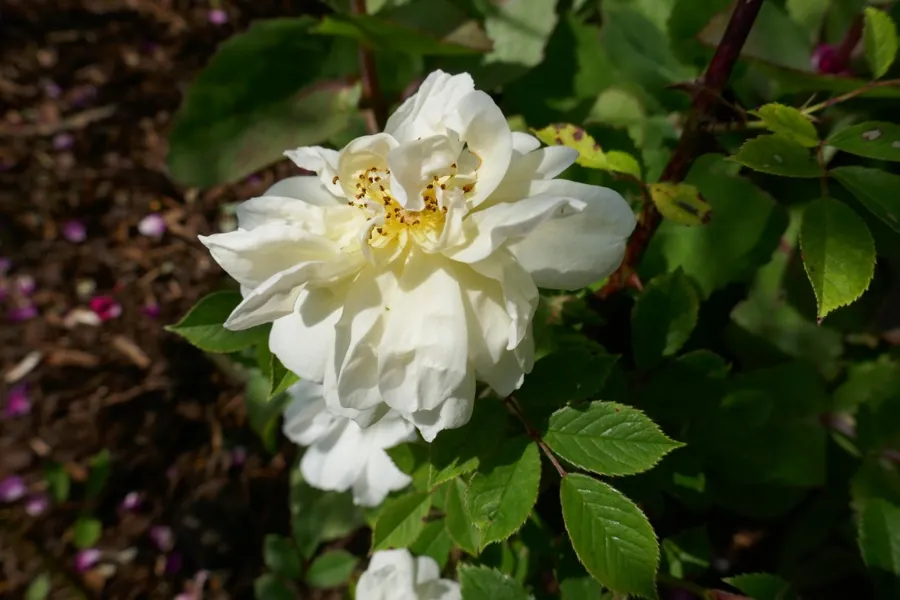
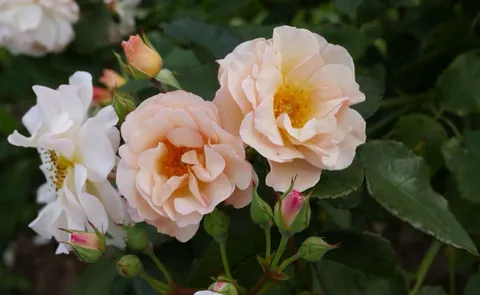
Creamy-yellow buff (chamois yellow) with amber stamens — fades to creamy white; named after Thisbe from the ancient myth “Pyramus and Thisbe” (Ovid), a tragic story that foreshadowed “Romeo and Juliet”; bred by Pemberton — an Anglican clergyman who began breeding at 60 and in 12 years created an entire Hybrid Musk class; Pemberton – Bentall line (with The Fairy, 1932).

Named after Thisbe from Ovid's 'Metamorphoses' · Pemberton was an Anglican clergyman who founded the Hybrid Musk class

Variety profile

Flowering

Repeat flowering in flushes — a rarity for shrubs of 1918

Legacy

Pemberton 1918

Hybrid Musk family

Winter hardiness

−23 °C

USDA zone 6b-10b. Central / Southern Ukraine.

Compare reference temperatures

Plant size

150 × 120 cm
person 170 cm150 cm
Habit
Arching shrub, upright with a slight lean
Dimensions
150 cm tall × 120 cm wide — a medium-large shrub for mixed borders and landscape groups
Support
Not needed, but it can be trained on a low support
Shoots
Flexible, arching
Branching
Well branched

Flower

≈ 4 cm

17-25 petals.

Bud shape
Small round golden
Open flower
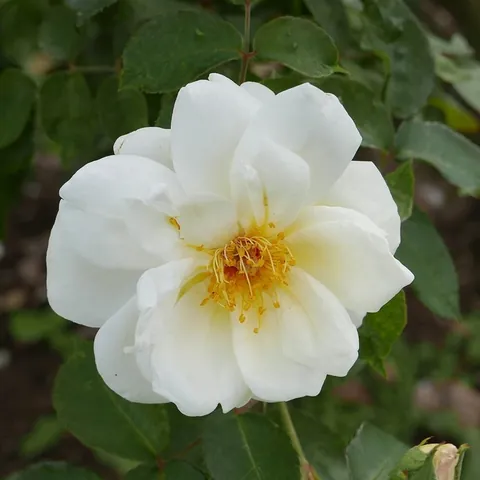
Semi-double, rosette-shaped: ~4 cm (1.5″), 17–25 petals
Centre
Visible amber stamens — the main visual accent
Fullness
17–25 petals (medium)
Flower carriage
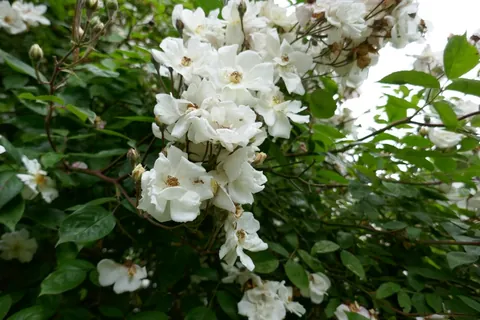
In large rosette-like clusters — a typical Hybrid Musk form

Fragrance

Strong; musky — the signature Pemberton trait

Strong musk — a signature trait of all Pemberton-type musks. Inherited from R. moschata through its ancestors.

Disease resistance

4 out of 5

Good 4/5 — typical resistance of Hybrid Musks. USDA 6b-10b — Central / Southern Ukraine without winter protection; in the north — light protection.

Sun

Sun + shade

Tolerates partial shade.

Thorns

Few
thornlessfewmoderatemanyvery many

Few thorns — typical for Pemberton-Hybrid Musks.

Foliage

Matt green with a characteristic tint — typical of Hybrid Musk.

All characteristics in a table
Group
Hybrid Musk; the Pax, Penelope, Moonlight, Felicia family
Breeder
Rev. Joseph Pemberton, United Kingdom, 1918
Bud shape
Small round golden
Open flower
Semi-double, rosette-shaped: ~4 cm (1.5″), 17–25 petals
Centre
Visible amber stamens — the main visual accent
Colour
Creamy-yellow buff (chamois yellow) with distinct amber stamens; fades to creamy white by the end of flowering — both phases on the bush at once
Fullness
17–25 petals (medium)
Flower carriage
In large rosette-like clusters — a typical Hybrid Musk form
Flowering
Repeat flowering in flushes — a rarity for shrubs of 1918
Fragrance
Strong musk — a signature trait of all Pemberton-type musks. Inherited from R. moschata through its ancestors
Hips
Small hips in autumn — adds ornament
Habit
Arching shrub, upright with a slight lean
Branching
Well branched
Shoots
Flexible, arching
Thorns
Few thorns — typical for Pemberton-Hybrid Musks.
Dimensions
150 cm tall × 120 cm wide — a medium-large shrub for mixed borders and landscape groups
Support
Not needed, but it can be trained on a low support
Foliage
Matt green with a characteristic tint — typical of Hybrid Musk
Resistance
Good 4/5 — typical resistance of Hybrid Musks. USDA 6b-10b — Central / Southern Ukraine without winter protection; in the north — light protection
Variations of the variety
No official code (1918 — before the registration system). Introduced 1918. Breeder: Rev. Joseph Hardwick Pemberton (UK). Parentage: 'Marie-Jeanne' × 'Perle des Jardins' (according to HMF, with a caveat that other versions are possible). One of Pemberton's last works before his death in 1926

Colour scheme

Creamy-yellow buff (chamois yellow) with distinct amber stamens; fades to creamy white by the end of flowering — both phases on the bush at once

Rose neighbours

Perennials to plant nearby

Neighbouring roses

The Pemberton family creates a 'classic shrub corner':

Perennial companions

A classic English cottage palette:

lavenderhostalady's mantle (Alchemilla)salvia

Availability worldwide

A collectable historic Hybrid Musk:

🇬🇧 UK: moderate · home of Pemberton🇪🇺 Europe: moderate🇺🇸 USA: moderate · Antique Rose Emporium🇺🇦 Ukraine: rare · via collector nurseries

More about the variety

Hips
Small hips in autumn — adds ornament
Variations of the variety
No official code (1918 — before the registration system). Introduced 1918. Breeder: Rev. Joseph Hardwick Pemberton (UK). Parentage: 'Marie-Jeanne' × 'Perle des Jardins' (according to HMF, with a caveat that other versions are possible). One of Pemberton's last works before his death in 1926

How to grow

Where to plant. In classic cottage gardens; in “English” shrub corners with the Pemberton family; beside a bench for its strong musky fragrance; under trees and shrubs — tolerates partial shade; in “literary” corners with other named varieties (Felicia, Penelope, etc.); do not plant in low-lying spots with standing water.

Climate. Central / Southern Ukraine without winter protection (USDA 6b-10b); in the north — light protection; tolerates summer heat well.

Care. Minimal — sun or light shade; prune once every 2–3 years; feed 1–2× per season; good drainage is important.

About the name

Name. “Thisbe” — after Thisbe from the ancient myth “Pyramus and Thisbe” (Ovid, Metamorphoses, Book IV), the tragic story of two lovers from Babylon that foreshadowed Shakespeare's “Romeo and Juliet”. Pemberton gave all his Hybrid Musks poetic, literary names: Pax (peace), Penelope, Moonlight, Felicia, Daphne, Cornelia, Thisbe — each a “little heroine” from classical or British culture. Breeder: bred by Rev. Joseph Hardwick Pemberton (UK). Introduced 1918. Parentage: 'Marie-Jeanne' × 'Perle des Jardins' (according to HMF). Pemberton was an Anglican priest who began breeding roses as a hobby at 60. In 12 years (1912–1924) he created an entire new class, “Hybrid Musk”, which had not formally existed before him. Thisbe was one of his last works before his death (1926).

Significance. The Pemberton Hybrid Musks family is the foundation of modern healthy Hybrid Musks: Pax, Penelope, Moonlight, Felicia, Daphne, Cornelia, Thisbe. The Pemberton-Bentall line: after Pemberton's death the class was developed by Ann Bentall (the same woman who created The Fairy in 1932!), so Thisbe and The Fairy are linked by one breeding line. The “fountain” shape of the bush was inherited by Sally Holmes from Ballerina (another Pemberton-Hybrid Musk). The strong musky scent is the same as in R. moschata, from which the whole class descends. The literary name Thisbe makes it ideal for “literary” corners of the garden. There are no major international awards (ADR, AARS, RHS AGM, WFRS HoF) — there was no tradition of awarding Pemberton Hybrid Musks at that time. Thisbe is valued above all for its historical and breeding significance.

Frequently asked questions about Thisbe

Does Thisbe need winter protection?

The cultivar’s reference temperature is −23 °C (USDA zone 6b−10b). Overwintering depends on the conditions. Central / Southern Ukraine.

How many times a season does Thisbe flower?

Repeat flowering in flushes — a rarity for shrubs of 1918.

How big does Thisbe grow?

About 150 cm tall, about 120 cm wide.

Which diseases affect Thisbe?

Overall resistance: 4 out of 5. Good — typical for Hybrid Musks.

How much sun does Thisbe need?

Sun + shade; tolerates partial shade.

What does Thisbe smell like?

Strong musk — a signature trait of all Pemberton-type musks. Inherited from R. moschata through its ancestors.

Gardeners' photos and reviews

My climate

Choose a reference temperature to compare with the cultivar’s data. This is not an overwintering forecast or advice on winter protection; consider wind, moisture and the duration of frost.

Regional data are generalised. USDA describes average annual extreme minima, not a forecast; the values in the list are rounded. Check the conditions at your site. More information: Roses in Ukraine's climate.