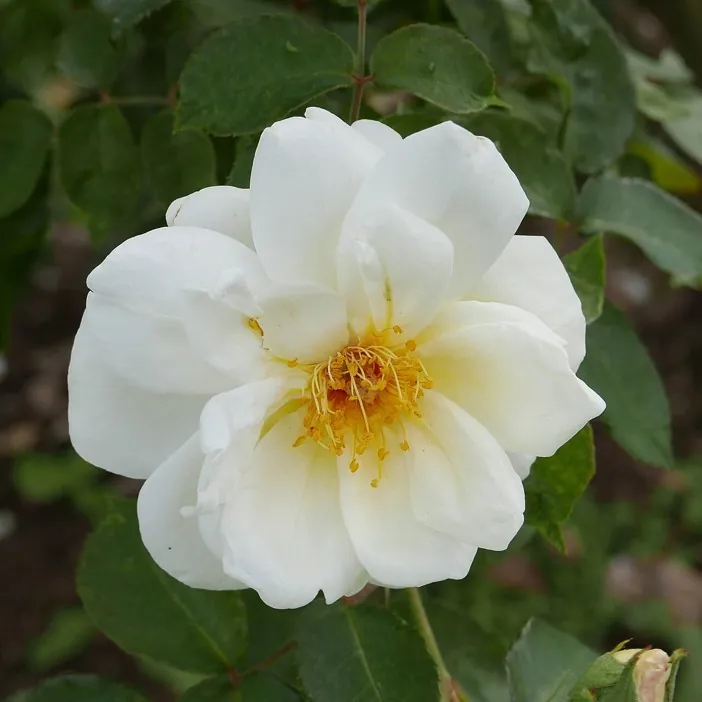
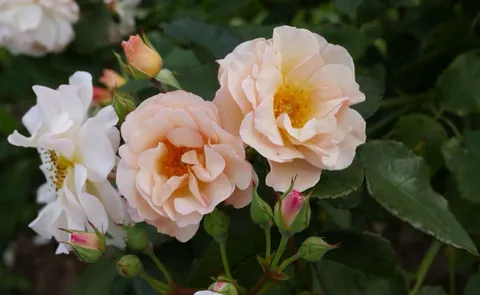
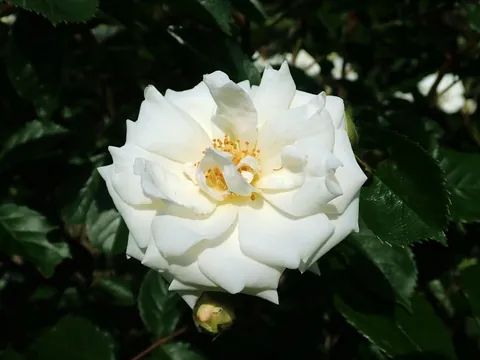
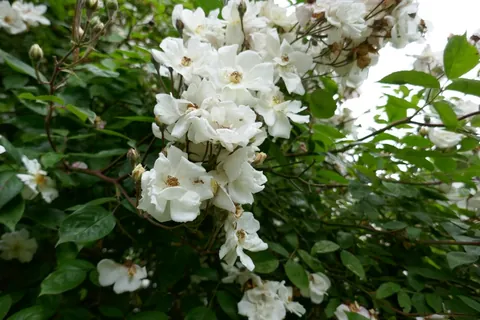


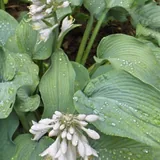


Pax, close-up of the flower
Back to catalogue
Hybrid Musk; the variety that gave its name to the whole classRev. Joseph Pemberton; Havering-atte-Bower, 1918White and cream

Pax

The variety that gave its name to the whole Hybrid Musk class!; Gold Medal RNRS 1918; "Pax" is Latin for "peace" — named to mark the end of the First World War on 11 November 1918; Pemberton's message to customers: "Commemorate peace by planting a bed of Pax".

Gold Medal RNRS 1918 · one of Pemberton's top 3

Variety profile

Flowering

Repeat flowering

Repeat flowering from June to November. Months are approximate, for the climate of Ukraine.

Legacy

RNRS Gold 1918

Gave its name to the Hybrid Musk class

Winter hardiness

−23 °C

USDA zone 6. All of Ukraine with light winter cover.

Compare reference temperatures

Plant size

120–250 × 150 cm
person 170 cmon a supportup to 2 m120–250 cm
Habit
Large spreading bush or short climber up to 2 m
Dimensions
120–250 cm high × ~150 cm wide; can grow as a short climber up to 2 m on a support
Support
Optionally as a climber; as a bush — not needed
Shoots
Flexible, train well on a support
Branching
Well branched with flexible canes

Flower

8–10 cm
Bud shape
Round with a creamy tint
Open flower
Large semi-double creamy-white flowers: 8–10 cm, open form with striking golden-yellow stamens — the main visual feature
Centre
Open, with prominent golden stamens — a contrast to the white
Fullness
9–16 petals (semi-double)
Flower carriage
In large trusses — typical of Hybrid Musk

Fragrance

Moderately strong; musky-fruity

Moderately strong musky-fruity — typical of Hybrid Musk.

Disease resistance

4 out of 5

High, 4/5: over 100 years of commercial success; tolerates poor soils and light shade.

Sun

Sun + shade

Tolerates light shade.

Thorns

Few
thornlessfewmoderatemanyvery many

Few prickles — typical of Pemberton Hybrid Musks.

Foliage

Dark green, semi-glossy — typical of Hybrid Musk.

All characteristics in a table
Group
Hybrid Musk; the variety that gave its name to the whole class
Breeder
Rev. Joseph Pemberton; Havering-atte-Bower, United Kingdom, 1918
Bud shape
Round with a creamy tint
Open flower
Large semi-double creamy-white flowers: 8–10 cm, open form with striking golden-yellow stamens — the main visual feature
Centre
Open, with prominent golden stamens — a contrast to the white
Colour
Pure creamy white: buds with a creamy tint open to white. Stable colour, does not fade
Fullness
9–16 petals (semi-double)
Flower carriage
In large trusses — typical of Hybrid Musk
Flowering
Repeat flowering from June to November
Fragrance
Moderately strong musky-fruity — typical of Hybrid Musk
Hips
Not documented — usually cut after flowering
Habit
Large spreading bush or short climber up to 2 m
Branching
Well branched with flexible canes
Shoots
Flexible, train well on a support
Thorns
Few prickles — typical of Pemberton Hybrid Musks.
Dimensions
120–250 cm high × ~150 cm wide; can grow as a short climber up to 2 m on a support
Support
Optionally as a climber; as a bush — not needed
Foliage
Dark green, semi-glossy — typical of Hybrid Musk
Resistance
High, 4/5: over 100 years of commercial success; tolerates poor soils and light shade
Variations of the variety
No official code (bred before the coding system). HMF ID 2.4701. Parentage: 'Trier' (Hybrid Multiflora, Lambert 1904) × 'Sunburst' (HT, Pernet-Ducher 1911). The name "Hybrid Musk" was first used by Courtney Page in 1917 for Pax itself — so Pax literally gave the whole class its name

Colour scheme

Pure creamy white: buds with a creamy tint open to white. Stable colour, does not fade

Rose neighbours

Perennials to plant nearby

Neighbouring roses

The Pemberton family and symbolically 'peaceful' varieties:

Companion perennials

Shade-tolerant cottage perennials for English 'peaceful corners':

lavenderhostalady's mantlegypsophila

Availability worldwide

Historic classic, available from specialist nurseries:

🇬🇧 UK: high · Peter Beales, David Austin🇪🇺 Europe: high · Lens Roses (Belgium)🇺🇸 USA: moderate · 'old roses' segment🇺🇦 Ukraine: rare · collector nurseries

More about the variety

Hips
Not documented — usually cut after flowering
Variations of the variety
No official code (bred before the coding system). HMF ID 2.4701. Parentage: 'Trier' (Hybrid Multiflora, Lambert 1904) × 'Sunburst' (HT, Pernet-Ducher 1911). The name "Hybrid Musk" was first used by Courtney Page in 1917 for Pax itself — so Pax literally gave the whole class its name

How to grow

Where to plant. In "peaceful" corners of the garden — a symbolic planting; in English cottage-style compositions; in shady places (rare for roses); as a hedge or climber on fences.

Climate. All of Ukraine with light winter cover (USDA 6); copes well with summer heat and light shade.

Care. Full sun or light shade; minimal care — tolerates poor soils; feed 1–2 times per season; prune by 1/4 in spring (Hybrid Musks do not like hard pruning).

About the name

Name. "Pax" is Latin for "peace". Named to mark the end of the First World War (11 November 1918). Pemberton personally appealed to customers: "Commemorate peace by planting a bed of Pax". A poetic Latin-Biblical tradition of Pemberton's (as with Prosperity, "prosperity", Felicia, "happy", Moonlight, "moonlight glow"). An interesting historical parallel: Pax (1918) and Peace (1945) — both roses of "peace", bred before the end of two world wars.

Breeding. Bred by Rev. Joseph Hardwick Pemberton in Havering-atte-Bower (Essex, UK). Introduced in 1918. Parentage: 'Trier' (Hybrid Multiflora, Lambert 1904) × 'Sunburst' (HT, Pernet-Ducher 1911). Trier is the ancestor of the whole Hybrid Musk class: a hybrid of R. multiflora with an admixture of R. moschata.

Significance. The variety that gave its name to the whole Hybrid Musk class! The term "Hybrid Musk" was first used by Courtney Page in 1917 for Pax. The name later spread to the whole class (about 70 varieties today). Gold Medal RNRS 1918 (Royal National Rose Society, UK). Honoured with plantings in RHS-managed gardens for the variety's 100th anniversary (2018). Its unusual tolerance of light shade is typical of Hybrid Musks and opened up a whole direction of "shade-tolerant roses". Without Pax there would be no Hybrid Musk class, and so none of the later varieties such as Penelope, Prosperity, Cornelia, Felicia, Buff Beauty, Ballerina, or the modern shrub roses.

Frequently asked questions about Pax

Does Pax need winter protection?

The cultivar’s reference temperature is −23 °C (USDA zone 6). Overwintering depends on the conditions. All of Ukraine with light winter cover.

How many times a season does Pax flower?

Repeat flowering from June to November.

How big does Pax grow?

120–250 cm tall, about 150 cm wide. On a support — up to 200 cm.

Which diseases affect Pax?

Overall resistance: 4 out of 5. High; over 100 years of commercial success.

How much sun does Pax need?

Sun + shade; tolerates light shade.

What does Pax smell like?

Moderately strong musky-fruity — typical of Hybrid Musk.

Gardeners' photos and reviews

My climate

Choose a reference temperature to compare with the cultivar’s data. This is not an overwintering forecast or advice on winter protection; consider wind, moisture and the duration of frost.

Regional data are generalised. USDA describes average annual extreme minima, not a forecast; the values in the list are rounded. Check the conditions at your site. More information: Roses in Ukraine's climate.