






About the name
Name. "Penelope" — after Penelope, wife of Odysseus in Homer's Odyssey. A symbol of fidelity and wise patience: she waited 20 years for her husband's return from the Trojan War, turning away 108 suitors. Pemberton loved literary names from ancient mythology and the Bible: Penelope, Cornelia, Felicia, Daphne (Greek); Moonlight, Vanity (English classics).
Breeding. Bred by Rev. Joseph Hardwick Pemberton (1852–1926), an Anglican priest from Havering-atte-Bower (Essex, UK). Introduced in 1924. Parentage: 'Ophelia' (HT, Paul 1912) × an unnamed seedling from the 'Trier' line (Lambert 1904) — the ancestor of the Hybrid Musk class. Together with his sister Florence and helpers John and Ann Bentall, Pemberton raised about 24 named varieties between 1913 and 1926.
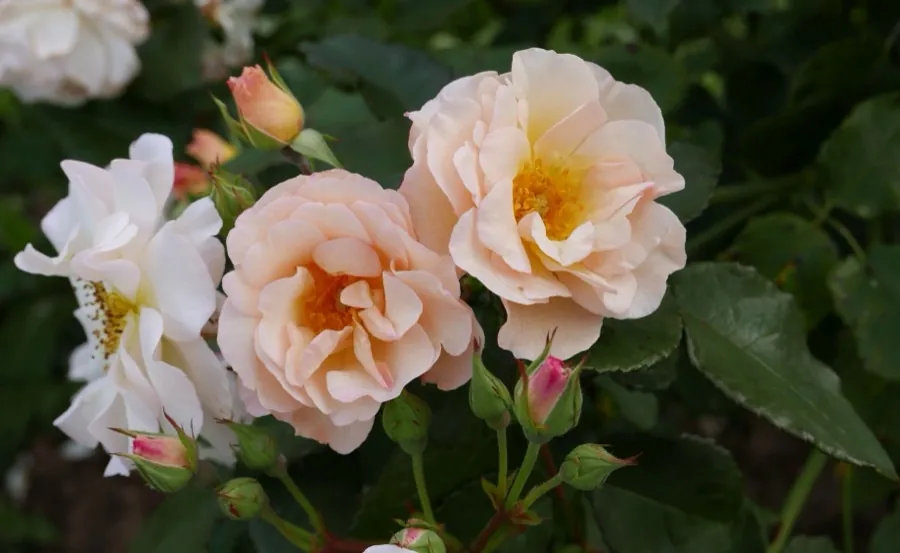
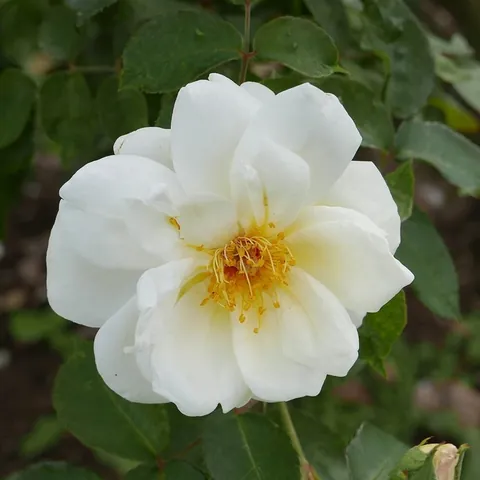
Significance. One of Pemberton's top 3 (alongside Pax 1918, Prosperity 1919, Cornelia 1925, Felicia 1928). RHS Award of Garden Merit — practical British recognition. Its unusual tolerance of light shade — rare for roses, typical of Hybrid Musks. The three-stage colour change on the bush (cream-apricot – seashell-pink – almost white) is a special feature. Decorative orange-coral hips in autumn — a rare secondary ornamental value. An exemplary classic rose for English cottage gardens; present in the collections of Mottisfont Abbey, Sissinghurst and RHS Wisley.