



Back to catalogue
Floribunda; white cluster-flowered — “a crown of flowers”Eugene S. «Gene» Boerner; Jackson & Perkins, 1960White and cream

Tiara

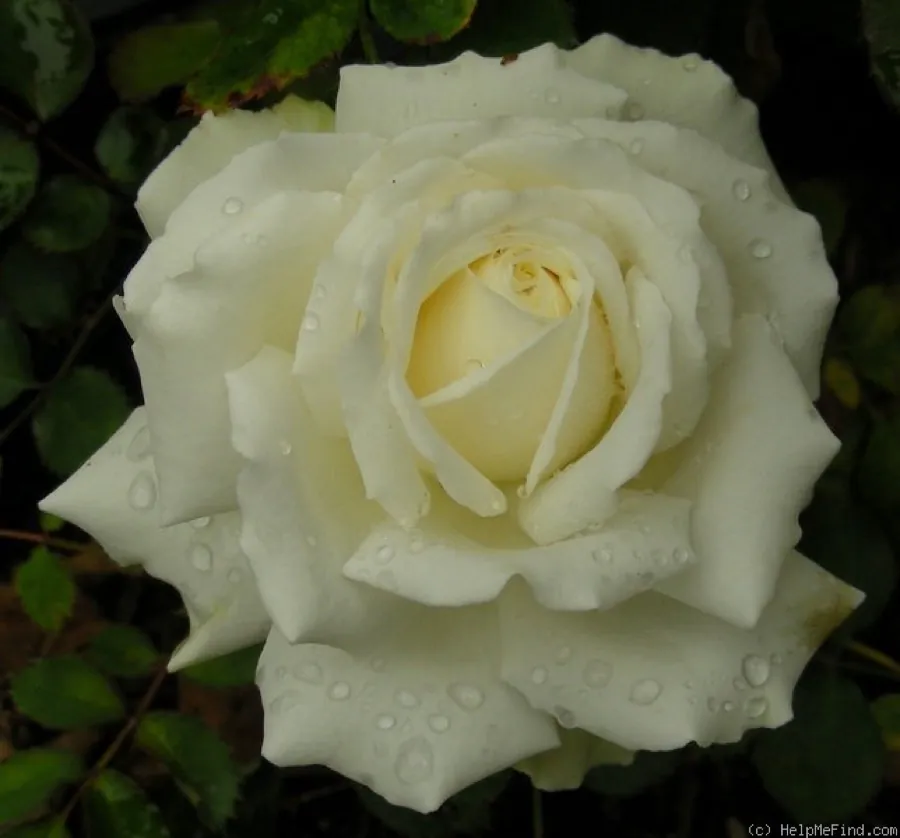
White fully double floribunda in compact clusters, like a crown; bred by Eugene Boerner — “Papa Floribunda”, who created dozens of floribundas over 45 years at Jackson & Perkins; US Plant Patent PP 1,981; ~50 petals in the very full form.

US Plant Patent PP 1,981 · late floribunda 'Papa Floribunda' by Boerner

Variety profile

Flowering

Repeat flowering

Generous repeat flowering from June to October. Months are approximate, for the climate of Ukraine.

Legacy

Papa Floribunda

Boerner J&P 1960

Winter hardiness

−23 °C

USDA zone 6b. Central / Southern Ukraine.

Compare reference temperatures

Plant size

70–90 × 60–80 cm
person 170 cm70–90 cm
Habit
Upright, bushy, vigorous — typical Boerner-type floribunda
Dimensions
~70–90 cm tall × 60–80 cm wide — compact, for small beds and borders
Support
Not needed — self-supporting
Shoots
Medium stiffness
Branching
Well branched

Flower

7-8 cm
Bud shape
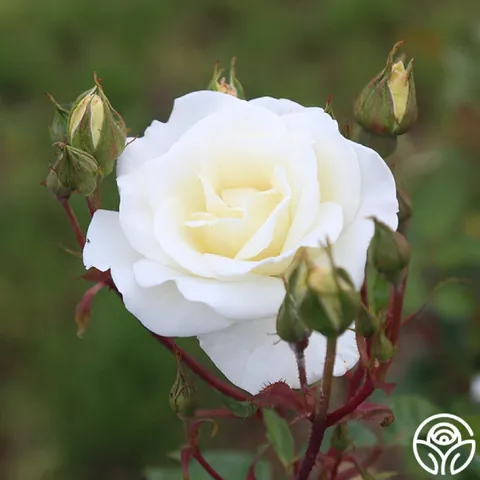
Round, white, sometimes with a delicate cream tone
Open flower
Very full (fully double): 7–8 cm (3″), 45–50 petals
Centre
Densely filled with symmetrical inner petals
Fullness
45–50 petals (very full)
Flower carriage
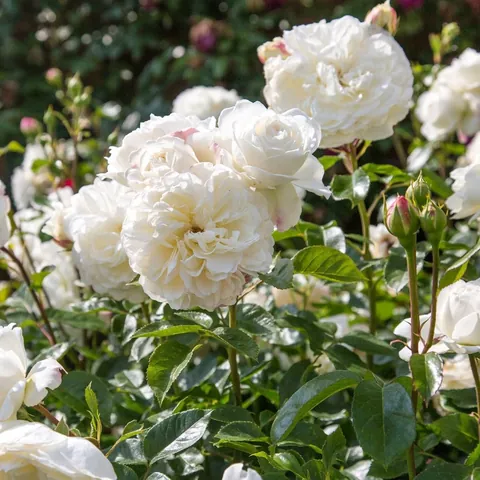
In dense clusters — hence the name “crown” (tiara)

Fragrance

Moderate

Moderate — typical of white floribundas from Boerner.

Disease resistance

3.5 out of 5

Good 3.5/5 — leathery, healthy foliage repels diseases well, but there are no detailed ratings. USDA 6b — Central / Southern Ukraine without winter protection.

Sun

Full sun

Thorns

Moderate
thornlessfewmoderatemanyvery many

Average number of thorns — typical for floribundas of the 1960s.

Foliage

Leathery dark green — typical Boerner quality.

All characteristics in a table
Group
Floribunda; white cluster-flowered — “a crown of flowers”
Breeder
Eugene S. «Gene» Boerner; Jackson & Perkins, USA, 1960
Bud shape
Round, white, sometimes with a delicate cream tone
Open flower
Very full (fully double): 7–8 cm (3″), 45–50 petals
Centre
Densely filled with symmetrical inner petals
Colour
Pure white; does not yellow in heat. Sometimes with a creamy tint in the bud
Fullness
45–50 petals (very full)
Flower carriage
In dense clusters — hence the name “crown” (tiara)
Flowering
Generous repeat flowering from June to October
Fragrance
Moderate — typical of white floribundas from Boerner
Hips
Not documented — typically cut
Habit
Upright, bushy, vigorous — typical Boerner-type floribunda
Branching
Well branched
Shoots
Medium stiffness
Thorns
Average number of thorns — typical for floribundas of the 1960s.
Dimensions
~70–90 cm tall × 60–80 cm wide — compact, for small beds and borders
Support
Not needed — self-supporting
Foliage
Leathery dark green — typical Boerner quality
Resistance
Good 3.5/5 — leathery, healthy foliage repels diseases well, but there are no detailed ratings. USDA 6b — Central / Southern Ukraine without winter protection
Variations of the variety
Code BOEga. US Plant Patent PP 1,981. Introduced 1960 through Jackson & Perkins. Breeder: Eugene S. “Gene” Boerner. Parentage: 'Chic' × ('Demure' × unnamed seedling). Not to be confused with other varieties called Tiara — this is the canonical J&P 1960 variety (NOT Kordes, NOT Tantau)

Colour scheme

Pure white; does not yellow in heat. Sometimes with a creamy tint in the bud

Rose neighbours

Perennials to plant nearby

Neighbouring roses

White floribundas for a moonlit garden:

Perennial companions

A classic palette for a white garden:

lavenderhostalady's mantle (Alchemilla)salvia

Availability worldwide

A late-1960s Boerner floribunda:

🇺🇸 USA: moderate · home of J&P🇪🇺 Europe: rare🇬🇧 UK: rare🇺🇦 Ukraine: rare · collector nurseries

More about the variety

Hips
Not documented — typically cut
Variations of the variety
Code BOEga. US Plant Patent PP 1,981. Introduced 1960 through Jackson & Perkins. Breeder: Eugene S. “Gene” Boerner. Parentage: 'Chic' × ('Demure' × unnamed seedling). Not to be confused with other varieties called Tiara — this is the canonical J&P 1960 variety (NOT Kordes, NOT Tantau)

How to grow

Where to plant. In groups of 3–5 bushes in borders for a “crown” effect; in white or moon gardens; as the front of a mixed border; along paths as a low edging; good in containers on a terrace.

Climate. Central / Southern Ukraine without winter protection (USDA 6b); tolerates summer heat well.

Care. Full sun; moderate disease prevention; feed 2–3× per season; prune ⅓ in spring; deadheading speeds up the second flush.

About the name

Name. “Tiara” = “crown / diadem”. A hint at the dense white cluster-flowers as a crown — each branch carries a “diadem” of white flowers. A typical Boerner-style name (elegant English words with an aristocratic touch). Breeder: bred by Eugene S. “Gene” Boerner at Jackson & Perkins (Newark, New York, USA). Code BOEga. US Plant Patent PP 1,981. Introduced 1960. Parentage: 'Chic' × ('Demure' × unnamed seedling). Eugene Boerner (1893–1966), the legendary “Papa Floribunda”, worked at Jackson & Perkins from 1920 and bred dozens of floribundas over 45 years. Tiara is one of his later works, before his death in 1966 (like Saratoga, 1964).

Significance. A late floribunda by “Papa Floribunda”, representing the peak of American breeding in this class after the Second World War. US Plant Patent PP 1,981 — an official patent. The “crown-like” character of the dense white clusters is a rare decorative detail in the class. Leathery, healthy foliage is typical of Boerner varieties. J&P heritage: together with Saratoga (1964), Tiara represents a series of white Boerner floribundas of the 1960s. Not to be confused with other varieties called Tiara — this is the canonical J&P variety of 1960. There are no major international awards (neither AARS nor RHS AGM); Tiara is known primarily as a commercial J&P classic.

Frequently asked questions about Tiara

Does Tiara need winter protection?

The cultivar’s reference temperature is −23 °C (USDA zone 6b). Overwintering depends on the conditions. Central / Southern Ukraine.

How many times a season does Tiara flower?

Generous repeat flowering from June to October.

How big does Tiara grow?

70–90 cm tall, 60–80 cm wide.

Which diseases affect Tiara?

Overall resistance: 3.5 out of 5. 3.5 / 5; leathery, healthy foliage — typical Boerner quality.

How much sun does Tiara need?

Sun; full sun.

What does Tiara smell like?

Moderate — typical of white floribundas from Boerner.

Gardeners' photos and reviews

My climate

Choose a reference temperature to compare with the cultivar’s data. This is not an overwintering forecast or advice on winter protection; consider wind, moisture and the duration of frost.

Regional data are generalised. USDA describes average annual extreme minima, not a forecast; the values in the list are rounded. Check the conditions at your site. More information: Roses in Ukraine's climate.