



Back to catalogue
Floribunda; a fragrant white floribunda, a rarity for the classEugene S. «Gene» Boerner; Jackson & PerkinsWhite and cream

Saratoga

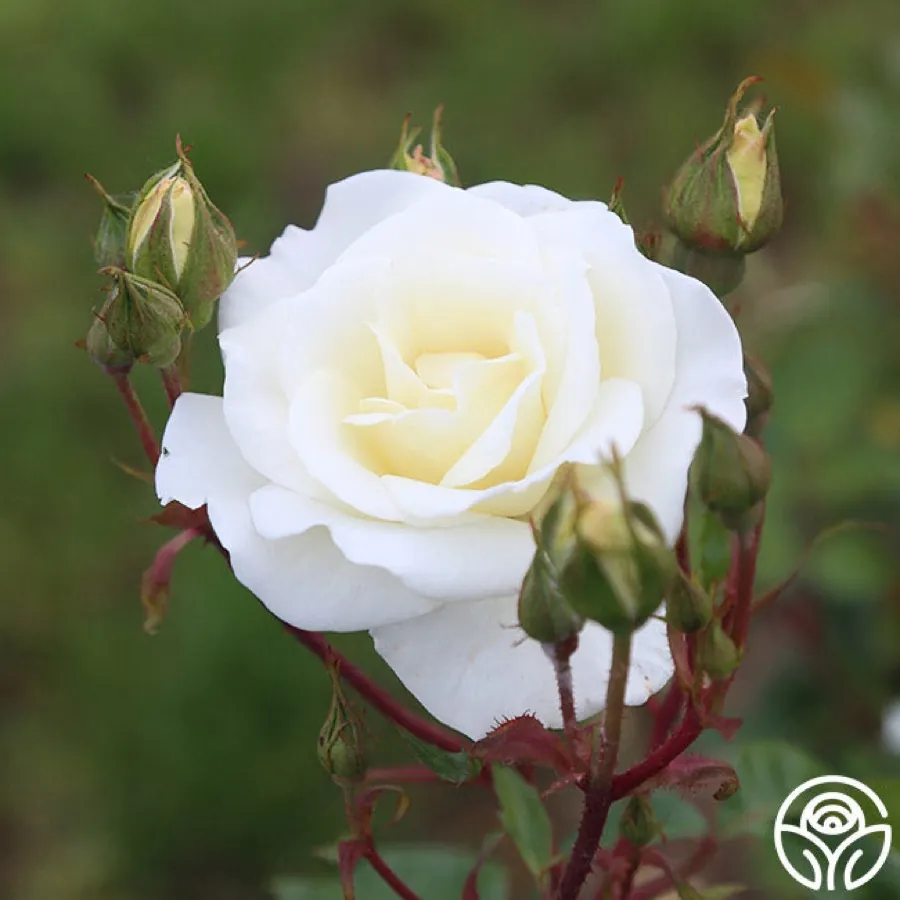
Gardenia-white, fully double floribunda in clusters; AARS 1964, awarded together with the classic 'Granada'; STRONG FRAGRANCE, a great rarity among white floribundas of the 1960s; bred by Eugene Boerner, 'Papa Floribunda', who created dozens of floribundas over 45 years at Jackson & Perkins; named after Saratoga Springs (New York), a spa town with mineral waters.

AARS 1964 (jointly with 'Granada' HT) · Boerner, the “Papa Floribunda” breeder

Variety profile

Flowering

Repeat flowering

Generous repeat flowering from June to October. Months are approximate, for the climate of Ukraine.

Legacy

AARS 1964

Papa Floribunda

Winter hardiness

−23 °C

USDA zone 6b-9b. Ukraine: Centre / South / West.

Compare reference temperatures

Plant size

50–70 × 50–70 cm
person 170 cm50–70 cm
Habit
Compact, upright, bushy: a typical Boerner-type floribunda
Dimensions
50-70 cm tall × 50-70 cm wide: compact, for small beds and borders
Support
Not needed; self-supporting
Shoots
Medium stiffness
Branching
Densely branched

Flower

≈ 10 cm

33 petals.

Bud shape
Round, gardenia-white
Open flower
Fully double: ≈10 cm (4"), up to 33 petals in clusters
Centre
Tightly packed
Fullness
Around 33 petals (full)
Flower carriage
In dense clusters of 5-10 flowers

Fragrance

Strong: a rarity for white floribundas

STRONG: a great rarity among white floribundas of the 1960s. Unlike most white varieties, which have a weak scent or none, Saratoga has a full, noticeable fragrance. This is the reason for its special value.

Disease resistance

3 out of 5

Moderate, 3/5: typical for the 1960s; the leathery foliage resists disease well, but prevention is advisable. USDA 6b-9b: in Ukraine, Centre / South / West without winter protection; in the North, light protection.

Sun

Full sun

Thorns

Moderate
thornlessfewmoderatemanyvery many

Moderate number of thorns, typical for floribundas of the 1960s.

Foliage

Leathery dark green: a typical Boerner quality.

All characteristics in a table
Group
Floribunda; a fragrant white floribunda, a rarity for the class
Breeder
Eugene S. «Gene» Boerner; Jackson & Perkins, USA
Bud shape
Round, gardenia-white
Open flower
Fully double: ≈10 cm (4"), up to 33 petals in clusters
Centre
Tightly packed
Colour
Pure 'gardenia white': the name describes the colour exactly. It does not yellow or grey at the end of flowering. Sometimes it has a faint cream tint in the centre
Fullness
Around 33 petals (full)
Flower carriage
In dense clusters of 5-10 flowers
Flowering
Generous repeat flowering from June to October
Fragrance
STRONG: a great rarity among white floribundas of the 1960s. Unlike most white varieties, which have a weak scent or none, Saratoga has a full, noticeable fragrance. This is the reason for its special value
Hips
Not documented; typically cut off
Habit
Compact, upright, bushy: a typical Boerner-type floribunda
Branching
Densely branched
Shoots
Medium stiffness
Thorns
Moderate number of thorns, typical for floribundas of the 1960s.
Dimensions
50-70 cm tall × 50-70 cm wide: compact, for small beds and borders
Support
Not needed; self-supporting
Foliage
Leathery dark green: a typical Boerner quality
Resistance
Moderate, 3/5: typical for the 1960s; the leathery foliage resists disease well, but prevention is advisable. USDA 6b-9b: in Ukraine, Centre / South / West without winter protection; in the North, light protection
Variations of the variety
Code JEPic. US Patent PP 2,299, dated 12.11.1963. Introduced 1964 through Jackson & Perkins (Newark, New York). Breeder: Eugene S. 'Gene' Boerner. Parentage: 'White Bouquet' (Floribunda, Boerner 1954) × 'Princess White'; both parents are white

Colour scheme

Pure 'gardenia white': the name describes the colour exactly. It does not yellow or grey at the end of flowering. Sometimes it has a faint cream tint in the centre

Rose neighbours

Perennials to plant nearby

Neighbouring roses

White floribundas and 1960s AARS classics:

Perennial companions

A classic palette for a white fragrance garden:

lavenderhostalady's mantle (Alchemilla)sage (Salvia)

Availability worldwide

A classic 1960s American floribunda from “Papa Floribunda”:

🇺🇸 USA: high · AARS classic🇪🇺 Europe: moderate🇬🇧 UK: moderate🇺🇦 Ukraine: rare · via imported collectors

More about the variety

Hips
Not documented; typically cut off
Variations of the variety
Code JEPic. US Patent PP 2,299, dated 12.11.1963. Introduced 1964 through Jackson & Perkins (Newark, New York). Breeder: Eugene S. 'Gene' Boerner. Parentage: 'White Bouquet' (Floribunda, Boerner 1954) × 'Princess White'; both parents are white

How to grow

Where to plant. Next to places to sit (bench, terrace) so you can enjoy the scent; in white or moonlit gardens; in low borders along paths; in fragrant corners; under bedroom windows for the scent; as the front plane of a mixed border.

Climate. Ukraine Centre / South / West without winter protection (USDA 6b-9b); in the North, light protection; tolerates summer heat well.

Care. Full sun; moderate disease prevention; feed 2-3 times per season; prune ⅓ in spring; deadheading speeds up the second flush.

About the name

Name. 'Saratoga', after the town of Saratoga Springs (New York State, USA), a famous spa with mineral waters since the nineteenth century, plus horse-racing stables (Saratoga Race Course, one of the oldest in America, from 1863). Naming varieties after American places and events is a typical Boerner-style tradition.

Breeding. Bred by Eugene S. 'Gene' Boerner at Jackson & Perkins (Newark, New York, USA). Code JEPic. US Patent PP 2,299, dated 12.11.1963. Introduced 1964. Parentage: 'White Bouquet' (Floribunda, Boerner 1954) × 'Princess White'. Eugene Boerner (1893-1966), the legendary 'Papa Floribunda', worked at Jackson & Perkins from 1920 and bred dozens of floribundas over 45 years. Saratoga was one of his last major varieties (he died in 1966).

Significance. AARS 1964 (All-America Rose Selections), awarded together with the classic 'Granada' (HT, Lindquist 1963; RNRS Fragrance Award 1968). STRONG FRAGRANCE: a great rarity among white floribundas; most white varieties of the time had a weak scent or none (Iceberg, for example, has only a light one). Saratoga is one of the few fragrant white FLs of the FL XX century. Boerner's legacy: Saratoga represents the peak of American floribunda breeding after the Second World War. The gardenia form: a fully double flower with a characteristic 'gardenia' look. Its compact size suits small beds and borders. Susceptibility to disease is typical for the 1960s: moderate prevention is needed, especially in wet seasons.

Frequently asked questions about Saratoga

Does Saratoga need winter protection?

The cultivar’s reference temperature is −23 °C (USDA zone 6b−9b). Overwintering depends on the conditions. Ukraine: Centre / South / West.

How many times a season does Saratoga flower?

Generous repeat flowering from June to October.

How big does Saratoga grow?

50–70 cm tall, 50–70 cm wide.

Which diseases affect Saratoga?

Overall resistance: 3 out of 5. Typical for the 1960s; prevention is advisable.

How much sun does Saratoga need?

Sun; full sun.

What does Saratoga smell like?

STRONG: a great rarity among white floribundas of the 1960s. Unlike most white varieties, which have a weak scent or none, Saratoga has a full, noticeable fragrance. This is the reason for its special value.

Gardeners' photos and reviews

My climate

Choose a reference temperature to compare with the cultivar’s data. This is not an overwintering forecast or advice on winter protection; consider wind, moisture and the duration of frost.

Regional data are generalised. USDA describes average annual extreme minima, not a forecast; the values in the list are rounded. Check the conditions at your site. More information: Roses in Ukraine's climate.