


Back to catalogue
Shrub / Ground Cover; the ancestor of Meilland's landscape rosesMarie-Louise (Louisette) Meilland-Paolino; Meilland, 1977White and cream

Swany

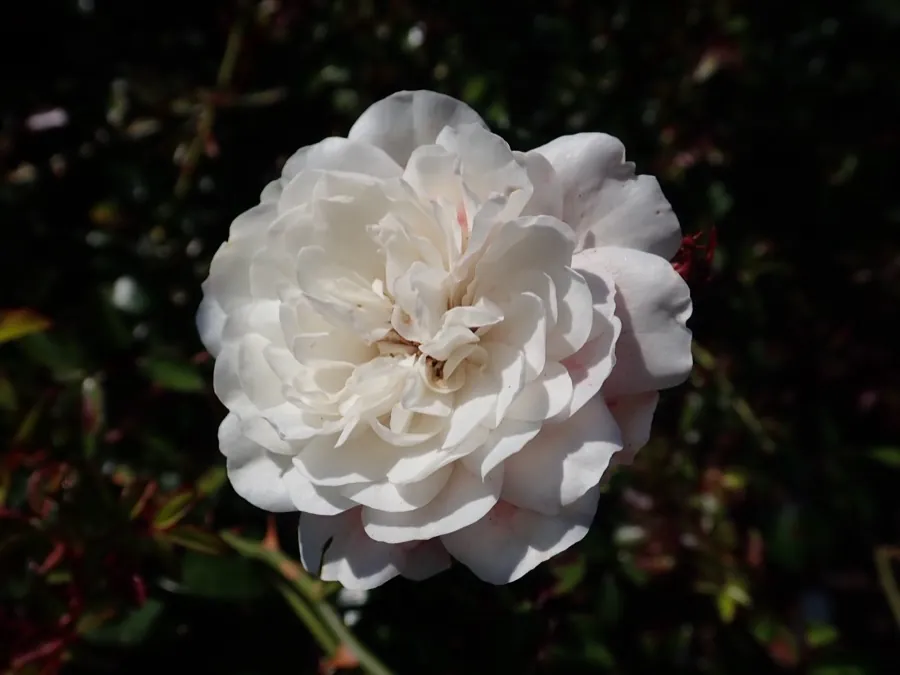
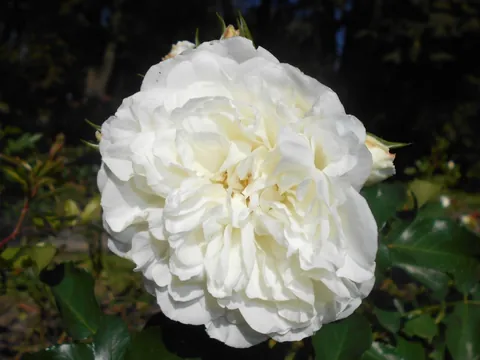
A pure white groundcover with golden stamens — a 'swan-like' silhouette; one of the first true groundcover roses, which opened the 'landscape' genre for Meilland; forerunner of the Meidiland series (Bonica, Scarlet Meidiland); up to 95 petals in a small cupped flower.

Forerunner of the Meidiland series · the first true ground-cover rose

Variety profile

Flowering

Repeat flowering

Generous repeat flowering from June to October. Months are approximate, for the climate of Ukraine.

Legacy

First GC Meilland

Forerunner of Meidiland

Winter hardiness

−23 °C

USDA zone 6b. Central and southern Ukraine, no winter protection.

Compare reference temperatures

Plant size

40–75 × 80–200 cm
person 170 cm40–75 cm
Habit
Groundcover: wider than tall, with flexible arching shoots
Dimensions
40–75 cm tall × 80–200 cm wide — spreads to 2 m, staying low
Support
Not needed — self-supporting
Shoots
Flexible, trailing over the ground — covers the soil well
Branching
Densely branched, spreading horizontally

Flower

3-5 cm
Bud shape
Small, round, pure white, occasionally with a slight pink tint
Open flower
Very full cupped: 3–5 cm, up to 95 petals (per HMF) — surprisingly many for a small flower
Centre
When fully open, golden-yellow stamens are visible — a 'swan's eye' on a white background
Fullness
Up to 95 petals (very full) — unusual for groundcovers
Flower carriage
In large clusters — a solid white carpet

Fragrance

Light; unobtrusive

Light, unobtrusive — typical of landscape roses (priority: resilience and flowering).

Disease resistance

4 out of 5
Black spotresistantPowdery mildewresistant

High, 4/5, against black spot and powdery mildew — the standard for landscape roses. USDA 6b — in central and southern Ukraine without winter protection; in the north, light winter protection is advisable.

Sun

Sun and partial shade

Tolerates partial shade.

Thorns

Few
thornlessfewmoderatemanyvery many

Few prickles — Meilland's selection for safe landscape plantings.

Foliage

Dark green, glossy, small.

All characteristics in a table
Group
Shrub / Ground Cover; the ancestor of Meilland's landscape roses
Breeder
Marie-Louise (Louisette) Meilland-Paolino; Meilland, France, 1977
Bud shape
Small, round, pure white, occasionally with a slight pink tint
Open flower
Very full cupped: 3–5 cm, up to 95 petals (per HMF) — surprisingly many for a small flower
Centre
When fully open, golden-yellow stamens are visible — a 'swan's eye' on a white background
Colour
Pure white with the faintest pearly sheen; does not yellow or grey at the end of flowering
Fullness
Up to 95 petals (very full) — unusual for groundcovers
Flower carriage
In large clusters — a solid white carpet
Flowering
Generous repeat flowering from June to October
Fragrance
Light, unobtrusive — typical of landscape roses (priority: resilience and flowering)
Hips
Not formed — energy goes into repeat flowering
Habit
Groundcover: wider than tall, with flexible arching shoots
Branching
Densely branched, spreading horizontally
Shoots
Flexible, trailing over the ground — covers the soil well
Thorns
Few prickles — Meilland's selection for safe landscape plantings.
Dimensions
40–75 cm tall × 80–200 cm wide — spreads to 2 m, staying low
Support
Not needed — self-supporting
Foliage
Dark green, glossy, small
Resistance
High, 4/5, against black spot and powdery mildew — the standard for landscape roses. USDA 6b — in central and southern Ukraine without winter protection; in the north, light winter protection is advisable
Variations of the variety
Code MEIburenac. Introduced 1977 through Meilland. Breeder: Marie-Louise (Louisette) Meilland-Paolino. Parentage: Rosa sempervirens L. × 'Mademoiselle Marthe Carron'. The heritage of R. sempervirens (the evergreen Mediterranean rose) gave the exceptional groundcover form and dense foliage

Colour scheme

Pure white with the faintest pearly sheen; does not yellow or grey at the end of flowering

Rose neighbours

Perennials to plant nearby

Neighbouring roses

White ground-cover roses and the Meidiland family — they make a light landscape planting:

Perennial companions

Silvery-grey neighbours for a 'moon' / white garden:

lavenderStachyslady's mantle (Alchemilla)ornamental grasses

Availability worldwide

⭐ Classic Meilland landscape rose of the 1970s:

🇫🇷 France: very high · home country🇪🇺 Europe: high · parks and avenues🇺🇸 USA: moderate🇺🇦 Ukraine: moderate · via collector nurseries

More about the variety

Hips
Not formed — energy goes into repeat flowering
Variations of the variety
Code MEIburenac. Introduced 1977 through Meilland. Breeder: Marie-Louise (Louisette) Meilland-Paolino. Parentage: Rosa sempervirens L. × 'Mademoiselle Marthe Carron'. The heritage of R. sempervirens (the evergreen Mediterranean rose) gave the exceptional groundcover form and dense foliage

How to grow

Where to plant. As a white carpet along paths; on slopes to hold the soil; as the front of a mixed border; in 'white' or moon gardens; under windows as a low edging; under trees and shrubs — it tolerates partial shade well.

Climate. Central and southern Ukraine without winter protection (USDA 6b); in the north, light winter protection is advisable; tolerates summer heat well.

Care. Minimal — full sun or light shade; prune once every 2–3 years with secateurs; feed 1–2× per season; rarely needs treatment.

About the name

Name. 'Swany' — from the English 'swan'. For the purity of its white colour and the graceful form of the groundcover — the bush seems to 'float' over the ground like a swan on water. A poetic, image-based name, typical of Meilland.

Breeding. Bred by Marie-Louise (Louisette) Meilland-Paolino at Meilland (Antibes, France). Code MEIburenac. Introduced 1977. Parentage: Rosa sempervirens L. × 'Mademoiselle Marthe Carron'. R. sempervirens — the evergreen Mediterranean rose — gave Swany its groundcover form, dense foliage and good hardiness.

Significance. One of the first true groundcover roses of its era — it opened a whole 'landscape' genre for Meilland. A forerunner of the Meidiland series: Swany's success inspired Marie-Louise Meilland to create Bonica (1981, WFRS HoF 2003), Scarlet Meidiland (1985), White Meidiland and the whole Meidiland series — the standard of landscape roses of the XX-XXI centuries. Very full flowers on a groundcover are a rare combination (groundcovers usually have single or semi-double flowers). It tolerates partial shade — a rare quality for roses. Swany is also one of the few white roses suited to the classic moon gardens of Vita Sackville-West at Sissinghurst.

Frequently asked questions about Swany

Does Swany need winter protection?

The cultivar’s reference temperature is −23 °C (USDA zone 6b). Overwintering depends on the conditions. Central and southern Ukraine, no winter protection.

How many times a season does Swany flower?

Generous repeat flowering from June to October.

How big does Swany grow?

40–75 cm tall, 80–200 cm wide.

Which diseases affect Swany?

Overall resistance: 4 out of 5. High — the standard for landscape roses.

How much sun does Swany need?

Sun and partial shade; tolerates partial shade.

What does Swany smell like?

Light, unobtrusive — typical of landscape roses (priority: resilience and flowering).

Gardeners' photos and reviews

My climate

Choose a reference temperature to compare with the cultivar’s data. This is not an overwintering forecast or advice on winter protection; consider wind, moisture and the duration of frost.

Regional data are generalised. USDA describes average annual extreme minima, not a forecast; the values in the list are rounded. Check the conditions at your site. More information: Roses in Ukraine's climate.