

Back to catalogue
Hybrid Tea (striped); striped HT, a rare direction for McGredySamuel Darragh McGredy IV, 1988Yellow

Tropical Sunset

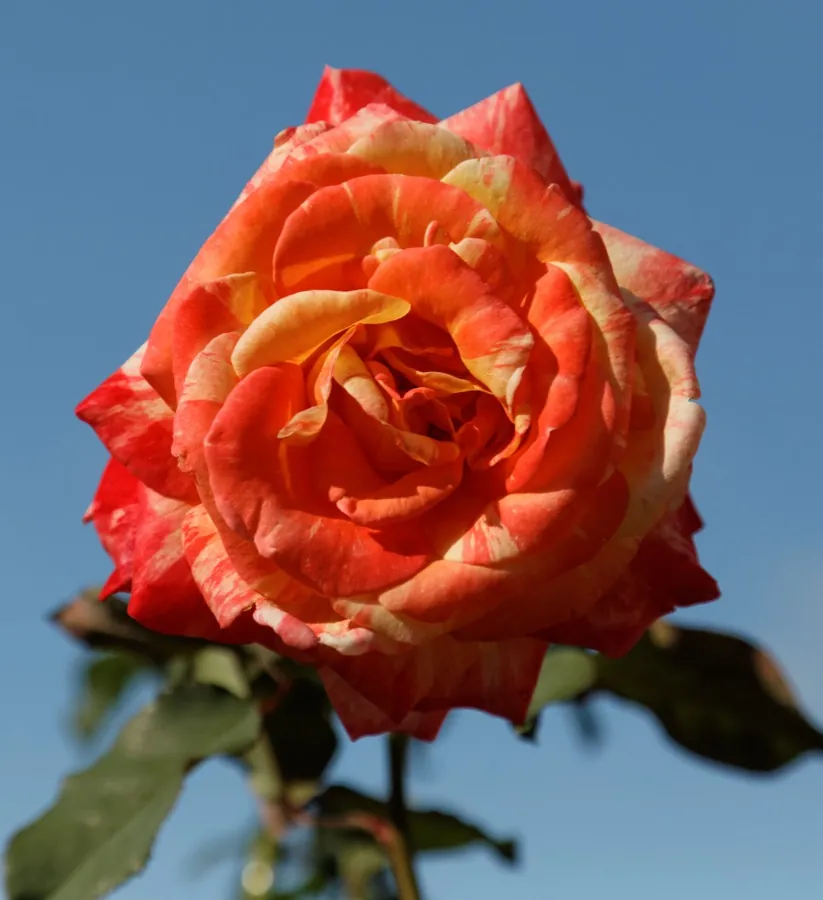
Yellow with orange-red stripes and a pale yellow reverse, like a tropical sunset. Bred by Sam McGredy IV, the fourth generation of the dynasty and the only one who consistently developed striped roses as a separate direction; one of the best-known striped HTs of the 80s. 🇳🇿 From New Zealand, where McGredy IV moved the family business. Also sold under the names 'Marvelle' and 'Rainbow Niagara'.

McGredy IV — the fourth generation of a legendary dynasty of breeders

Variety profile

Flowering

Repeat flowering

Generous repeat flowering from June to October. Months are approximate, for the climate of Ukraine.

Legacy

McGredy IV

4th-generation striped family

Winter hardiness

−18 °C

USDA zone 7b. Southern Ukraine: no winter cover needed.

Compare reference temperatures

Plant size

90–120 × 75 cm
person 170 cm90–120 cm
Habit
Tall, dense, upright; typical HT
Dimensions
90-120 cm tall × about 75 cm wide; a full-sized HT for cutting and beds
Support
Not needed; upright shoots hold themselves up
Shoots
Strong, long; good for cutting
Branching
Well branched

Flower

≈ 11 cm

17-40 petals.

Bud shape
Long, pointed, yellow with orange stripes
Open flower
Full HT form: about 11 cm (4.5"), 17-40 petals (full 26-40)
Centre
Densely packed
Fullness
17-40 petals (full)
Flower carriage
Singly on a long stem; good for cutting

Fragrance

Moderate; fruity, spicy, sweet

Moderate: fruity, spicy, sweet, a rare combination of three fragrances.

Disease resistance

3.5 out of 5
Rustresistant

Moderate, 3.5/5; resistant to rust, a specific quality that the breeder declared. USDA 7b+: southern Ukraine without cover; centre and north with cover.

Sun

Full sun

Thorns

Moderate
thornlessfewmoderatemanyvery many

Moderate number of thorns; typical for HTs.

Foliage

Dark green, semi-matt.

All characteristics in a table
Group
Hybrid Tea (striped); striped HT, a rare direction for McGredy
Breeder
Samuel Darragh McGredy IV, New Zealand, 1988
Bud shape
Long, pointed, yellow with orange stripes
Open flower
Full HT form: about 11 cm (4.5"), 17-40 petals (full 26-40)
Centre
Densely packed
Colour
Yellow with orange-red stripes and a pale yellow reverse. It lightens with age: it starts as a rich 'tropical sunset' and finishes paler. Several colour stages appear on the same bush at once
Fullness
17-40 petals (full)
Flower carriage
Singly on a long stem; good for cutting
Flowering
Generous repeat flowering from June to October
Fragrance
Moderate: fruity, spicy, sweet, a rare combination of three fragrances
Hips
Not documented; usually cut
Habit
Tall, dense, upright; typical HT
Branching
Well branched
Shoots
Strong, long; good for cutting
Thorns
Moderate number of thorns; typical for HTs.
Dimensions
90-120 cm tall × about 75 cm wide; a full-sized HT for cutting and beds
Support
Not needed; upright shoots hold themselves up
Foliage
Dark green, semi-matt
Resistance
Moderate, 3.5/5; resistant to rust, a specific quality that the breeder declared. USDA 7b+: southern Ukraine without cover; centre and north with cover
Variations of the variety
Code MACtaurang. Introduced 1988. Breeder: Samuel Darragh McGredy IV (New Zealand). Parentage: 'Louise Gardner' × 'Port Ludlow'. Not to be confused with the 'Coker 1994' hypothesis, which is a myth; the true attribution is McGredy IV, 1988

Colour scheme

Yellow with orange-red stripes; the reverse of the petal is pale yellow. It lightens with age: it starts as a rich 'tropical sunset' and finishes paler. Several colour stages appear on the same bush at once

Rose neighbours

Perennials to plant nearby

Neighbouring roses

Warm HTs for a warm planting of related varieties:

Companion perennials

A sunny palette with purple accents:

coreopsislavenderstachyssedum

Availability worldwide

McGredy striped HT from New Zealand:

🇳🇿 New Zealand: high · origin: McGredy IV🇺🇸 USA: moderate🇪🇺 Europe: moderate🇺🇦 Ukraine: rare

More about the variety

Hips
Not documented; usually cut
Variations of the variety
Code MACtaurang. Introduced 1988. Breeder: Samuel Darragh McGredy IV (New Zealand). Parentage: 'Louise Gardner' × 'Port Ludlow'. Not to be confused with the 'Coker 1994' hypothesis, which is a myth; the true attribution is McGredy IV, 1988

How to grow

Where to plant. As a 'burst of colour' accent in a bed, thanks to its striped character; in 'genealogical' collections of 80s HTs; for cutting, thanks to its long stems; beside a bench, for its moderate fruity fragrance; not in damp shade.

Climate. USDA 7b. Southern Ukraine without cover; centre and north with mandatory winter cover. Tolerates summer heat well and even intensifies the colour.

Care. Full sun; moderate prevention against black spot (rust resistance is declared); feeding 3× per season; pruning ⅓ in spring; regular watering at the root.

About the name

Name. 'Tropical Sunset', for the yellow-orange-red striped gradient, which recalls a tropical sunset over the ocean. A poetic name, typical of McGredy-style naming (Sam IV gave his roses memorable descriptive names).

Breeding. Bred by Samuel Darragh McGredy IV (New Zealand). Code MACtaurang. Introduced 1988. Parentage: 'Louise Gardner' × 'Port Ludlow'. Sam McGredy IV represents the fourth generation of the legendary McGredy dynasty of breeders: I (Sam McGredy 1817-1881, founded the firm in Portadown, Northern Ireland) – II – III – IV (born 1932, moved the business to New Zealand in 1972). McGredy IV was one of the few breeders who consistently developed striped roses as a separate line (Old Master, Sentimental, Hurdy Gurdy Tropical Sunset).

Significance. Striped HT is a rare class, which McGredy IV studied for decades. The fourth McGredy generation is one of the longest breeding lineages in the rose world (170+ years of continuous breeding). Legacy of McGredy: together with Old Master, Sentimental, Hurdy Gurdy Tropical Sunset, it forms the 'striped' direction collection. Resistant to rust, a quality the breeder specifically declared. A complex fruity, spicy, sweet fragrance, a rare combination. The misattribution 'Coker 1994' in some legacy catalogues is a myth; the true attribution is McGredy IV, 1988. No major international awards (ADR/AARS/RHS AGM) are documented.

Frequently asked questions about Tropical Sunset

Does Tropical Sunset need winter protection?

The cultivar’s reference temperature is −18 °C (USDA zone 7b). Overwintering depends on the conditions. Southern Ukraine: no winter cover needed.

How many times a season does Tropical Sunset flower?

Generous repeat flowering from June to October.

How big does Tropical Sunset grow?

90–120 cm tall, about 75 cm wide.

Which diseases affect Tropical Sunset?

Overall resistance: 3.5 out of 5. 3.5 / 5; resistant to rust.

How much sun does Tropical Sunset need?

Sun; full sun.

What does Tropical Sunset smell like?

Moderate: fruity, spicy, sweet, a rare combination of three fragrances.

Gardeners' photos and reviews

My climate

Choose a reference temperature to compare with the cultivar’s data. This is not an overwintering forecast or advice on winter protection; consider wind, moisture and the duration of frost.

Regional data are generalised. USDA describes average annual extreme minima, not a forecast; the values in the list are rounded. Check the conditions at your site. More information: Roses in Ukraine's climate.