



About the name
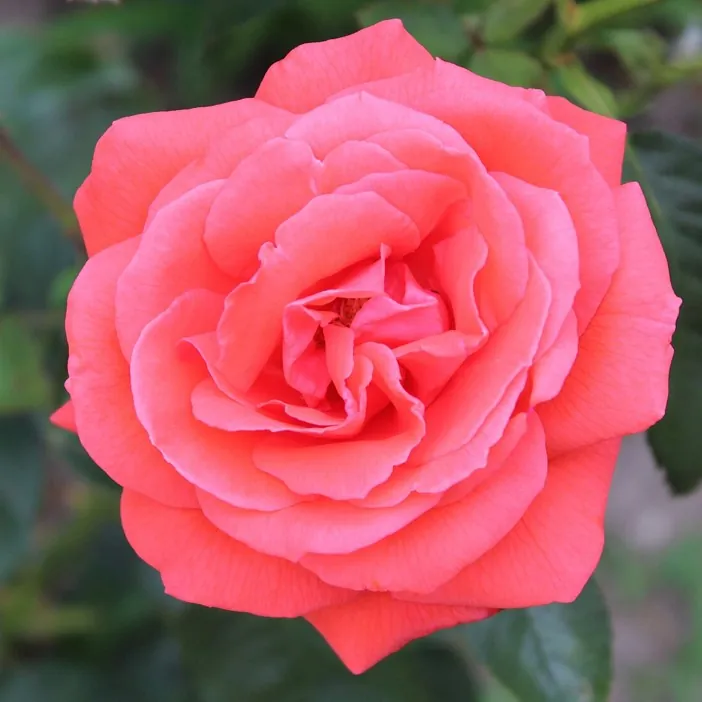
Name. It has two names for different markets: 'Super Star' in Europe (German/English), after the sensational character of the variety, and 'Tropicana' in the USA (the commercial name of Jackson & Perkins), which stresses the 'tropical', explosive orange colour. The best-known example of a 'trade renaming' in the history of roses.
Breeding. Bred by Mathias Tantau Jr. at Rosen Tantau (Uetersen, Germany). Code TANorstar. Introduced 1960 in Germany and France, 1961 in the UK, 1962 in the USA. Parentage: seedling 5135 (Tantau) × a seedling with 'Super Star' pollen; the seed parent is not disclosed. Tantau opened up a new pigment, pelargonidin at an unusually high concentration, which produced the effect of 'fluorescence'.
Significance. THE FIRST ROSE IN HISTORY with a truly FLUORESCENT orange pigment. In the early 1960s the colour was seen as “impossible”; breeders said “Tantau opened up a new part of the spectrum for roses”. AARS 1963 (All-America Rose Selections, the main American award). RNRS President's International Trophy 1960 + RNRS Gold Medal 1960, the highest British awards. 6 Gold Medals: Bagatelle (Paris 1960), Geneva (1960), Madrid Certificate (1960), Portland (1961), The Hague (1961) + Golden Rose of The Hague. 30+ million bushes sold in the first decade, a commercial giant of its era. The first rose with a 'new colour spectrum'; after Tropicana, all the modern 'neon' orange varieties appeared. IMPORTANT: Tropicana is NOT in the WFRS Hall of Fame (a common myth; the list includes only Peace, Queen Elizabeth, Fragrant Cloud, Iceberg, Double Delight, Papa Meilland, Pascali, Just Joey, New Dawn, Ingrid Bergman, Bonica, Pierre de Ronsard, Elina, Graham Thomas, Sally Holmes, Cocktail, Knock Out, Pink Flower Carpet). It did not receive an ADR, despite its German origin. Weak resistance, 2/5: a classic 'sacrifice for a breakthrough in colour'.