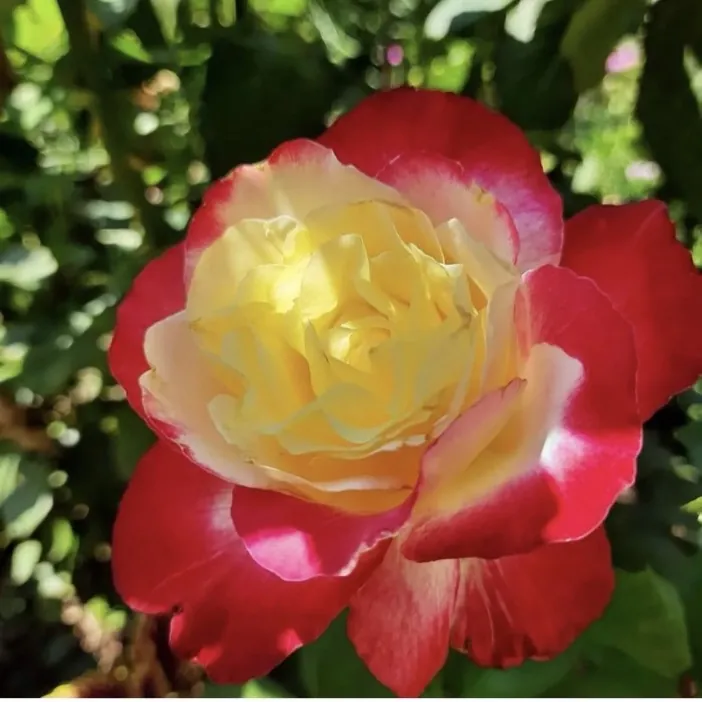
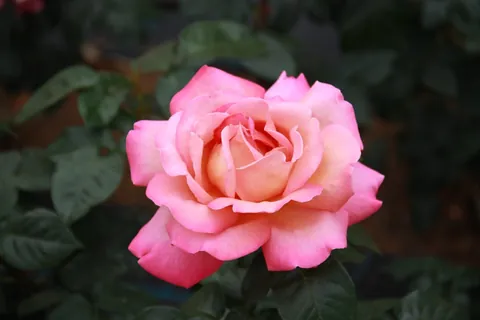

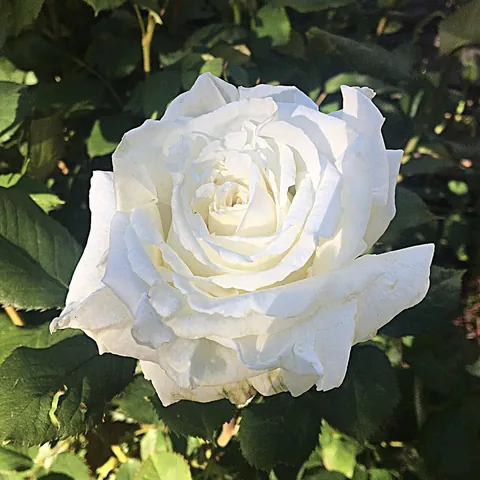
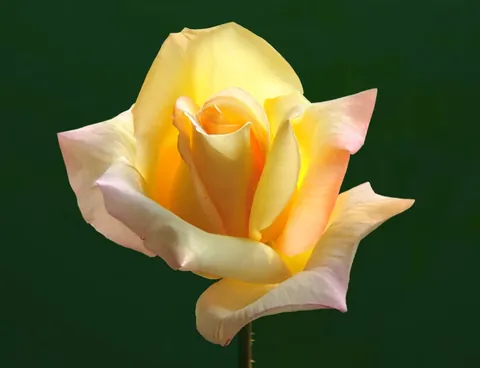



Double Delight, close-up of the flower
Back to catalogue
Hybrid TeaSwim & Ellis, 1977Bicolour

Double Delight

AARS 1977; WFRS Rose Hall of Fame 1985; one of the best-known roses of the twentieth century.

Armstrong Nurseries · Hall of Fame

Variety profile

Flowering

Repeat flowering

Repeat-flowering, continuous from May to October. Months are approximate, for the climate of Ukraine.

Awards

HoF · Gamble

AARS 1977 · WFRS HoF 1985 · Gamble Fragrance 1986 · Gold Baden-Baden + Roma 1976

Winter hardiness

−25 °C

USDA zone 5b–10b. In Ukraine with winter protection.

Compare reference temperatures

Plant size

90–150 × 60–90 cm
person 170 cm90–150 cm
Habit
Upright bush with long stems; ideal for cutting
Dimensions
90–150 cm tall × 60–90 cm wide
Support
No support needed; a standard HT (a climbing sport exists separately: AROclidd 1982)
Shoots
Sturdy, straight, they carry the large flowers well
Branching
Moderate; the shoots spread well from the base

Flower

12–15 cm
Bud shape
Elongated, high-centred, cream with raspberry highlights
Open flower
Classic high-centred HT form; 12–15 cm across (up to 6 inches), very large
Centre
Cream-white, the intensity lessening from the centre toward the edges
Fullness
Full, 30–45 petals
Flower carriage
Mostly large flowers borne singly on long stems; ideal for cutting

Fragrance

Strong

Outstanding; strong, fruity-spicy, with a note of lily of the valley and a soft spice; one of the most fragrant HT varieties of all time.

Disease resistance

3 out of 5
Powdery mildewsusceptible

Moderate: prone to powdery mildew in humid climates, but tolerates heat well; regular preventive treatments are essential.

Sun

6 hours

At least 6 hours a day; more sun gives a deeper raspberry edge.

Thorns

Moderate
thornlessfewmoderatemanyvery many

Moderate number of thorns (typical for HT).

Foliage

Dark green, leathery.

Other names

Breeder's code ANDeli.

All characteristics in a table
Group
Hybrid Tea
Breeder
Swim & Ellis, 1977
Bud shape
Elongated, high-centred, cream with raspberry highlights
Open flower
Classic high-centred HT form; 12–15 cm across (up to 6 inches), very large
Centre
Cream-white, the intensity lessening from the centre toward the edges
Colour
A LEGENDARY bicolour: a cream-white centre with raspberry-pink edges that 'outline' each petal, like an ombré; the intensity of the raspberry depends on sun and temperature, so every flower is unique
Fullness
Full, 30–45 petals
Flower carriage
Mostly large flowers borne singly on long stems; ideal for cutting
Flowering
Repeat-flowering, continuous from May to October
Fragrance
Outstanding; strong, fruity-spicy, with a note of lily of the valley and a soft spice; one of the most fragrant HT varieties of all time
Hips
Rarely sets hips
Habit
Upright bush with long stems; ideal for cutting
Branching
Moderate; the shoots spread well from the base
Shoots
Sturdy, straight, they carry the large flowers well
Thorns
Moderate number of thorns (typical for HT).
Dimensions
90–150 cm tall × 60–90 cm wide
Support
No support needed; a standard HT (a climbing sport exists separately: AROclidd 1982)
Foliage
Dark green, leathery
Resistance
Moderate: prone to powdery mildew in humid climates, but tolerates heat well; regular preventive treatments are essential
Variations of the variety
Climbing sport: Double Delight, Cl. (AROclidd, 1982). Do not confuse them: the main variety has the code ANDeli, the climber has AROclidd

Colour scheme

A LEGENDARY bicolour: a cream-white centre with raspberry-pink edges that 'outline' each petal, like an ombré; the intensity of the raspberry depends on sun and temperature, so every flower is unique

Rose neighbours

Perennials to plant nearby

Neighbouring roses

Classic HT partners — bicolour + cream/white varieties:

Perennial companions

Raspberry and blue — bring out the ombré bicolour:

bee balm 'Cambridge Scarlet'sage 'Blue Hill'echinacea 'Pow Wow White'lavender 'Grosso'

Availability worldwide

A bestseller for 50 years — in the catalogue of every major nursery in the world:

  • 🇪🇺 Europe: Pharmarosa · PIROBA · all the major ones
  • 🇺🇸 USA: J&P · Weeks · Grace · Heirloom · Rogue Valley
  • 🇯🇵 Asia: Double Delight (ダブル デライト) · Korea · China
  • 🇺🇦 Ukraine: Panski Sady · Posadka · Sadu Bykovynu · all nurseries

More about the variety

Hips
Rarely sets hips
Variations of the variety
Climbing sport: Double Delight, Cl. (AROclidd, 1982). Do not confuse them: the main variety has the code ANDeli, the climber has AROclidd

How to grow

Where to plant. Showy borders, cutting roses, sunny spots with free air circulation; ideal as a specimen or an accent thanks to its large flowers.

Climate. Down to −25 °C; in Ukraine winter protection is advisable in the northern regions, and in the south no cover is needed.

Care. A classic HT; needs regular preventive treatments against powdery mildew (especially in humid climates) and formative pruning in spring. Steady watering keeps the colour in the heat.

About the name

Name. 'Double Delight', 'double pleasure': one 'delight' is the bicolour beauty (cream and raspberry), the other is the powerful fruity-spicy scent. The name captures the character of the variety precisely.

Breeding. Raised by the legendary duo Herb Swim and Arnold Ellis at Armstrong Nurseries (USA), 1976; introduced in 1977. Patent code ANDeli. The rights holder is now Weeks Roses. Parentage: Granada (Lindquist 1963, red-yellow HT) × Garden Party (Swim 1959, ivory HT).

Significance. ONE OF THE MOST FAMOUS ROSES OF THE TWENTIETH CENTURY. Wikipedia describes it as 'one of the most famous and widely grown modern roses in the world'. The cream-raspberry bicolour became the standard: every flower is unique, because the intensity of the colours changes with the weather. Created by the legendary Swim/Ellis duo at Armstrong Nurseries, it is the last great hit of the classic HT era. It was included in the World Federation of Rose Societies Rose Hall of Fame in 1985, one of the highest international honours. Full list of awards: Gold Baden-Baden + Roma 1976, Fragrance Geneva 1976, AARS 1977, WFRS Hall of Fame 1985, James Alexander Gamble Fragrance Medal ARS 1986.

Frequently asked questions about Double Delight

Does Double Delight need winter protection?

The cultivar’s reference temperature is −25 °C (USDA zone 5b–10b). Overwintering depends on the conditions. In Ukraine with winter protection.

How many times a season does Double Delight flower?

Repeat-flowering, continuous from May to October.

How big does Double Delight grow?

90–150 cm tall, 60–90 cm wide.

Which diseases affect Double Delight?

Overall resistance: 3 out of 5. Prone to powdery mildew in humid climates; tolerates heat well.

How much sun does Double Delight need?

Sun; at least 6 hours a day; more sun gives a deeper raspberry edge.

What does Double Delight smell like?

Outstanding; strong, fruity-spicy, with a note of lily of the valley and a soft spice; one of the most fragrant HT varieties of all time.

Gardeners' photos and reviews

My climate

Choose a reference temperature to compare with the cultivar’s data. This is not an overwintering forecast or advice on winter protection; consider wind, moisture and the duration of frost.

Regional data are generalised. USDA describes average annual extreme minima, not a forecast; the values in the list are rounded. Check the conditions at your site. More information: Roses in Ukraine's climate.