


Back to catalogue
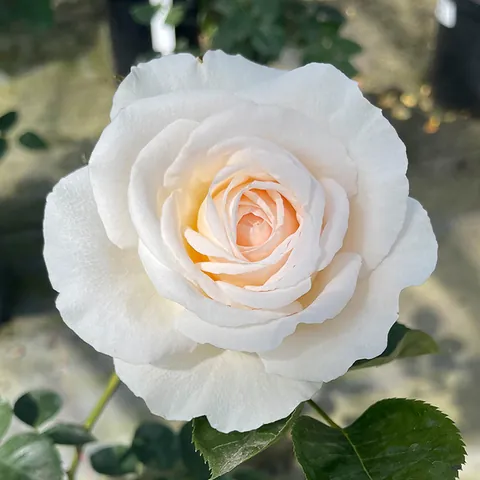
Spray Rose; FloribundaDe Ruiter, 2007Apricot and orange

Alegria

Ruiortro; an orange-pink spray rose with the longest vase life — up to 2 weeks.

Cut flower for bouquets / bedding rose

Variety profile

Flowering

Repeat, in flushes

Repeat-flowering in flushes: May – September; provided spent flower heads are removed. Months are approximate, for the climate of Ukraine.

Cut flowers

~2 weeks

One of the longest-lasting spray roses in a bouquet

Winter hardiness

−23 °C

USDA zone 6. All of Ukraine; with protection in the northern regions.

Compare reference temperatures

Plant size

60–70 × 50 cm
person 170 cm60–70 cm
Habit
Upright, compact; a neat bush for a border
Dimensions
60–70 cm tall × ~50 cm wide
Support
Does not need support — a compact border rose
Shoots
Sturdy, straight; hold heavy clusters well without tying in
Branching
Medium; holds its shape well without formative pruning

Flower

5–7 cm
Bud shape
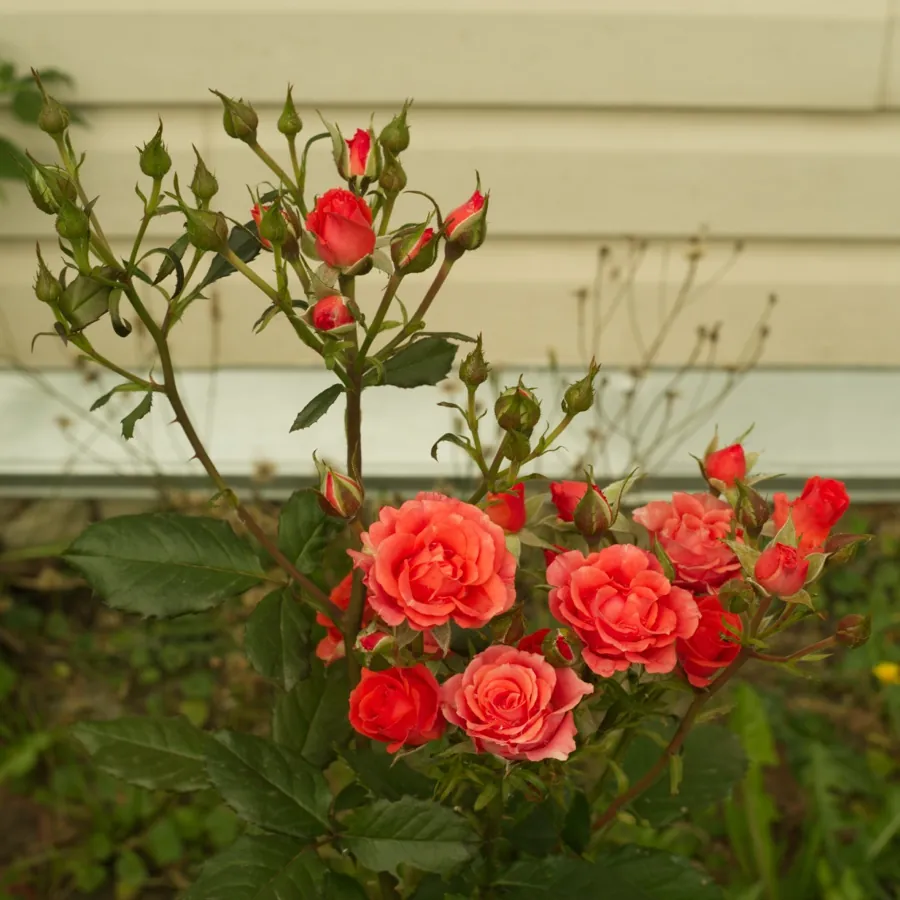
Small, goblet-shaped; dark orange, velvety
Open flower
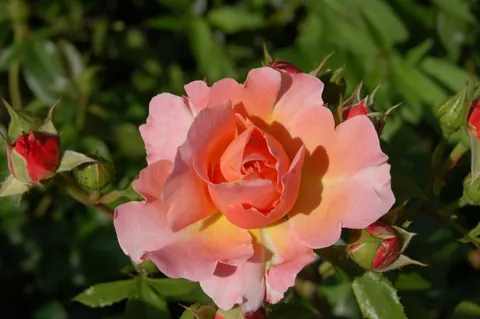
Fully double, cup-shaped; diameter 5–7 cm; petals layer tightly
Centre
Moderately dense; stamens can be seen when fully open
Fullness
Fully double, 25–35 petals (some sources give up to 50)
Flower carriage
In clusters of 5–10 flowers per stem; on strong stems up to 20+; like a small bouquet on a single stalk

Fragrance

Barely noticeable

Very weak, almost absent — the variety was bred for bouquet cutting and resilience, not for scent.

Disease resistance

3.5 out of 5
Black spotmoderatePowdery mildewmoderate

Moderate (++): good against powdery mildew; against black spot — moderate; in unfavourable years needs preventive treatment; rain-resistant.

Sun

Full sun

Tolerates light shade; holds up well in rain.

Thorns

Moderate
thornlessfewmoderatemanyvery many

Moderate number of thorns; the canes are prickly, typical of a cut-flower rose.

Foliage

Dark green, glossy, dense.

All characteristics in a table
Group
Spray Rose; Floribunda
Breeder
De Ruiter, 2007
Bud shape
Small, goblet-shaped; dark orange, velvety
Open flower
Fully double, cup-shaped; diameter 5–7 cm; petals layer tightly
Centre
Moderately dense; stamens can be seen when fully open
Colour
Orange-pink, softly orange; the velvety texture of the petal gives depth
Fullness
Fully double, 25–35 petals (some sources give up to 50)
Flower carriage
In clusters of 5–10 flowers per stem; on strong stems up to 20+; like a small bouquet on a single stalk
Flowering
Repeat-flowering in flushes: May – September; provided spent flower heads are removed
Fragrance
Very weak, almost absent — the variety was bred for bouquet cutting and resilience, not for scent
Vase life
About 2 weeks — a record for a spray rose
Habit
Upright, compact; a neat bush for a border
Branching
Medium; holds its shape well without formative pruning
Shoots
Sturdy, straight; hold heavy clusters well without tying in
Thorns
Moderate number of thorns; the canes are prickly, typical of a cut-flower rose.
Dimensions
60–70 cm tall × ~50 cm wide
Support
Does not need support — a compact border rose
Foliage
Dark green, glossy, dense
Resistance
Moderate (++): good against powdery mildew; against black spot — moderate; in unfavourable years needs preventive treatment; rain-resistant
Purpose
Dual-purpose — as a cut bouquet rose (Spray Rose) and as a garden Floribunda for a border

Colour scheme

Orange-pink, softly orange; the velvety texture of the petal gives depth

Rose neighbours

Perennials to plant nearby

Neighbouring roses

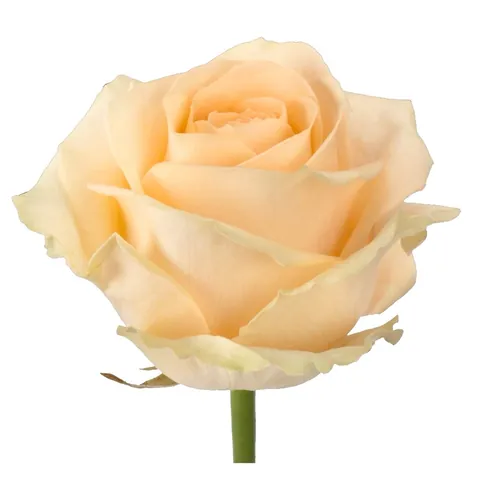
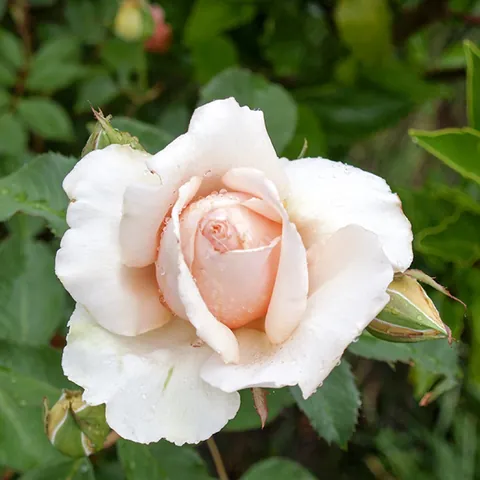
Warm peach-apricot roses keep one soft orange mood around Alegria:

Perennial companions

A cool purple-blue frame — a classic contrast to the warm orange:

lavendersalvia Caradonnacatmint (Nepeta)delphiniumagastache

Contrasting accents

White and silver accents highlight the warmth of Alegria:

GypsophilaLamb's ear (Stachys)Bronze-leaved heucheraOrnamental grasses (Stipa)

More about the variety

Vase life
About 2 weeks — a record for a spray rose
Purpose
Dual-purpose — as a cut bouquet rose (Spray Rose) and as a garden Floribunda for a border

How to grow

Where to plant. In the front of a border, in groups of 3–5 bushes, in containers on a terrace or balcony. As a cut flower — in a dedicated 'cutting' corner of the garden for regular picking for bouquets.

Climate. Hardy to −23 °C; in the northern regions of Ukraine (Chernihiv and Sumy regions) light winter protection is advisable. In the Forest-Steppe and Steppe it overwinters reliably.

Care. Regular removal of spent flower heads for repeat flowering. Preventive treatment against black spot 1–2 times per season. Glossy foliage and sturdy canes — minimal care needed.

About the name

Name. 'Alegría' (Spanish) — 'joy, merriment, comfort'. The word comes from Latin alacer — 'lively, brisk', via the Spanish adjective alegre — 'cheerful'. The name conveys the festive, bouquet character of the variety with its warm orange-pink colour.

Breeding. Bred by the Dutch company De Ruiter Innovations BV in 2007. Breeder's code: Ruiortro. Parentage is not disclosed by the breeder (trade secret).

Significance. A commercial bestseller in the cut-flower trade — one of the most popular spray roses in the Dutch flower industry. Valued for its exceptionally long vase life (about 2 weeks), which makes it a favourite in wedding arrangements. In the garden it performs as a reliable Floribunda for a border.

Frequently asked questions about Alegria

Does Alegria need winter protection?

The cultivar’s reference temperature is −23 °C (USDA zone 6). Overwintering depends on the conditions. All of Ukraine; with protection in the northern regions.

How many times a season does Alegria flower?

Repeat-flowering in flushes: May – September; provided spent flower heads are removed.

How big does Alegria grow?

60–70 cm tall, about 50 cm wide.

Which diseases affect Alegria?

Overall resistance: 3.5 out of 5. 3.5 / 5; moderate; good against powdery mildew; black spot — needs preventive treatment.

How much sun does Alegria need?

Full sun; tolerates light shade; holds up well in rain.

What does Alegria smell like?

Very weak, almost absent — the variety was bred for bouquet cutting and resilience, not for scent.

Gardeners' photos and reviews

My climate

Choose a reference temperature to compare with the cultivar’s data. This is not an overwintering forecast or advice on winter protection; consider wind, moisture and the duration of frost.

Regional data are generalised. USDA describes average annual extreme minima, not a forecast; the values in the list are rounded. Check the conditions at your site. More information: Roses in Ukraine's climate.