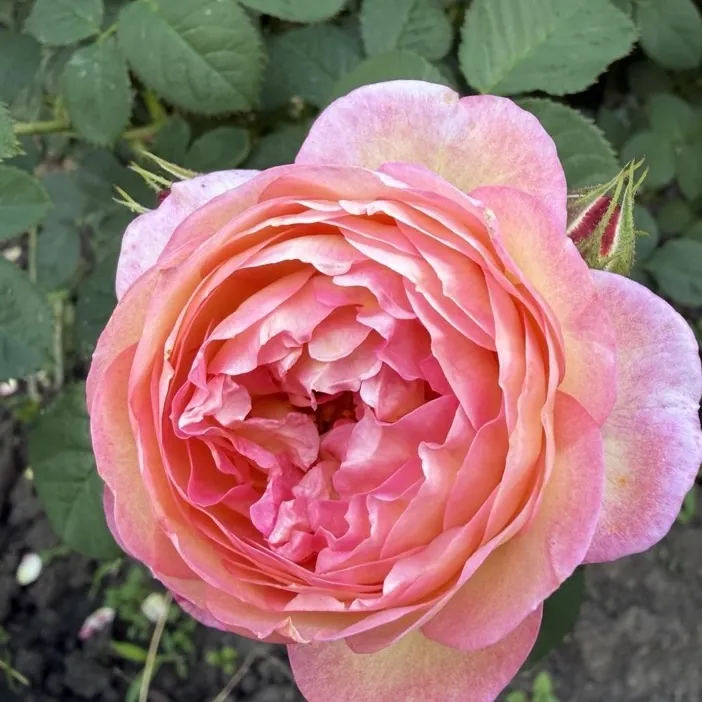
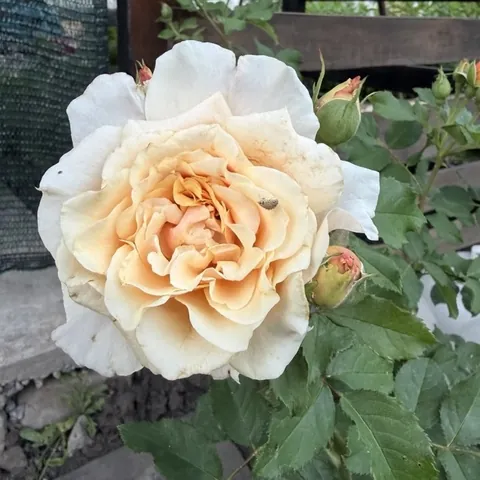
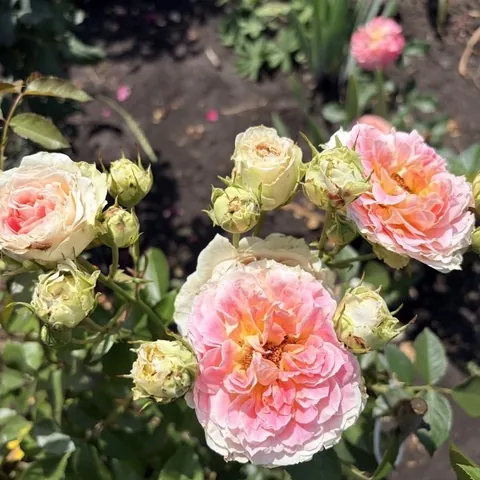
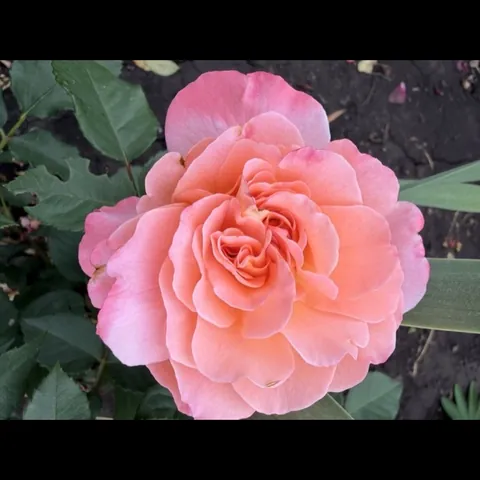
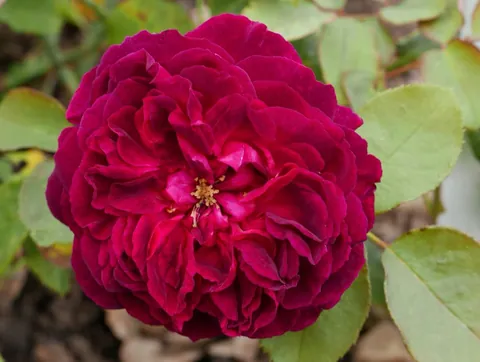


Alchymist, close-up of the flower
Back to catalogue
Climber (Large-Flowered Climber)Kordes, 1956Apricot and orange

Alchymist

Kordes 1956; an apricot-gold legendary climber with a powerful fruity-honey scent; flowers once a season, but exceptionally abundantly.

Classic from 1956; old-fashioned quartered rosette

Variety profile

Flowering

Once-flowering

Once-flowering — once a season (late spring to early summer), but exceptionally abundant; does not repeat-flower. Months are approximate, for the climate of Ukraine.

Awards

Classic

A legendary Kordes variety from 1956

Winter hardiness

−34 °C

USDA zone 4b. Exceptional hardiness — overwinters throughout Ukraine.

Compare reference temperatures

Plant size

250–300 × 200 cm
person 170 cm250–300 cm
Habit
A powerful, spreading climber with long arching canes
Dimensions
250–300 cm tall × up to 200 cm wide
Support
Yes — it needs a sturdy support: wall, large pergola, arch, fence. Tie the canes in horizontally for abundant flowering.
Shoots
Long, stiff — work well on a wall, pergola, large arch or fence
Branching
Strong; builds up a large mass over the years

Flower

8–10 cm
Bud shape
Round, golden apricot
Open flower
Quartered rosette of the old-fashioned type; diameter 8–10 cm; densely packed with petals
Centre
Dense, quartered (divided into segments) — the look of an old rose
Fullness
Very double, 60–80 petals
Flower carriage
Singly and in small groups along the entire length of the canes

Fragrance

Strong

Strong, fruity-honeyed — one of the most fragrant of the old climbers.

Disease resistance

3 out of 5
Black spotsusceptible

Moderate; in humid climates prone to black spot — good air flow and preventive treatment are worthwhile.

Sun

Sun or partial shade

Tolerates north-facing and shady walls — a rare quality for climbers.

Thorns

Many
thornlessfewmoderatemanyvery many

Thorny — typical of old vigorous climbers; work in gloves.

Foliage

Dense, dark green, leathery, with a light scent (inherited from R. eglanteria).

All characteristics in a table
Group
Climber (Large-Flowered Climber)
Breeder
Kordes, 1956
Bud shape
Round, golden apricot
Open flower
Quartered rosette of the old-fashioned type; diameter 8–10 cm; densely packed with petals
Centre
Dense, quartered (divided into segments) — the look of an old rose
Colour
'alchemy' of colour: from golden yellow through peach-apricot to pink as the flower matures — hence the name
Fullness
Very double, 60–80 petals
Flower carriage
Singly and in small groups along the entire length of the canes
Flowering
Once-flowering — once a season (late spring to early summer), but exceptionally abundant; does not repeat-flower
Fragrance
Strong, fruity-honeyed — one of the most fragrant of the old climbers
Hips
Occasional hips may form after flowering
Habit
A powerful, spreading climber with long arching canes
Branching
Strong; builds up a large mass over the years
Shoots
Long, stiff — work well on a wall, pergola, large arch or fence
Thorns
Thorny — typical of old vigorous climbers; work in gloves.
Dimensions
250–300 cm tall × up to 200 cm wide
Support
Yes — it needs a sturdy support: wall, large pergola, arch, fence. Tie the canes in horizontally for abundant flowering.
Foliage
Dense, dark green, leathery, with a light scent (inherited from R. eglanteria)
Resistance
Moderate; in humid climates prone to black spot — good air flow and preventive treatment are worthwhile
Winter hardiness
Exceptional — to USDA 4b (about −34 °C); overwinters reliably throughout Ukraine

Colour scheme

'alchemy' of colour: from golden yellow through peach-apricot to pink as the flower matures — hence the name

Rose neighbours

Perennials to plant nearby

Neighbouring roses

To go with the warm apricot-golden palette: peach, cream and soft pink varieties:

Perennials and clematis

Blue and lavender tones give the best contrast to the apricot-gold:

Catmint 'Faassen'perovskiaSage 'Caradonna'Geranium 'Wargrave'Clematis 'Étoile Violette'

Contrasting accents

Deep blue and silver foliage bring out the warm, honey-coloured flower:

Blue delphiniumsSpiked speedwellSilver wormwoodLady's mantle (Alchemilla)

More about the variety

Hips
Occasional hips may form after flowering
Winter hardiness
Exceptional — to USDA 4b (about −34 °C); overwinters reliably throughout Ukraine

How to grow

Where to plant. Large walls, pergolas, arches, fences — wherever there is room for a powerful climber of 2.5–3 m. Thanks to its tolerance of partial shade, it suits even north- and east-facing walls. It needs space — it becomes massive over the years.

Climate. Exceptional hardiness — to −34 °C (USDA 4b); overwinters reliably throughout Ukraine without special protection. One of the most long-lived old climbing varieties.

Care. It flowers once a season, so prune right after flowering (not in spring), removing the oldest canes. To prevent black spot — good air flow and treatments in a wet summer.

About the name

Name. 'Alchymist' (in Ukrainian, Alkhimik) — a hint at the 'alchemy' of the flower itself, which changes colour from gold through peach to pink, as if a substance were transforming before one's eyes. In Ukrainian the variety is often called Alkhimik.

Breeding. Bred by Reimer Kordes (W. Kordes' Söhne, Germany) and introduced in 1956. Parentage: 'Golden Glow' (Brownell) × a hybrid of Rosa eglanteria — hence the light fragrance of the foliage and exceptional hardiness.

Significance. A classic of the world's climbing rose range — combining the form of an old quartered rosette, a warm apricot-gold colour, a powerful fruity-honey scent and record hardiness. Despite flowering only once, it remains a gardeners' favourite for its romantic look and reliability.

Frequently asked questions about Alchymist

Does Alchymist need winter protection?

The cultivar’s reference temperature is −34 °C (USDA zone 4b). Overwintering depends on the conditions. Exceptional hardiness — overwinters throughout Ukraine.

How many times a season does Alchymist flower?

Once-flowering — once a season (late spring to early summer), but exceptionally abundant; does not repeat-flower.

How big does Alchymist grow?

250–300 cm tall, about 200 cm wide.

Which diseases affect Alchymist?

Overall resistance: 3 out of 5. Moderate; in a wet summer prone to black spot — preventive treatment needed.

How much sun does Alchymist need?

Sun or partial shade; tolerates north-facing and shady walls — a rare quality for climbers.

What does Alchymist smell like?

Strong, fruity-honeyed — one of the most fragrant of the old climbers.

Gardeners' photos and reviews

My climate

Choose a reference temperature to compare with the cultivar’s data. This is not an overwintering forecast or advice on winter protection; consider wind, moisture and the duration of frost.

Regional data are generalised. USDA describes average annual extreme minima, not a forecast; the values in the list are rounded. Check the conditions at your site. More information: Roses in Ukraine's climate.