


Back to catalogue
FloribundaAlain Meilland; Meilland International, 1996Bicolour

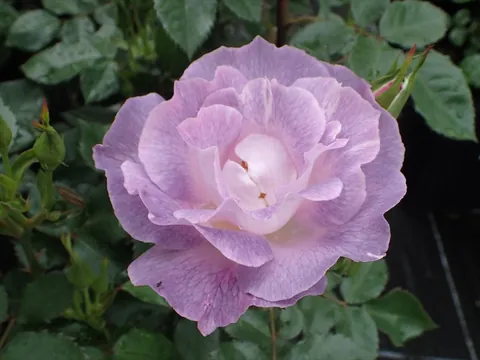
Marie Curie

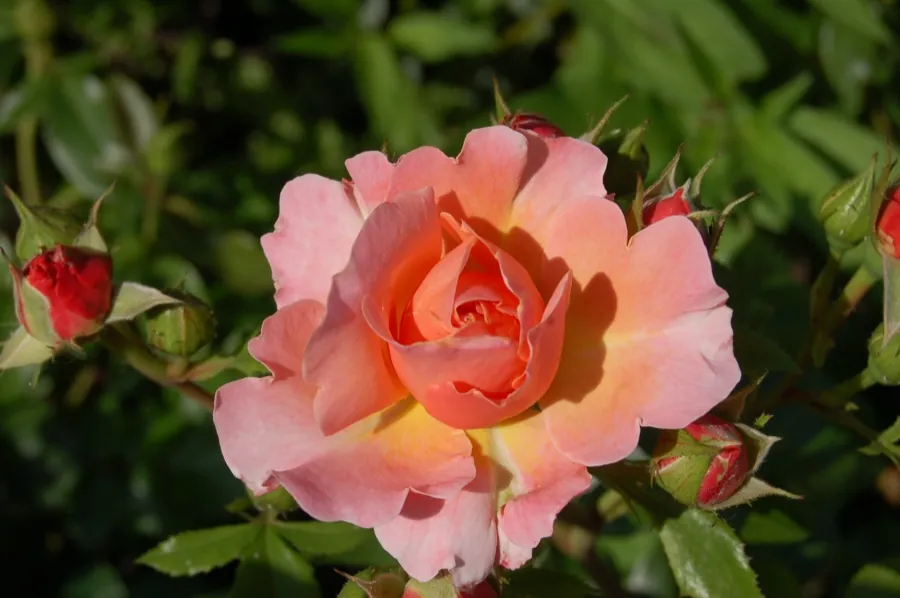
6 awards: Gold Hague 1996 + Top Rosen 2003+2010 (for long-term resistance); soft apricot with a pale pink edging; named after Maria Skłodowska-Curie (1867–1934) — the only person to have won 2 Nobel Prizes in different sciences.

Romantica® series · 4th Romantica in the catalogue

Variety profile

Flowering

Repeat-flowering, abundant

Awards

6 awards

Gold Hague 1996 · Saverne + Le Roeulx 1996 · Top Rosen 2003+2010

Winter hardiness

−20 °C

USDA zone 6. With moderate winter cover.

Compare reference temperatures

Plant size

60–80 × 60 cm
person 170 cm60–80 cm
Habit
Upright and compact — a typical Meilland Floribunda
Dimensions
60–80 × about 60 cm
Support
Does not need support
Shoots
Medium, straight
Branching
Good

Flower

≈ 9 cm

36 petals.

Bud shape
Round, apricot with pink highlights
Open flower
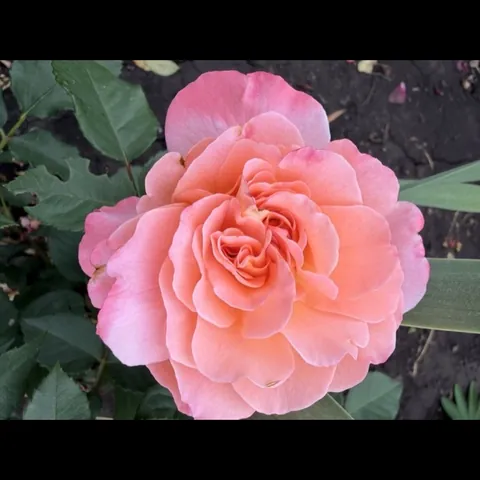
Full Romantica-form — an old-fashioned quartered form with a nostalgic touch
Centre
Tightly packed, apricot
Fullness
Full, about 36 petals
Flower carriage
Clusters of 2–5 flowers on the stem

Fragrance

Moderate; spicy; clove

Moderate spicy with a distinct clove note (clou de girofle) — a characteristic trait.

Disease resistance

5 out of 5

Excellent — confirmed by 2× Top Rosen Netherlands 2003 and 2010 (for long-term field resistance).

Sun

Full sun

Thorns

Moderate
thornlessfewmoderatemanyvery many

Average number.

Foliage

Dark green, leathery, very healthy.

Other names

Romantic Dreams
All characteristics in a table
Group
Floribunda
Breeder
Alain Meilland; Meilland International, France, 1996
Bud shape
Round, apricot with pink highlights
Open flower
Full Romantica-form — an old-fashioned quartered form with a nostalgic touch
Centre
Tightly packed, apricot
Colour
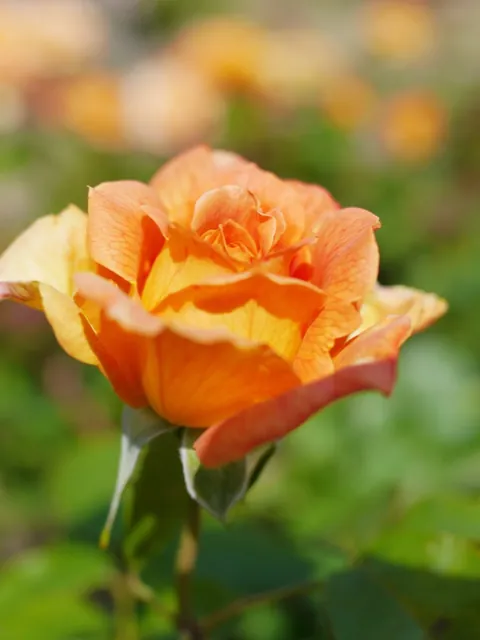
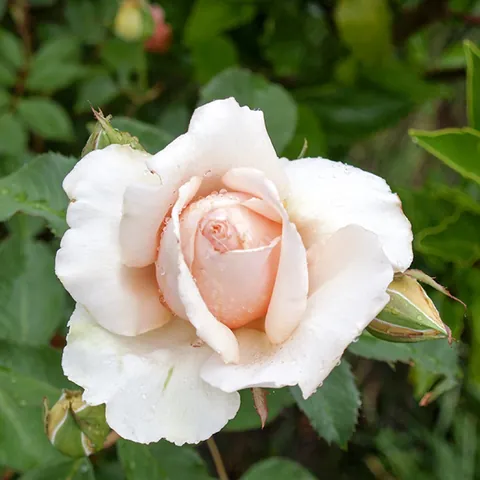
Soft apricot / light orange centre with a pale pink edging along the petals — a delicate two-tone gradient; a 'watercolour' effect
Fullness
Full, about 36 petals
Flower carriage
Clusters of 2–5 flowers on the stem
Flowering
Repeat-flowering, abundant
Fragrance
Moderate spicy with a distinct clove note (clou de girofle) — a characteristic trait
Hips
Not documented
Habit
Upright and compact — a typical Meilland Floribunda
Branching
Good
Shoots
Medium, straight
Thorns
Average number.
Dimensions
60–80 × about 60 cm
Support
Does not need support
Foliage
Dark green, leathery, very healthy
Resistance
Excellent — confirmed by 2× Top Rosen Netherlands 2003 and 2010 (for long-term field resistance)
Variations of the variety
Code MEIlomit; parentage Coppélia '76 × (Allgold × LeGrice); synonym Romantic Dreams (international market); there is a namesake Marie Curie from Lens Roses — that is a different plant

Colour scheme

Soft apricot / light orange centre with a pale pink edging along the petals — a delicate two-tone gradient; a 'watercolour' effect

Rose neighbours

Perennials to plant nearby

Neighbouring roses

The Romantica family in the catalogue — 4th member:

Companion perennials

A warm family — it brings out the apricot heart:

lavendercatmintechinacea 'Sunrise'soft lady's mantle (Alchemilla)

Availability worldwide

Classic Meilland Romantica with 2 synonyms:

🇫🇷 France: high · Meilland🇪🇺 Europe: high · as Romantic Dreams🇺🇸 USA: moderate🇺🇦 Ukraine: moderate · via European nurseries

More about the variety

Hips
Not documented
Variations of the variety
Code MEIlomit; parentage Coppélia '76 × (Allgold × LeGrice); synonym Romantic Dreams (international market); there is a namesake Marie Curie from Lens Roses — that is a different plant

How to grow

Where to plant. Classic romantic flower gardens, mono-apricot groups, formal borders; ideal in a group with Leonardo da Vinci, Jean Giono and Alexandrine as a 'Romantica-quartet' — an Italian Renaissance in the garden.

Climate. To −20 °C — in Ukraine with moderate winter cover; the south — no cover needed.

Care. Classic Floribunda — spring pruning; removing spent flowers encourages new flushes; needs almost no disease prevention (5/5 health, 2× Top Rosen).

About the name

Name. The rose is named after Maria Skłodowska-Curie (1867–1934) — a physicist and chemist of Polish-French origin, the only person in history to have won two Nobel Prizes in different sciences (physics 1903, chemistry 1911). She discovered polonium (1898, named after her native Poland) and radium (1898). She died of leukaemia caused by prolonged contact with radioactive materials.

Breeding. Bred by Alain Meilland at Meilland International (Provence, France), in 1996. Code MEIlomit. Parentage: Coppélia '76 × (Allgold × LeGrice). It belongs to the Romantica® Meilland series — a line founded in the 1990s that brought back the fashion for full petals and a nostalgic form in HTs and Floribundas.

Significance. 6 awards: Certificat Saverne 1996 (France), Certificat Le Roeulx 1996 (Belgium), Médaille d'Or La Haye 1996 (Netherlands), Certificat The Hague 2001, Top Rosen 2003 and 2010 (Netherlands, for long-term garden resistance). The 4th work of the Romantica series in our catalogue — alongside Alexandrine (MEIgapencey 2009), Jean Giono (MEIrokoi 1996), Leonardo da Vinci (MEIdeauri 1994). Do not confuse with Marie Curie from Lens Roses — that is a different variety. Synonym: Romantic Dreams (international market).

Frequently asked questions about Marie Curie

Does Marie Curie need winter protection?

The cultivar’s reference temperature is −20 °C (USDA zone 6). Overwintering depends on the conditions. With moderate winter cover.

How many times a season does Marie Curie flower?

Repeat-flowering, abundant.

How big does Marie Curie grow?

60–80 cm tall, about 60 cm wide.

Which diseases affect Marie Curie?

Overall resistance: 5 out of 5. Confirmed 2× Top Rosen (NL) for long-term field resistance.

How much sun does Marie Curie need?

Sun; full sun.

What does Marie Curie smell like?

Moderate spicy with a distinct clove note (clou de girofle) — a characteristic trait.

Gardeners' photos and reviews

My climate

Choose a reference temperature to compare with the cultivar’s data. This is not an overwintering forecast or advice on winter protection; consider wind, moisture and the duration of frost.

Regional data are generalised. USDA describes average annual extreme minima, not a forecast; the values in the list are rounded. Check the conditions at your site. More information: Roses in Ukraine's climate.