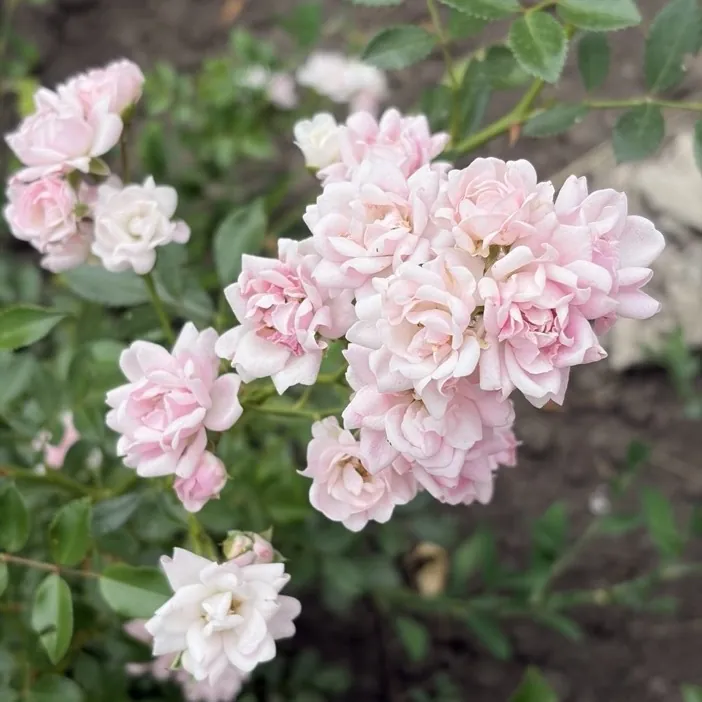
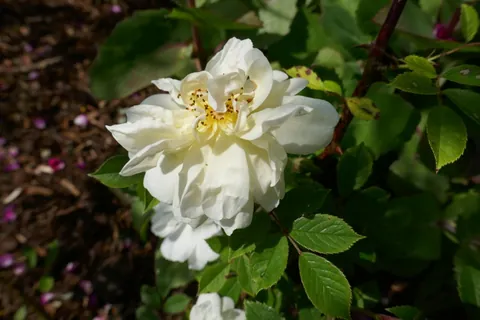
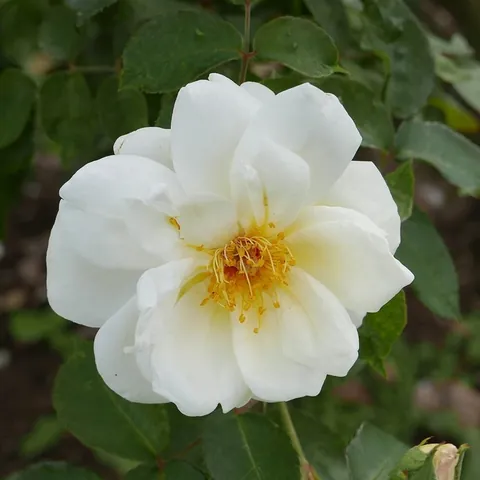
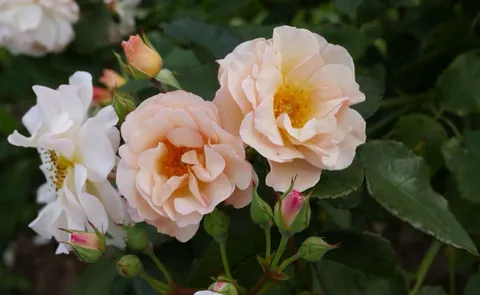
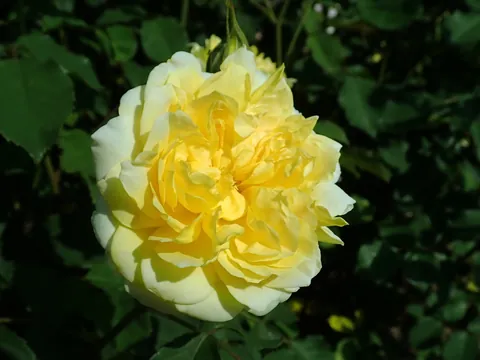



The Fairy, close-up of the flower
Back to catalogue
Polyantha; the most famous Polyantha XX centuryAnn & John Bentall, 1932Pink

The Fairy

Light pink, low spreading bush of small flowers in large clusters — a typical Polyantha XX century; RHS AGM + Earth-Kind + Longwood Ten-Year Trial; the last major Polyantha before the class died out (absorbed by floribundas after the 1940s); the best-selling Polyantha of all time; Pemberton – Bentall LINE — a family breeding line with Thisbe (1918).

RHS Award of Garden Merit + Earth-Kind™ + Longwood Ten-Year Trial passed · the last major Polyantha before the class died out

Variety profile

Flowering

Repeat flowering

Generous repeat flowering from June to October — practically continuous. Months are approximate, for the climate of Ukraine.

Legacy

RHS AGM + Earth-Kind

+ Longwood passed

Winter hardiness

−32 °C

USDA zone 4b. All of Ukraine without winter protection.

Compare reference temperatures

Plant size

60–120 × 60–120 cm
person 170 cm60–120 cm
Habit
Broad, spreading, with drooping canes — like a “fountain”
Dimensions
60–120 cm tall × 60–120 cm wide — equal height and width; it spreads like a round umbrella
Support
Not needed — self-supporting
Shoots
Flexible, arching
Branching
Densely branched

Flower

≈ 3.5 cm

17-25 petals.

Bud shape
Small round pink
Open flower
Small cupped rosettes: ~3.5 cm (1.5″), 17–25 petals
Centre
Stamens visible when open
Fullness
17–25 petals (medium)
Flower carriage
In large clusters of 10–40 flowers at once — a pink “fountain”

Fragrance

Light; apple

Light, apple — a rare note for Polyantha.

Disease resistance

5 out of 5

Benchmark 5/5 — Earth-Kind™ status (Texas A&M programme confirming organic growing without pesticides). USDA 4b-9b — one of the most frost-hardy shrub roses; in Ukraine it overwinters without protection throughout the country, including the Sumy and Chernihiv regions.

Sun

Sun + shade

Tolerates partial shade.

Thorns

Few
thornlessfewmoderatemanyvery many

Few thorns — typical for Polyantha.

Foliage

Glossy dark green, small leaves — typical of Polyantha.

All characteristics in a table
Group
Polyantha; the most famous Polyantha XX century
Breeder
Ann & John Bentall, United Kingdom, 1932
Bud shape
Small round pink
Open flower
Small cupped rosettes: ~3.5 cm (1.5″), 17–25 petals
Centre
Stamens visible when open
Colour
Light pink; in heat it fades slightly to flesh-white, so one bush shows both the pink and the white phases at the same time
Fullness
17–25 petals (medium)
Flower carriage
In large clusters of 10–40 flowers at once — a pink “fountain”
Flowering
Generous repeat flowering from June to October — practically continuous
Fragrance
Light, apple — a rare note for Polyantha
Hips
Small red hips in autumn — adds ornament
Habit
Broad, spreading, with drooping canes — like a “fountain”
Branching
Densely branched
Shoots
Flexible, arching
Thorns
Few thorns — typical for Polyantha.
Dimensions
60–120 cm tall × 60–120 cm wide — equal height and width; it spreads like a round umbrella
Support
Not needed — self-supporting
Foliage
Glossy dark green, small leaves — typical of Polyantha
Resistance
Benchmark 5/5 — Earth-Kind™ status (Texas A&M programme confirming organic growing without pesticides). USDA 4b-9b — one of the most frost-hardy shrub roses; in Ukraine it overwinters without protection throughout the country, including the Sumy and Chernihiv regions
Variations of the variety
No official code (1932 — before the registration system). Introduced 1932. Breeders: Ann and John Bentall (the widow continued the breeding work of J.A. Bentall). Parentage: 'Paul Crampel' × 'Lady Gay' (hybrid wichurana, Walsh 1903). There is also 'The White Fairy' — a white sport mutation

Colour scheme

Light pink; in heat it fades slightly to flesh-white, so one bush shows both the pink and the white phases at the same time

Rose neighbours

Perennials to plant nearby

Neighbouring roses

The Pemberton-Bentall family creates a classic English shrub-rose corner:

Perennial companions

A classic English cottage palette:

lavenderhostalady's mantle (Alchemilla)catmint (Nepeta)

Availability worldwide

⭐⭐⭐ The best-selling Polyantha of all time:

🇬🇧 UK: very high · home country🇪🇺 Europe: very high · mass plantings in towns🇺🇸 USA: very high · Earth-Kind recommended🇺🇦 Ukraine: high · a classic for parks

More about the variety

Hips
Small red hips in autumn — adds ornament
Variations of the variety
No official code (1932 — before the registration system). Introduced 1932. Breeders: Ann and John Bentall (the widow continued the breeding work of J.A. Bentall). Parentage: 'Paul Crampel' × 'Lady Gay' (hybrid wichurana, Walsh 1903). There is also 'The White Fairy' — a white sport mutation

How to grow

Where to plant. In groups of 3–5 bushes in borders; along paths as a pink edging; under windows because of its low, “umbrella” shape; under trees and shrubs — it tolerates partial shade; in municipal parks (the European standard of a “zero-care rose”).

Climate. All of Ukraine without winter protection (USDA 4b — record winter hardiness among Polyanthas); tolerates partial shade.

Care. Minimal (Earth-Kind standard): sun or light shade; prune once every 2–3 years with secateurs; feed 1× per season; no chemical treatments needed; water in hot weather.

About the name

Name. “The Fairy” = “Fairy” in English. Named after Harold Chapin's play “The Fairy” — the Bentall-family gave their roses poetic, theatrical names (typical of British rose houses of that era). Breeder: bred by Ann and John Bentall (UK). Introduced 1932. Parentage: 'Paul Crampel' × 'Lady Gay' (hybrid wichurana, Walsh 1903). Ann Bentall was the widow of J.A. Bentall, who had worked as assistant to Joseph Pemberton (creator of the Hybrid Musk class). After Pemberton's death (1926) and that of J.A. Bentall, Ann continued the breeding work — the Pemberton (1918, Thisbe) – Bentall (1932, The Fairy) line, a family breeding dynasty that kept the musk-polyantha style.

Significance. The most famous Polyantha XX century. The best-selling Polyantha of all time. The last major Polyantha before the class effectively died out (absorbed by floribundas after the 1940s). The Fairy outlived all its rivals and still holds the crown. RHS Award of Garden Merit — officially confirmed. Earth-Kind™ status (Texas A&M Programme) — organic growing without pesticides. Longwood Gardens Ten-Year Rose Trial passed. In Europe it is officially recommended for mass urban planting as a “zero-care rose” — the standard of a “rose without treatments”. The Pemberton – Bentall line links The Fairy with Thisbe (1918) — both come from the same family breeding dynasty. WFRS Old Rose HoF — a MYTH (common in secondary catalogues): The Fairy is absent from the Old Rose HoF The Fairy list.

Frequently asked questions about The Fairy

Does The Fairy need winter protection?

The cultivar’s reference temperature is −32 °C (USDA zone 4b). Overwintering depends on the conditions. All of Ukraine without winter protection.

How many times a season does The Fairy flower?

Generous repeat flowering from June to October — practically continuous.

How big does The Fairy grow?

60–120 cm tall, 60–120 cm wide.

Which diseases affect The Fairy?

Overall resistance: 5 out of 5. Benchmark — Earth-Kind standard.

How much sun does The Fairy need?

Sun + shade; tolerates partial shade.

What does The Fairy smell like?

Light, apple — a rare note for Polyantha.

Gardeners' photos and reviews

My climate

Choose a reference temperature to compare with the cultivar’s data. This is not an overwintering forecast or advice on winter protection; consider wind, moisture and the duration of frost.

Regional data are generalised. USDA describes average annual extreme minima, not a forecast; the values in the list are rounded. Check the conditions at your site. More information: Roses in Ukraine's climate.