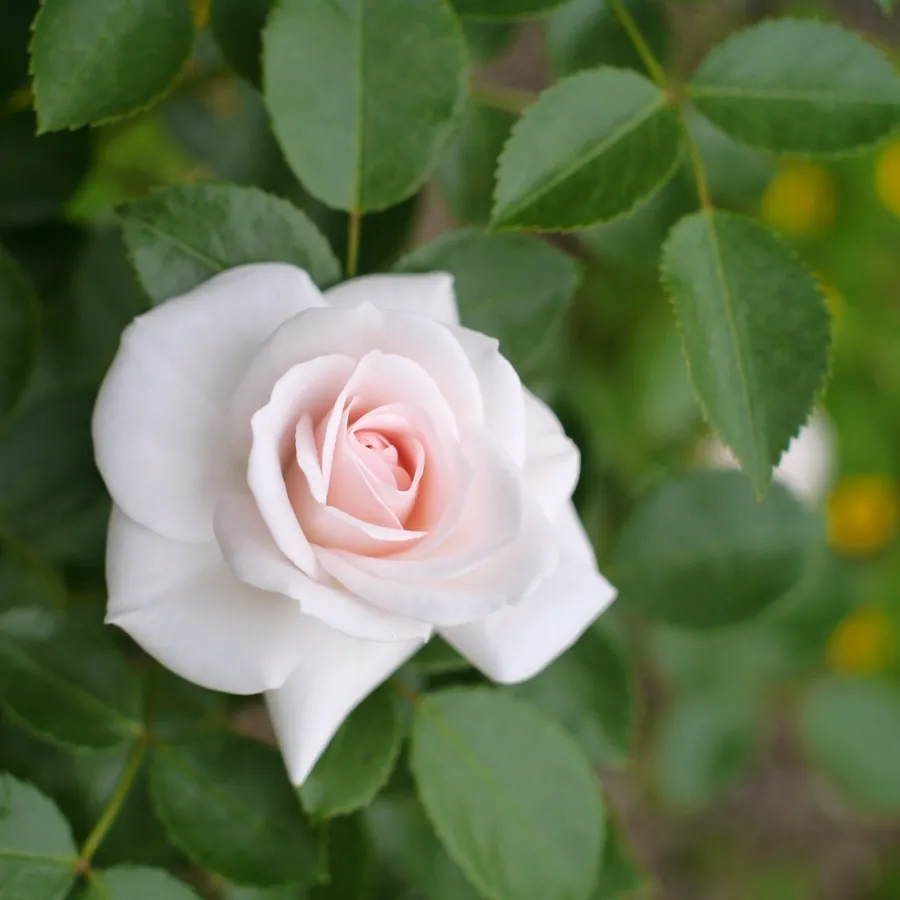

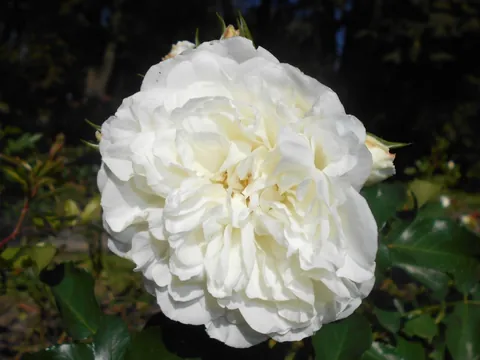
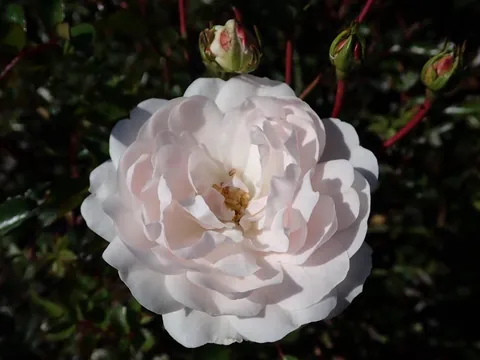




Aspirin Rose, close-up of the flower
Back to catalogue
Landscape; FloribundaTantau, 1997White and cream

Aspirin Rose

TANiripsa · dedicated to the 100th anniversary of Bayer aspirin (1897–1997) · benchmark for disease resistance — ADR 1995.

Variety profile

Flowering

Repeat flowering

Continuous from June until the frosts — one of the longest flowering periods among garden varieties. Months are approximate, for the climate of Ukraine.

Winter hardiness

−29 °C

USDA zone 5b–9.

Compare reference temperatures

Plant size

50–80 × 60–90 cm
person 170 cm50–80 cm
Habit
A low, spreading bush; width usually a little more than height
Dimensions
50–80 cm high × 60–90 cm wide (wider than it is tall)
Support
No support needed — the bush is self-supporting (support is needed only for climbing varieties)
Shoots
Flexible, arching
Branching
Dense; in group planting it covers the ground well

Flower

4–6 cm
Bud shape
Round pink buds
Open flower
Semi-double, cupped; diameter 4–6 cm
Centre
Yellow stamens are visible — attracts bees
Fullness
Medium, 17–25 petals
Flower carriage
Dense clusters of 5–15 blooms — creating a 'cloud' effect

Fragrance

Barely noticeable

Very weak (Tantau: 1/5).

Disease resistance

5 out of 5
Powdery mildewresistant

Exemplary — a benchmark of resistance to black spot, powdery mildew and rain.

Sun

Sun + partial shade

A rare tolerance of partial shade for a rose.

Foliage

Light green, glossy, dense.

Other names

Glacier Magic, Special Child
All characteristics in a table
Group
Landscape; Floribunda
Breeder
Tantau, 1997
Bud shape
Round pink buds
Open flower
Semi-double, cupped; diameter 4–6 cm
Centre
Yellow stamens are visible — attracts bees
Colour
Pure white in the heat; pink centre in cool weather; petals self-clean after flowering
Fullness
Medium, 17–25 petals
Flower carriage
Dense clusters of 5–15 blooms — creating a 'cloud' effect
Flowering
Continuous from June until the frosts — one of the longest flowering periods among garden varieties
Fragrance
Very weak (Tantau: 1/5)
Hips
Minor
Habit
A low, spreading bush; width usually a little more than height
Branching
Dense; in group planting it covers the ground well
Shoots
Flexible, arching
Number of thorns
Moderate — the variety is neither almost thornless nor heavily prickly
Dimensions
50–80 cm high × 60–90 cm wide (wider than it is tall)
Support
No support needed — the bush is self-supporting (support is needed only for climbing varieties)
Foliage
Light green, glossy, dense
Resistance
Exemplary — a benchmark of resistance to black spot, powdery mildew and rain
Variations of the variety
Ideal for mass planting, on slopes, in borders and in pots; synonyms: Glacier Magic, Special Child

Colour scheme

Pure white in the heat; pink centre in cool weather; petals self-clean after flowering

Rose neighbours

Perennials to plant nearby

Rose neighbours

Only Iceberg supports the white palette, but it grows taller and blooms in different clusters. Other roses add contrast in height, flower size or colour intensity.

Companion perennials

Violet-blue flowers and silver foliage create colour contrast without duplicating the white mass of Aspirin Rose.

Lavender 'Hidcote'. Colour accent: lavender.Lamb's ear. Colour accent: silver.Catmint. Colour accent: blue.Sage (Salvia). Colour accent: purple.

More about the variety

Hips
Minor
Variations of the variety
Ideal for mass planting, on slopes, in borders and in pots; synonyms: Glacier Magic, Special Child

How to grow

The best place for Aspirin Rose is at the front of a flower bed, a wide border or a slope, where several bushes can form one solid mass of flowers. The variety is also suitable for low hedges, large containers and planting along paths. While in bloom, the bushes attract bees and other pollinating insects.

Climate. The whole of Ukraine without exception, from Lviv to Mariupol; it overwinters well without cover down to zone 5b. One of the hardiest Tantau varieties.

Care. Minimal — spring pruning of the bush by 1/3, mulch, and no compulsory treatments against fungal disease. One of the least demanding varieties for beginners.

About the name

Name. 'Aspirin' — in honour of the 100th anniversary of the invention of aspirin by Bayer (1897 – 1997). Originally the variety was called Glacier Magic (“magic of the glacier”).

Breeding. Bred by Hans Jürgen Evers (Tantau) in 1989 and introduced in 1997. Parentage: RT 83-350 × The Fairy (from The Fairy itself — the famous old landscape variety with pink clusters). Patent code: TANiripsa.

Meaning. “as healthy as aspirin” — a nod to the variety's sturdiness and the round, pill-like whiteness of its flowers. Key awards: ADR 1995 (Germany), Gold Standard 2006 (Great Britain), Gold Medal Barcelona 2007, Silver Baden-Baden, Top Rose Den Haag (Netherlands), Bronze Japan. One of the most 'defenceless' garden varieties of modern breeding.

Frequently asked questions about Aspirin Rose

Does Aspirin Rose need winter protection?

The cultivar’s reference temperature is −29 °C (USDA zone 5b–9). Overwintering depends on the conditions.

How many times a season does Aspirin Rose flower?

Continuous from June until the frosts — one of the longest flowering periods among garden varieties.

How big does Aspirin Rose grow?

50–80 cm tall, 60–90 cm wide.

Which diseases affect Aspirin Rose?

Overall resistance: 5 out of 5. Exemplary; self-cleaning; ADR-variety.

How much sun does Aspirin Rose need?

Sun + partial shade; a rare tolerance of partial shade for a rose.

What does Aspirin Rose smell like?

Very weak (Tantau: 1/5).

Gardeners' photos and reviews

My climate

Choose a reference temperature to compare with the cultivar’s data. This is not an overwintering forecast or advice on winter protection; consider wind, moisture and the duration of frost.

Regional data are generalised. USDA describes average annual extreme minima, not a forecast; the values in the list are rounded. Check the conditions at your site. More information: Roses in Ukraine's climate.