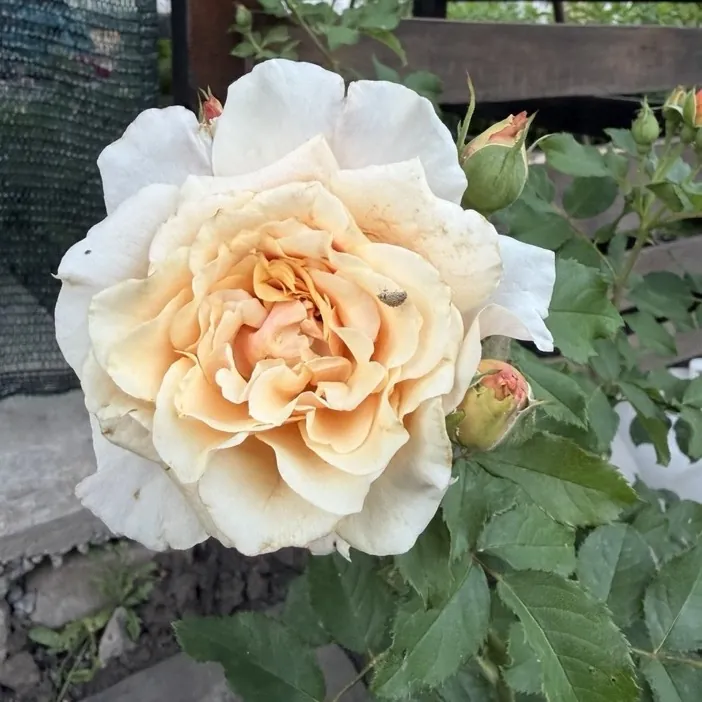
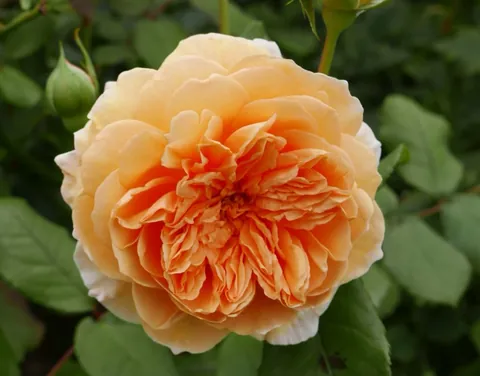
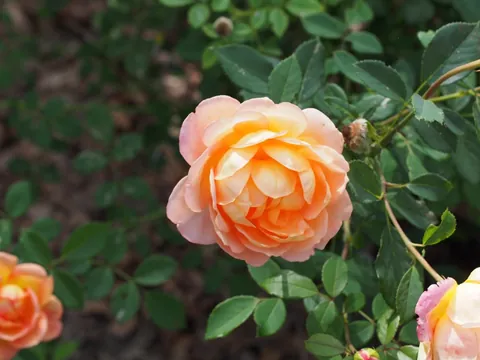
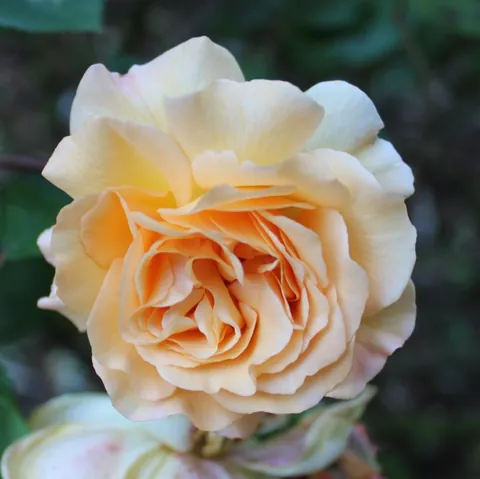





Caramella, close-up of the flower
Back to catalogue
Shrub rose; nostalgicKordes, 2001Apricot and orange

Caramella

Fairy Tale series; the starting variety of Kordes' nostalgic shrub roses.

Fairy Tale® series (Märchenrosen)

Variety profile

Flowering

Repeat, in flushes

Repeat flowering in flushes, May – October. Months are approximate, for the climate of Ukraine.

Awards

Patents

EU · DE · AU 2000–2006

Winter hardiness

−25 °C

USDA zone 5–9. All of Ukraine with light winter cover.

Compare reference temperatures

Plant size

100–120 × 60–80 cm
person 170 cm100–120 cm
Habit
Upright, bushy, dense; noticeably taller than wide
Dimensions
100–120 cm high × 60–80 cm wide; with sanitary pruning it keeps a compact shape
Support
Does not need support — an ordinary upright shrub, holds its shape well on its own
Shoots
Sturdy, semi-rigid
Branching
Dense; the shrub looks neat without formative pruning

Flower

≈ 10 cm

80–85 petals.

Bud shape
Blazing orange, lightening to caramel as it opens
Open flower
Nostalgic, quartered, cupped; diameter ~10 cm
Centre
Lemon-yellow heart, gradually opening into a full rosette
Fullness
Very double, 80–85 petals
Flower carriage
In clusters of 3–5 flowers per stem

Fragrance

Light

Light, fruity with an apricot note.

Disease resistance

4 out of 5
Black spotresistantPowdery mildewresistant

High resistance to powdery mildew, good resistance to black spot (typical Kordes-type quality).

Sun

Full sun gives abundant flowering

In partial shade there are fewer flowers, but the colour lasts longer.

Thorns

Moderate
thornlessfewmoderatemanyvery many

Moderate number of prickles.

Foliage

Dark green, semi-glossy, dense.

Other names

Caramella Fairy Tale, Carmella Fairy Tale, Reminiscence

Breeder's code KORkinteral.

All characteristics in a table
Group
Shrub rose; nostalgic
Breeder
Kordes, 2001
Bud shape
Blazing orange, lightening to caramel as it opens
Open flower
Nostalgic, quartered, cupped; diameter ~10 cm
Centre
Lemon-yellow heart, gradually opening into a full rosette
Colour
Outer petals honey-cream, inner petals deep amber; a smooth gradation without sharp lines
Fullness
Very double, 80–85 petals
Flower carriage
In clusters of 3–5 flowers per stem
Flowering
Repeat flowering in flushes, May – October
Fragrance
Light, fruity with an apricot note
Hips
Practically none — double flowers do not set hips
Habit
Upright, bushy, dense; noticeably taller than wide
Branching
Dense; the shrub looks neat without formative pruning
Shoots
Sturdy, semi-rigid
Thorns
Moderate number of prickles.
Dimensions
100–120 cm high × 60–80 cm wide; with sanitary pruning it keeps a compact shape
Support
Does not need support — an ordinary upright shrub, holds its shape well on its own
Foliage
Dark green, semi-glossy, dense
Resistance
High resistance to powdery mildew, good resistance to black spot (typical Kordes-type quality)
Variations of the variety
Trade names: Caramella Fairy Tale®; Carmella Fairy Tale®; Reminiscence (for Canada and the USA)

Colour scheme

Outer petals honey-cream, inner petals deep amber; a smooth gradation without sharp lines

Rose neighbours

Perennials to plant nearby

Neighbouring roses

Warm apricot and cream tones that support the caramel palette of Caramella.

Companion perennials

Purple-silver perennials — a classic contrast for yellow-orange roses:

lavender 'Hidcote'catmint (Nepeta) 'Walker's Low'sage 'Caradonna'myrtle spurge

Contrasting accents

For depth and play of shades — cool silver and purple 'shadows':

Perovskiaspiked speedwellheuchera 'Caramel'

More about the variety

Hips
Practically none — double flowers do not set hips
Variations of the variety
Trade names: Caramella Fairy Tale®; Carmella Fairy Tale®; Reminiscence (for Canada and the USA)

How to grow

Where to plant. Mixed borders, romantic beds, the foreground of pastel rose arrangements; looks good beside lavender and catmint (Nepeta).

Climate. Tolerates frosts down to −25 °C — suitable for all regions of Ukraine, with light winter cover in the northern areas.

Care. Undemanding; typical Kordes-type quality — healthy foliage, minimal chemical protection. Regular removal of spent flowers prolongs flowering.

About the name

Name. 'Caramella' — Italian for 'little caramel', a reference to the colour of melted sugar; it conveys the warm honey-amber tone of the flower.

Breeding. Bred by Wilhelm Kordes III at W. Kordes' Söhne (Germany), 2001. Parentage: seed parent Rugelda® (yellow Kordes shrub, 1989); pollen parent Westerland (Kordes 1969) × an unnamed seedling. Patent code KORkinteral.

Significance. The starting variety of the Fairy Tale® (Märchenrosen) series — the nostalgic Kordes shrub line that broke through towards 'old-fashioned double flowers with modern health'. The variety started the apricot-caramel palette in modern shrub roses.

Frequently asked questions about Caramella

Does Caramella need winter protection?

The cultivar’s reference temperature is −25 °C (USDA zone 5–9). Overwintering depends on the conditions.

How many times a season does Caramella flower?

Repeat flowering in flushes, May – October.

How big does Caramella grow?

100–120 cm tall, 60–80 cm wide.

Which diseases affect Caramella?

Overall resistance: 4 out of 5. Typical Kordes-type quality; high resistance to powdery mildew, good resistance to black spot.

How much sun does Caramella need?

Sun; full sun gives abundant flowering; in partial shade there are fewer flowers, but the colour lasts longer.

What does Caramella smell like?

Light, fruity with an apricot note.

Gardeners' photos and reviews

My climate

Choose a reference temperature to compare with the cultivar’s data. This is not an overwintering forecast or advice on winter protection; consider wind, moisture and the duration of frost.

Regional data are generalised. USDA describes average annual extreme minima, not a forecast; the values in the list are rounded. Check the conditions at your site. More information: Roses in Ukraine's climate.