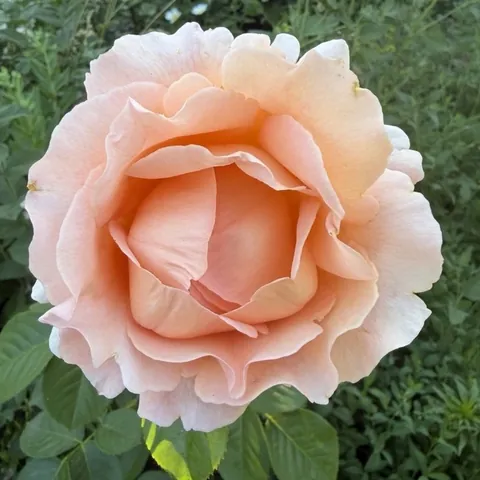
César, close-up of the flower
Back to catalogue
Climber; large-floweredMeilland, 1993Apricot and orange

César

Synonym Romantic Occasion; one of the best-known climbing Romanticas.

Romantica® series

Variety profile

Flowering

Repeat flowering

Abundant first flowering in May–June, then weaker repeat flowering with pauses. Months are approximate, for the climate of Ukraine.

Awards

Romantica®

Flagship of the series · 35+ favourite votes HMF

Winter hardiness

−23 °C

USDA zone 6–9. With light winter cover — all of Ukraine.

Compare reference temperatures

Plant size

200–400 × 120–200 cm
person 170 cm200–400 cm
Habit
Flexible long shoots, which shape well on a support (arch, trellis, pergola)
Dimensions
200–400 cm high × 120–200 cm wide; with heavy pruning it is kept as a large shrub of 150–180 cm
Support
Needs support — a classic climber; looks best on an arch, pergola, trellis or south wall
Shoots
Long, flexible, bend easily into the horizontal — important for abundant flowering on the side shoots
Branching
Moderate; over time it forms a strong framework

Flower

10–12 cm
Bud shape
Round-oval, cream-pink
Open flower
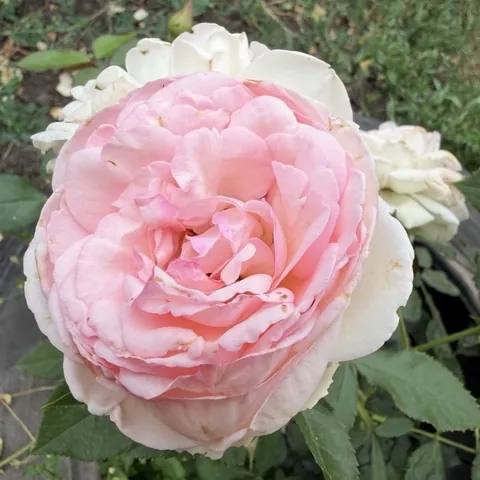
Quartered, nostalgic, cupped; diameter 10–12 cm
Centre
Warm pink-salmon petals, with apricot highlights
Fullness
Very double, 40–50+ petals (very full)
Flower carriage
Borne singly or in small clusters of 3

Fragrance

Light

Light, fruity-tea — the least fragrant of the Romantica roses.

Disease resistance

4 out of 5
Black spotresistantPowdery mildewresistantRustresistant

Resistant to black spot, good tolerance of powdery mildew, rust rare.

Sun

Sun + partial shade

Full sun or light partial shade in southern regions; in heat the colour fades to light cream.

Thorns

Moderate
thornlessfewmoderatemanyvery many

Moderate number of prickles, typical of climbing HTs.

Foliage

Dark green, semi-glossy, dense.

Other names

César, Romantic Occasion

Breeder's code MEIsardan.

All characteristics in a table
Group
Climber; large-flowered
Breeder
Meilland, 1993
Bud shape
Round-oval, cream-pink
Open flower
Quartered, nostalgic, cupped; diameter 10–12 cm
Centre
Warm pink-salmon petals, with apricot highlights
Colour
Outer petals cream-yellow, inner petals pink-salmon; the tone is richer in cool weather
Fullness
Very double, 40–50+ petals (very full)
Flower carriage
Borne singly or in small clusters of 3
Flowering
Abundant first flowering in May–June, then weaker repeat flowering with pauses
Fragrance
Light, fruity-tea — the least fragrant of the Romantica roses
Hips
Rarely, due to high doubleness
Habit
Flexible long shoots, which shape well on a support (arch, trellis, pergola)
Branching
Moderate; over time it forms a strong framework
Shoots
Long, flexible, bend easily into the horizontal — important for abundant flowering on the side shoots
Thorns
Moderate number of prickles, typical of climbing HTs.
Dimensions
200–400 cm high × 120–200 cm wide; with heavy pruning it is kept as a large shrub of 150–180 cm
Support
Needs support — a classic climber; looks best on an arch, pergola, trellis or south wall
Foliage
Dark green, semi-glossy, dense
Resistance
Resistant to black spot, good tolerance of powdery mildew, rust rare
Variations of the variety
Trade names: César® (Europe); Romantic Occasion (English-speaking markets)
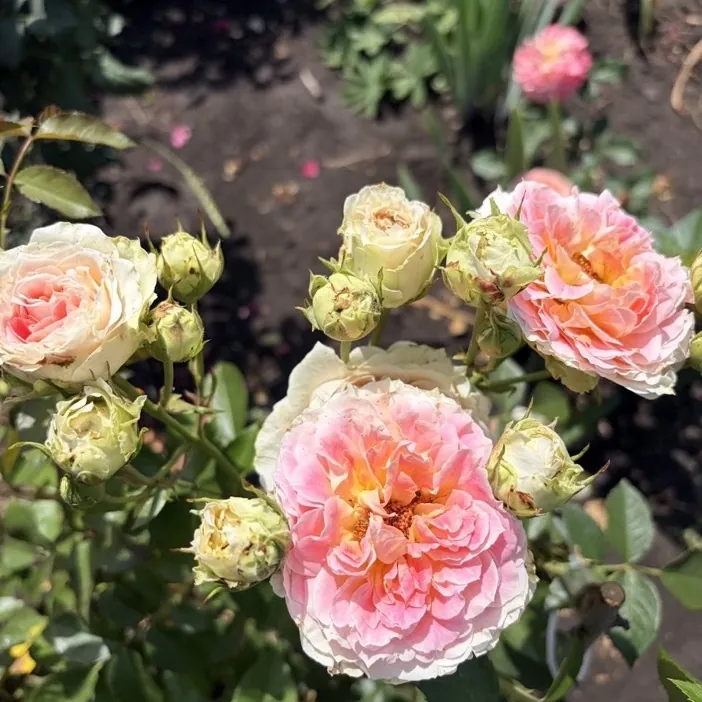
Colour scheme

Outer petals cream-yellow, inner petals pink-salmon; the tone is richer in cool weather

Rose neighbours

Perennials to plant nearby

Neighbouring roses

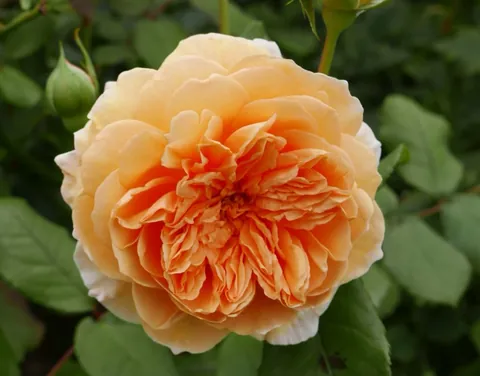
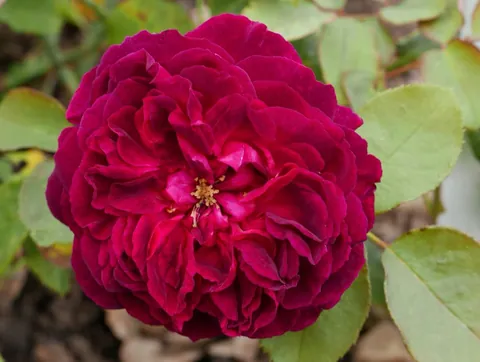
Cream and apricot roses, with Munstead Wood adding a dark crimson contrast:

Companion perennials

A classic pairing for a climbing rose — purple clematis that climb the same support:

clematis 'Etoile Violette'purple foxglovesagelavender

Contrasting accents

Cool purple and silver — to 'cool down' the warm palette of the rose:

clematis 'Polish Spirit'artemisia 'Powis Castle'bronze fennel

More about the variety

Hips
Rarely, due to high doubleness
Variations of the variety
Trade names: César® (Europe); Romantic Occasion (English-speaking markets)
How to grow

Where to plant. Arches, pergolas, trellises, the south and south-west walls of houses, tall obelisks. Its flexible shoots bend easily into the horizontal — which encourages abundant flowering on the side shoots.

Climate. Tolerates −23 °C; in the northern regions of Ukraine it is best to take it down from its support and cover it for winter.

Care. Climber pruning is light (cut out only old or diseased shoots, shorten side shoots to 2–3 buds); it is important to train the main shoots horizontally.

About the name

Name. After Gaius Julius Caesar — an emperor, a military commander, a symbol of greatness. The name matches the scale and stately character of the climber.

Breeding. Bred by Alain Meilland at Meilland International (France), 1993; in commerce from 1994. Patent code MEIsardan. Synonym: Romantic Occasion (for English-speaking markets).

Significance. Created by Meilland at the peak of popularity of the Romantica® series — as 'a climber that resembles an old rose but with modern health'. One of the best-known climbing Romanticas, among the top garden climbers for arches and pergolas.

Frequently asked questions about César

Does César need winter protection?

The cultivar’s reference temperature is −23 °C (USDA zone 6–9). Overwintering depends on the conditions.

How many times a season does César flower?

Abundant first flowering in May–June, then weaker repeat flowering with pauses.

How big does César grow?

200–400 cm tall, 120–200 cm wide.

Which diseases affect César?

Overall resistance: 4 out of 5. Excellent for a climbing HT; resistant to black spot and powdery mildew.

How much sun does César need?

Sun + partial shade; full sun or light partial shade in southern regions; in heat the colour fades to light cream.

What does César smell like?

Light, fruity-tea — the least fragrant of the Romantica roses.

Gardeners' photos and reviews

My climate

Choose a reference temperature to compare with the cultivar’s data. This is not an overwintering forecast or advice on winter protection; consider wind, moisture and the duration of frost.

Regional data are generalised. USDA describes average annual extreme minima, not a forecast; the values in the list are rounded. Check the conditions at your site. More information: Roses in Ukraine's climate.