


About the name
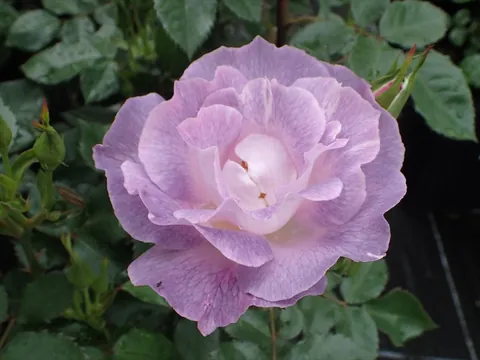
Name. The rose is named after the heroine of 'The Lady of Shalott', a poem by Alfred Tennyson (1832/1842). The Lady of Shalott is a maiden artist from the Arthurian cycle who wove on an island near Camelot, gazing into a magic mirror. When she saw the knight Lancelot and looked directly at the world, a curse killed her. An image of a romantic, lonely female artist in a tower. The variety was released ahead of the 200th anniversary of Tennyson's birth (Alfred Tennyson, 1809–1892).
Breeding. Bred by David C. H. Austin Sr. at David Austin Roses (Albrighton, England) and presented at the Chelsea Flower Show 2009 to mark the 50th anniversary of David Austin's breeding work (the company was founded in 1959). Code AUSnyson. Parentage not publicly disclosed — standard Austin practice. It belongs to the Leander Group in David Austin's classification (groups with weakened R. wichuriana blood — more resilient English Shrubs).
Significance. RHS Award of Garden Merit 2012 + American Garden Rose Selections (AGRS) 2017. One of the most popular and best-selling David Austin English roses of the last 15 years; the benchmark of a 'healthy English rose' for beginners — recommended as a first Austin. A rare combination: 5/5 disease resistance + tolerance of partial shade + winter hardiness to −30 °C — unusual for English roses. Sometimes confused with 'Lady Emma Hamilton' (AUSbrother, also an Austin apricot) — it is a different variety. The breeder is Austin Sr. (1926–2018), NOT the younger one.