

Back to catalogue
English Climber / ShrubDavid Austin, 1999Apricot and orange

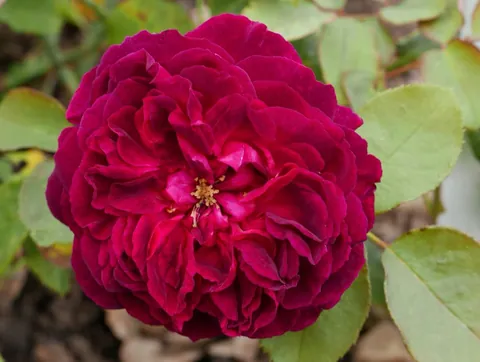
Crown Princess Margareta

A descendant of 'Abraham Darby'; one of the best ‘warm’ varieties of David Austin.

Leander Group · descendants of 'Charles Austin'

Variety profile

Flowering

Repeat flowering

Repeat-flowering, continuous in flushes from late spring to frosts – a very dependable repeat-flowering variety. Months are approximate, for the climate of Ukraine.

Awards

RHS AGM

Award of Garden Merit

Winter hardiness

−23 °C

USDA zone 6–9. With moderate cover — all of Ukraine.

Compare reference temperatures

Plant size

120–150 × 120–135 cm
person 170 cmon a supportup to 3.6 m120–150 cm
Habit
Versatile – as a short climber or as a large spreading shrub; shoots long, arching
Dimensions
As a shrub: 120–150 cm × 120–135 cm; as a climber: up to 350–360 cm (RHS: 2.5–4 m × 1–1.5 m)
Support
Optional – as a shrub it needs no support; as a climber – a low trellis, obelisk, fence or south wall
Shoots
Long, flexible, arching; easily bent horizontally for abundant side flowering
Branching
Good; over time it forms a strong framework

Flower

8–9 cm
Bud shape
Round-conical, deep orange
Open flower
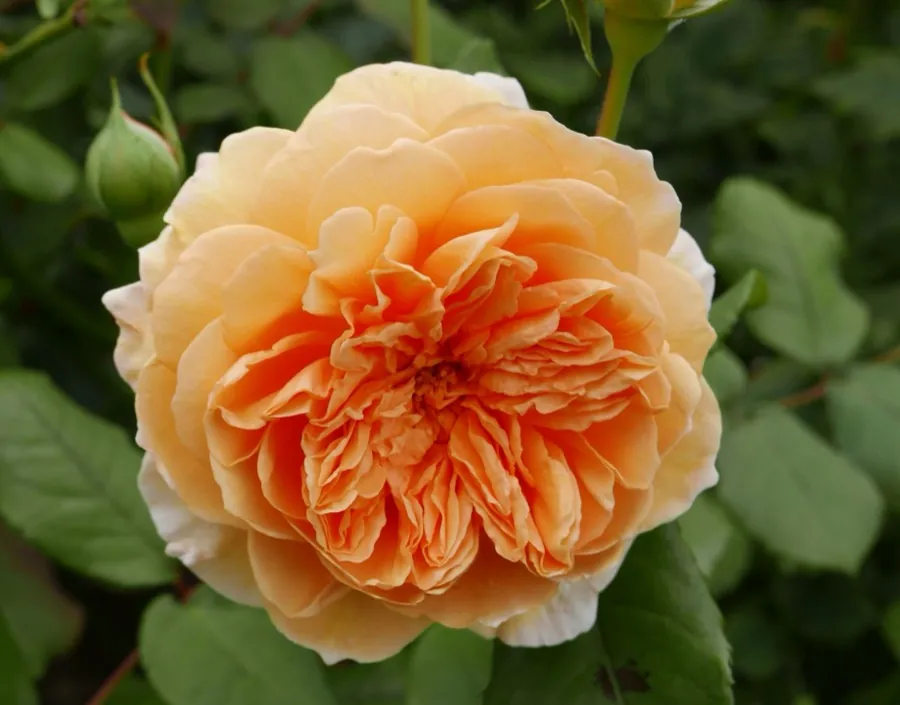
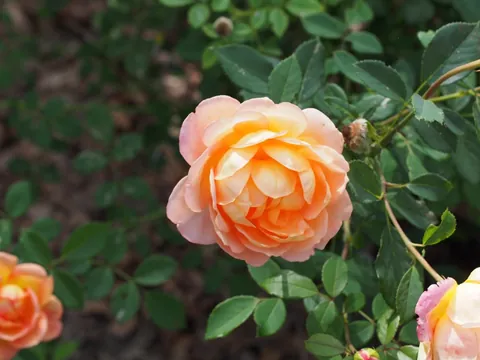
Full cupped – nostalgic rosette; diameter 8–9 cm
Centre
Dense orange-apricot centre
Fullness
Very double – up to 120 petals
Flower carriage
In small clusters on the shoot

Fragrance

Strong

Strong – a rich fruity tea rose with notes of mango and apricot.

Disease resistance

4 out of 5
Black spotresistantPowdery mildewresistant

Good overall; black spot and powdery mildew possible in damp conditions.

Sun

Sun or partial shade

In partial shade the orange-apricot colour holds better, without fading.

Thorns

Moderate
thornlessfewmoderatemanyvery many

Moderate number, typical of Abraham Darby descendants.

Foliage

Medium green, matt, typical of English Roses.

Other names

Breeder's code AUSwinter.

All characteristics in a table
Group
English Climber / Shrub
Breeder
David Austin, 1999
Bud shape
Round-conical, deep orange
Open flower
Full cupped – nostalgic rosette; diameter 8–9 cm
Centre
Dense orange-apricot centre
Colour
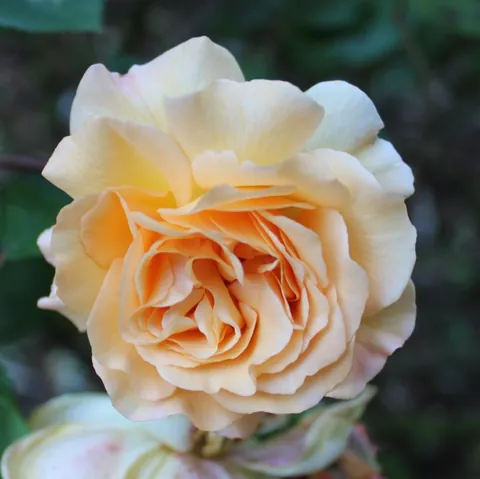
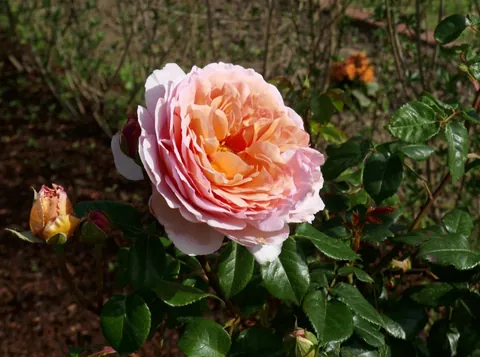
Deep apricot-orange in young flowers – with age it fades to a soft vanilla-apricot and pale yellowish. One of the best ‘warm’ Austin varieties
Fullness
Very double – up to 120 petals
Flower carriage
In small clusters on the shoot
Flowering
Repeat-flowering, continuous in flushes from late spring to frosts – a very dependable repeat-flowering variety
Fragrance
Strong – a rich fruity tea rose with notes of mango and apricot
Hips
As a rule, does not set hips – continuous flowering
Habit
Versatile – as a short climber or as a large spreading shrub; shoots long, arching
Branching
Good; over time it forms a strong framework
Shoots
Long, flexible, arching; easily bent horizontally for abundant side flowering
Thorns
Moderate number, typical of Abraham Darby descendants.
Dimensions
As a shrub: 120–150 cm × 120–135 cm; as a climber: up to 350–360 cm (RHS: 2.5–4 m × 1–1.5 m)
Support
Optional – as a shrub it needs no support; as a climber – a low trellis, obelisk, fence or south wall
Foliage
Medium green, matt, typical of English Roses
Resistance
Good overall; black spot and powdery mildew possible in damp conditions
Variations of the variety
No official sports

Colour scheme

Deep apricot-orange in young flowers – with age it fades to a soft vanilla-apricot and pale yellowish. One of the best ‘warm’ Austin varieties

Rose neighbours

Perennials to plant nearby

Neighbouring roses

Austin's warm apricot-orange palette — and the parent variety Abraham Darby:

Companion perennials

A lavender-blue 'haze' — a classic cool contrast to the warm apricot:

Faassen's catmint (Nepeta)geranium 'Brookside'Veronica longifoliamyrtle spurge

Contrasting accents

Silver and white for depth:

Perovskia atriplicifoliaechinacea 'White Swan'artemisia 'Powis Castle'

More about the variety

Hips
As a rule, does not set hips – continuous flowering
Variations of the variety
No official sports

How to grow

Where to plant. Arches, low pergolas, fences, south walls (as a climber) or as a large shrub in the centre of a border; striking in a group planting of 3 bushes.

Climate. Down to −23 °C – in the northern regions of Ukraine it needs moderate winter protection; in the south – no protection.

Care. As a climber – in spring, train the main shoots horizontally and shorten side shoots to 2–3 buds. As a shrub – formative pruning and removal of spent blooms. In a damp climate – prevention of black spot.

About the name

Name. In honour of Crown Princess Margareta of Sweden (1882–1920) – granddaughter of Queen Victoria, a talented landscape painter and gardener. It emphasises the rose's aristocratic character. Bred by David C. H. Austin Sr. at the house of David Austin Roses Ltd. (England), 1990; introduced in Great Britain in 1999 and in the USA in 2000. Patent code AUSwinter. Parentage: unknown seedling × 'Abraham Darby' (AUScot) – hence the warm apricot colour and the powerful fruity fragrance. In Austin's classification – Leander Group (English Climbers, descendants of 'Charles Austin').

Significance. One of the best ‘warm’ varieties in the David Austin collection, RHS AGM. A versatile rose – it grows as a short climber or as a large spreading shrub. A very dependable repeat-flowering variety with a powerful fruity fragrance of mango and apricot.

Frequently asked questions about Crown Princess Margareta

Does Crown Princess Margareta need winter protection?

The cultivar’s reference temperature is −23 °C (USDA zone 6–9). Overwintering depends on the conditions.

How many times a season does Crown Princess Margareta flower?

Repeat-flowering, continuous in flushes from late spring to frosts – a very dependable repeat-flowering variety.

How big does Crown Princess Margareta grow?

120–150 cm tall, 120–135 cm wide. On a support — up to 360 cm.

Which diseases affect Crown Princess Margareta?

Overall resistance: 4 out of 5. Good overall resistance, typical of Austin; black spot and powdery mildew are possible in damp conditions.

How much sun does Crown Princess Margareta need?

Sun or partial shade; in partial shade the orange-apricot colour holds better, without fading.

What does Crown Princess Margareta smell like?

Strong – a rich fruity tea rose with notes of mango and apricot.

Gardeners' photos and reviews

My climate

Choose a reference temperature to compare with the cultivar’s data. This is not an overwintering forecast or advice on winter protection; consider wind, moisture and the duration of frost.

Regional data are generalised. USDA describes average annual extreme minima, not a forecast; the values in the list are rounded. Check the conditions at your site. More information: Roses in Ukraine's climate.