



Back to catalogue
FloribundaMeilland, 1988Bicolour

Charles Aznavour

Synonyms: Matilda; Seduction; Pearl of Bedfordview; 4 gold medals in 2 years — a phenomenal result.

Meilland's 'star' series of tributes

Variety profile

Flowering

Repeat flowering

Repeat-flowering, continuous from spring to the first frosts. Months are approximate, for the climate of Ukraine.

Awards

4 × Gold

Bagatelle · Courtrai 1987 · Baden-Baden 1988 · Tokyo Silver 1988

Winter hardiness

−20 °C

USDA zone 6b–9b. In the northern regions of Ukraine, with winter cover.

Compare reference temperatures

Plant size

70–80 × 40–50 cm
person 170 cm70–80 cm
Habit
Compact and upright — a typical border floribunda
Dimensions
70–80 cm tall × 40–50 cm wide
Support
No support needed
Shoots
Sturdy, holding the flower clusters well
Branching
Good; the bush looks rounded

Flower

≈ 9 cm

24–30 petals.

Bud shape
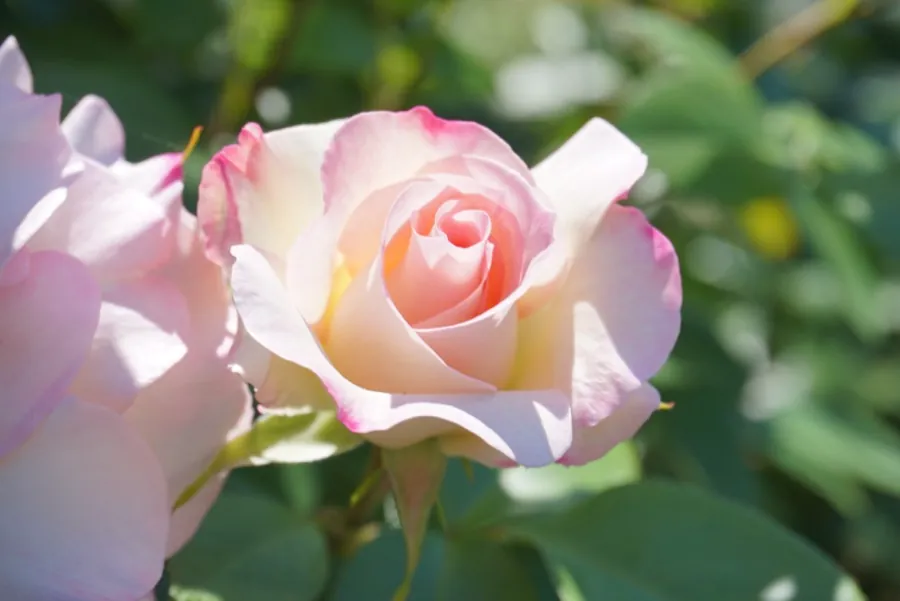
Rounded-conical, cream with pink highlights
Open flower
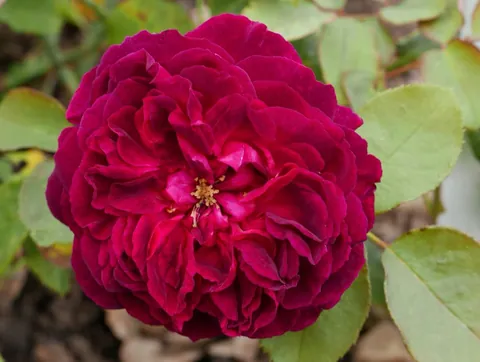
Cupped, opening flat, with prominent orange-yellow stamens; diameter 9 cm
Centre
Creamy-white centre with contrasting stamens
Fullness
Double to full, 24–30 petals
Flower carriage
In clusters of 2–5 (up to 7) flowers per stem — typical for a floribunda

Fragrance

No fragrance

None (HMF: 'no fragrance') — a weak point of the variety, offset by its ornamental value.

Disease resistance

5 out of 5

5/5 — one of the healthiest Meilland floribundas of the 1980s.

Sun

Full sun

In cool weather the pink edges are brighter, in heat they pale.

Thorns

Moderate
thornlessfewmoderatemanyvery many

Moderate number ('thorny stems').

Foliage

Dark green, leathery.

Other names

Matilda, Seduction, Pearl of Bedfordview

Breeder's code MEIbeausai.

All characteristics in a table
Group
Floribunda
Breeder
Meilland, 1988
Bud shape
Rounded-conical, cream with pink highlights
Open flower
Cupped, opening flat, with prominent orange-yellow stamens; diameter 9 cm
Centre
Creamy-white centre with contrasting stamens
Colour
Bicolour: creamy-white petals with soft carmine-pink edges; the intensity of the pink depends on temperature — brighter in cool weather, paler in heat
Fullness
Double to full, 24–30 petals
Flower carriage
In clusters of 2–5 (up to 7) flowers per stem — typical for a floribunda
Flowering
Repeat-flowering, continuous from spring to the first frosts
Fragrance
None (HMF: 'no fragrance') — a weak point of the variety, offset by its ornamental value
Hips
Forms decorative hips — unusual for floribundas
Habit
Compact and upright — a typical border floribunda
Branching
Good; the bush looks rounded
Shoots
Sturdy, holding the flower clusters well
Thorns
Moderate number ('thorny stems').
Dimensions
70–80 cm tall × 40–50 cm wide
Support
No support needed
Foliage
Dark green, leathery
Resistance
5/5 — one of the healthiest Meilland floribundas of the 1980s
Variations of the variety
Trade synonyms: Matilda (Germany, Belgium); Seduction; Pearl of Bedfordview — the same variety under different names in different markets

Colour scheme

Bicolour: creamy-white petals with soft carmine-pink edges; the intensity of the pink depends on temperature — brighter in cool weather, paler in heat

Rose neighbours

Perennials to plant nearby

Neighbouring roses

A creamy-pink palette for a romantic border:

Companion perennials

Violet-silver plants — a classic contrast to the bicolour bloom:

narrow-leaved lavenderFaassen's catmintsage 'Caradonna'soft lady's mantle (Alchemilla)

Availability worldwide

A Meilland classic, widely available in Europe (often under the name Matilda):

🇫🇷 Europe: wide network🇺🇸 USA: heritage nurseries🇯🇵 Asia: Keisei · Sakata🇺🇦 Ukraine: large nurseries

More about the variety

Hips
Forms decorative hips — unusual for floribundas
Variations of the variety
Trade synonyms: Matilda (Germany, Belgium); Seduction; Pearl of Bedfordview — the same variety under different names in different markets

How to grow

Where to plant. Borders, the front of a bed with low perennials, group plantings of 3–5 bushes; thanks to its compact shape and lack of scent, it suits open, airy sites.

Climate. To −20 °C — in Ukraine it needs winter cover in the northern regions (Sumy and Chernihiv regions); in the centre and further south there is no problem.

Care. Minimal, thanks to excellent disease resistance. Removing spent flowers encourages new flushes; formative pruning in spring.

About the name

Name. After Charles Aznavour (1924–2018), the legendary Armenian-French singer-songwriter, actor, composer and Armenia's ambassador to Switzerland. Aznavour himself took part in the variety's presentation in Paris.

Breeding. Bred by Alain Meilland at Meilland International (France); officially registered in 1988 (shown at competitions from 1987). Patent code MEIbeausai. Parentage: Coppélia '76 × Nirvana ® (both Meilland floribundas from 1975).

Significance. A classic example of Meilland's 'star' commercial varieties named after celebrities — alongside Catherine Deneuve, Pierre Cardin, Princesse Charlene de Monaco and Yves Piaget. What made it a classic was four gold medals in two years (Bagatelle, Courtrai 1987; Baden-Baden 1988; Tokyo Silver 1988) — a phenomenal result that gave the variety a place in the standard range of almost every European nursery for 35+ years. In Europe it is sold mostly under the name Matilda (especially in Germany and Belgium) — not a mistake, the same variety.

Frequently asked questions about Charles Aznavour

Does Charles Aznavour need winter protection?

The cultivar’s reference temperature is −20 °C (USDA zone 6b–9b). Overwintering depends on the conditions. In the northern regions of Ukraine, with winter cover.

How many times a season does Charles Aznavour flower?

Repeat-flowering, continuous from spring to the first frosts.

How big does Charles Aznavour grow?

70–80 cm tall, 40–50 cm wide.

Which diseases affect Charles Aznavour?

Overall resistance: 5 out of 5. 'excellente résistance' (Meilland); confirmed in practice.

How much sun does Charles Aznavour need?

Sun; full sun; in cool weather the pink edges are brighter, in heat they pale.

What does Charles Aznavour smell like?

None (HMF: 'no fragrance') — a weak point of the variety, offset by its ornamental value.

Gardeners' photos and reviews

My climate

Choose a reference temperature to compare with the cultivar’s data. This is not an overwintering forecast or advice on winter protection; consider wind, moisture and the duration of frost.

Regional data are generalised. USDA describes average annual extreme minima, not a forecast; the values in the list are rounded. Check the conditions at your site. More information: Roses in Ukraine's climate.