

Back to catalogue
Floribunda (low border)Delbard, 2001Bicolour

Bordure Camaïeu

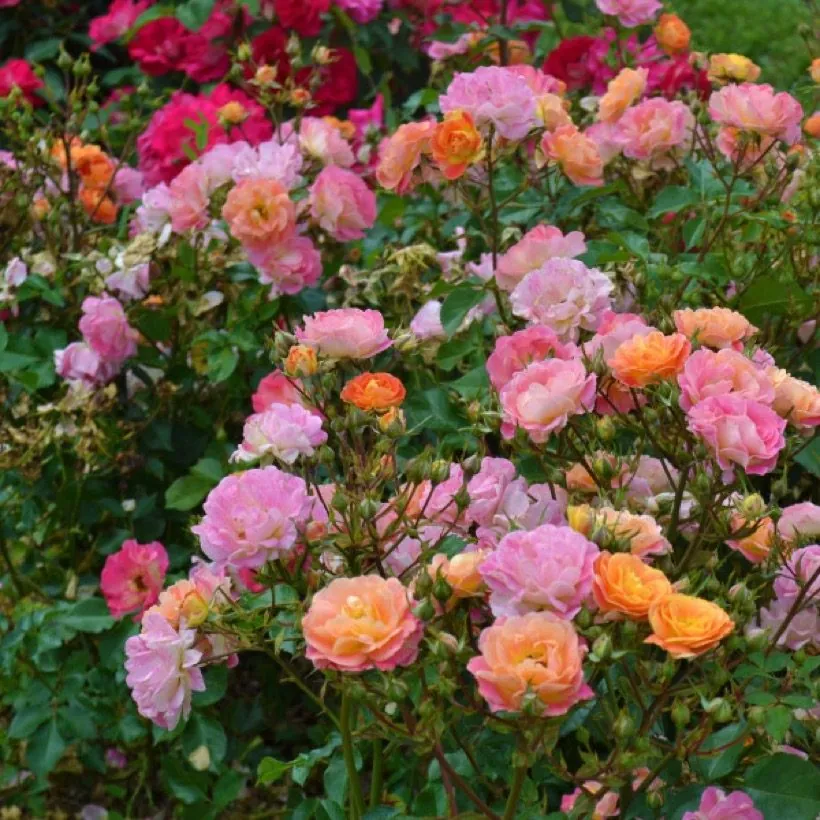
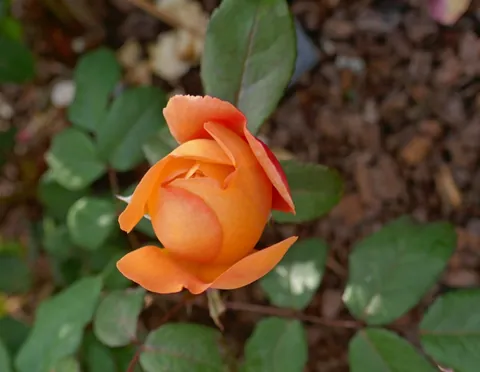
Warm 'tone-on-tone': orange buds – yellow and peach – pale pink; compact border rose, very abundant.

Delbard 'Bordure' series · play of warm 'tone-on-tone' shades

Variety profile

Flowering

Repeat flowering

Abundant, repeat-flowering, from June to late autumn. Months are approximate, for the climate of Ukraine.

Legacy

Bordure series

The warmest-coloured border rose by Delbard ('camaïeu' tone-on-tone)

Winter hardiness

−20 °C

USDA zone 6–9. Southern and central Ukraine; in the north – with winter protection. South and centre of Ukraine · in the north — with protection.

Compare reference temperatures

Plant size

50–60 × 40–60 cm
person 170 cm50–60 cm
Habit
Dense, rounded-domed, broad bush, compact
Dimensions
50–60 cm tall × 40–60 cm wide (roughly equal width and height)
Support
Not needed – compact border rose
Shoots
Strong
Branching
Dense

Flower

17–25 petals
Bud shape
Orange, egg-shaped and pointed
Open flower
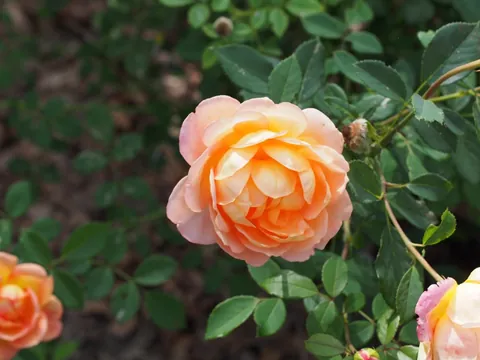
Small cup-shaped rosette; yellow stamens visible in the centre
Centre
Yellow stamens
Fullness
Double (17–25 petals)
Flower carriage
In dense clusters (10+ flowers each), not borne singly

Fragrance

Barely noticeable

Disease resistance

4 out of 5

Good to very good against diseases.

Sun

Full sun

Fresh, rich, well-drained soil.

Thorns

Moderate
thornlessfewmoderatemanyvery many

Moderate thorniness.

Foliage

Dark green, dense, glossy, healthy.

Other names

Breeder's code DELcapo.

All characteristics in a table
Group
Floribunda (low border)
Breeder
Delbard, France, 2001
Bud shape
Orange, egg-shaped and pointed
Open flower
Small cup-shaped rosette; yellow stamens visible in the centre
Centre
Yellow stamens
Colour
Warm 'tone-on-tone' (camaïeu): orange buds – bright yellow and peach – fading to pale pink with age; there are no stripes – this is a changing ('chameleon') colour, not a striped pattern
Fullness
Double (17–25 petals)
Flower carriage
In dense clusters (10+ flowers each), not borne singly
Flowering
Abundant, repeat-flowering, from June to late autumn
Fragrance
Barely noticeable
Hips
Unknown
Habit
Dense, rounded-domed, broad bush, compact
Branching
Dense
Shoots
Strong
Thorns
Moderate thorniness.
Dimensions
50–60 cm tall × 40–60 cm wide (roughly equal width and height)
Support
Not needed – compact border rose
Foliage
Dark green, dense, glossy, healthy
Resistance
Good to very good against diseases
Variations of the variety
The 'Bordure' series has many 'sisters' (Bordure Rose, Nacrée, Magenta, Abricot, Vive and others)

Colour scheme

Warm 'tone-on-tone' (camaïeu): orange buds – bright yellow and peach – fading to pale pink with age; there are no stripes – this is a changing ('chameleon') colour, not a striped pattern

Rose neighbours

Perennials to plant nearby

Neighbouring roses

Apricot, peach and orange varieties hold the same warm 'tone-on-tone' palette around Bordure Camaïeu.

Perennial companions

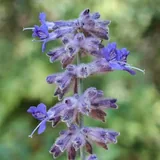
Blue-violet flowers give a clean contrast to the warm palette:

catmint (Nepeta)salvia 'Caradonna'perovskiagypsophila

Contrasting accents

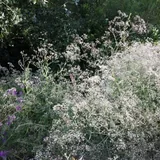
Blue spikes and a sheer 'haze' balance the warm drift:

DelphiniumNepeta Six Hills GiantPerovskia

More about the variety

Hips
Unknown
Variations of the variety
The 'Bordure' series has many 'sisters' (Bordure Rose, Nacrée, Magenta, Abricot, Vive and others)

How to grow

Where to plant. For edging beds and paths (borders), in containers, on terraces and balconies, in small gardens; compact and profuse – lovely in mass plantings, where the 'tone-on-tone' effect is seen best.

Climate. Southern and central Ukraine – grows without problems; in the north – with winter protection (USDA zone 6).

Care. Undemanding; full sun, fresh well-drained soil; removing spent flowers encourages new flushes.

About the name

Name. 'Bordure' (French for 'border, edge of a flower bed') – the name of the Delbard series of compact border roses; 'Camaïeu' – a painting technique of monochrome 'tone-on-tone' (related to 'cameo') – a hint at the play of close warm shades on one bush.

Breeding. Bred by the Georges Delbard house (France, founded 1935), introduced in 2001. Code DELcapo. Parent forms not published.

Significance. Within the 'Bordure' series it is considered the warmest in colour – a compact, abundantly flowering, hardy 'benchmark' border rose for edging and containers.

Frequently asked questions about Bordure Camaïeu

Does Bordure Camaïeu need winter protection?

The cultivar’s reference temperature is −20 °C (USDA zone 6–9). Overwintering depends on the conditions. Southern and central Ukraine; in the north – with winter protection.

How many times a season does Bordure Camaïeu flower?

Abundant, repeat-flowering, from June to late autumn.

How big does Bordure Camaïeu grow?

50–60 cm tall, 40–60 cm wide.

Which diseases affect Bordure Camaïeu?

Overall resistance: 4 out of 5. Good to very good.

How much sun does Bordure Camaïeu need?

Full sun; fresh, rich, well-drained soil.

What does Bordure Camaïeu smell like?

Barely noticeable.

Gardeners' photos and reviews

My climate

Choose a reference temperature to compare with the cultivar’s data. This is not an overwintering forecast or advice on winter protection; consider wind, moisture and the duration of frost.

Regional data are generalised. USDA describes average annual extreme minima, not a forecast; the values in the list are rounded. Check the conditions at your site. More information: Roses in Ukraine's climate.