


Back to catalogue
Hybrid TeaJohnston, 1962Pink

Chicago Peace

Stanley C. Johnston; a tricolour sport of the legendary 'Peace'.

Peace family — a sport of 'Peace'

Variety profile

Flowering

Repeat flowering

Repeat-flowering in flushes from spring to late autumn. Months are approximate, for the climate of Ukraine.

Awards

Portland

Gold Medal 1962

Winter hardiness

−18 °C

USDA zone 7–9. In Ukraine — winter cover is essential in the northern and central regions.

Compare reference temperatures

Plant size

135–215 × 60–90 cm
person 170 cm135–215 cm
Habit
Tall, upright, vigorous bush — inherits its vigour from the parent 'Peace'
Dimensions
135–215 cm tall × 60–90 cm wide
Support
No support needed — a standard HT, holds its tall shape on its own
Shoots
Sturdy, straight, holding the large flowers well on long stems
Branching
Moderate, typical of HTs; the shoots spread well from the base

Flower

13–15 cm
Bud shape
Elongated, pointed, tall — the classic HT bud of the Peace family
Open flower
High-centred, opening into a cupped flower with wide wavy petals; diameter 13–15 cm — very large
Centre
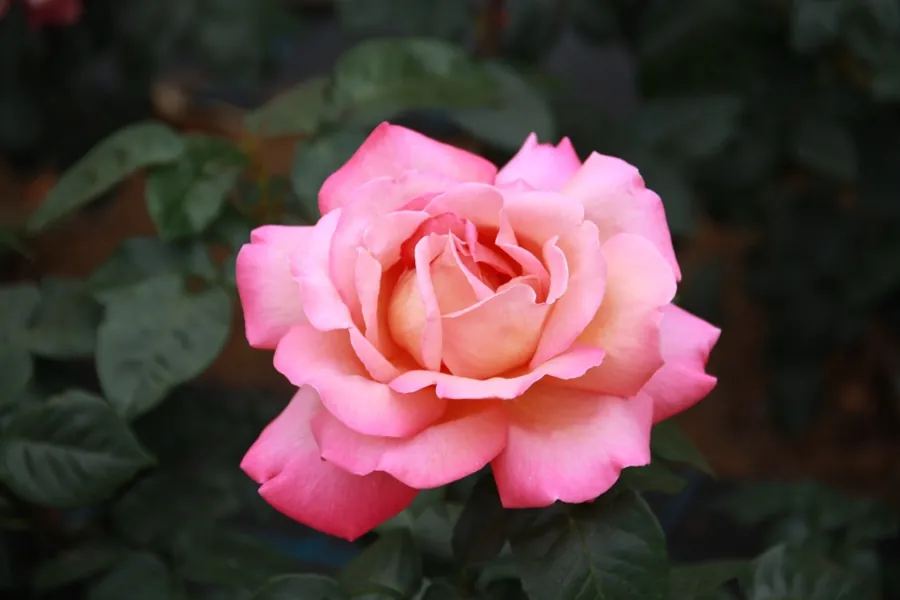
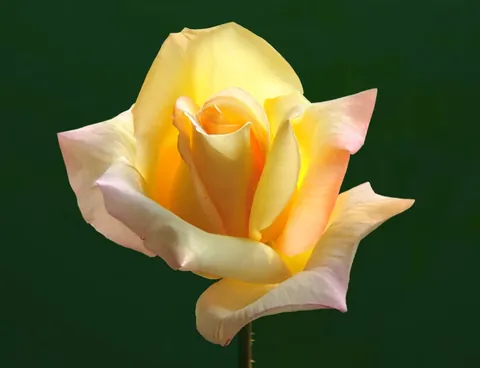
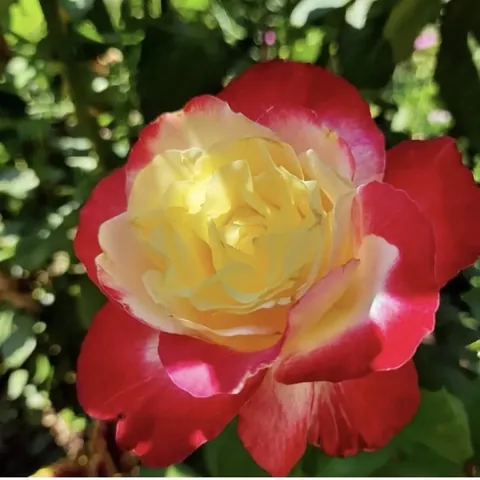
Canary-yellow base to the petals; the pink gradually 'eats into' the yellow as the flower ages
Fullness
Very double, 45–60 petals
Flower carriage
Mostly large flowers borne singly on each stem

Fragrance

Light

Light, fruity.

Disease resistance

3 out of 5
Black spotsusceptiblePowdery mildewsusceptibleRustsusceptible

Winter hardiness below average; prone to black spot in autumn; this is an unstable sport — the bush sometimes reverts to the parent's 'Peace' colour.

Sun

The colours are brightest in morning or evening light

At midday they can 'bleach out'.

Thorns

Many
thornlessfewmoderatemanyvery many

Many thorns — typical of the Peace family of HTs.

Foliage

Dark green, large, leathery, glossy.

Other names

Breeder's code JOHnago.

All characteristics in a table
Group
Hybrid Tea
Breeder
Johnston, 1962
Bud shape
Elongated, pointed, tall — the classic HT bud of the Peace family
Open flower
High-centred, opening into a cupped flower with wide wavy petals; diameter 13–15 cm — very large
Centre
Canary-yellow base to the petals; the pink gradually 'eats into' the yellow as the flower ages
Colour
Outer petals bright fuchsia-pink, shading to coral-peach, with a canary-yellow base. Much brighter and richer than the parent 'Peace'
Fullness
Very double, 45–60 petals
Flower carriage
Mostly large flowers borne singly on each stem
Flowering
Repeat-flowering in flushes from spring to late autumn
Fragrance
Light, fruity
Hips
As a rule, does not set hips
Habit
Tall, upright, vigorous bush — inherits its vigour from the parent 'Peace'
Branching
Moderate, typical of HTs; the shoots spread well from the base
Shoots
Sturdy, straight, holding the large flowers well on long stems
Thorns
Many thorns — typical of the Peace family of HTs.
Dimensions
135–215 cm tall × 60–90 cm wide
Support
No support needed — a standard HT, holds its tall shape on its own
Foliage
Dark green, large, leathery, glossy
Resistance
Winter hardiness below average; prone to black spot in autumn; this is an unstable sport — the bush sometimes reverts to the parent's 'Peace' colour
Variations of the variety
Daughter sports: 'Don Charlton' (1991), 'Desert Peace' (1991)

Colour scheme

Outer petals bright fuchsia-pink, shading to coral-peach, with a canary-yellow base. Much brighter and richer than the parent 'Peace'

Rose neighbours

Perennials to plant nearby

Neighbouring roses

Other large Hybrid Teas from the Peace family — a lovely partner for the mother variety:

Companion perennials

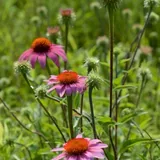
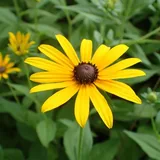
Warm perennials — they intensify the yellow-pink palette of the tricolour bloom:

purple coneflowerheliopsisshining coneflowercatmint

Contrasting accents

Cool blues and silvers — to 'cool down' the hot tricolour blend:

blue delphiniumgaura 'Whirling Butterflies'silver-grey artemisia

More about the variety

Hips
As a rule, does not set hips
Variations of the variety
Daughter sports: 'Don Charlton' (1991), 'Desert Peace' (1991)

How to grow

Where to plant. Formal borders, cut-flower roses, the centre of a large flower bed; because of its large tricolour flowers it works as a specimen plant or an accent.

Climate. To −18 °C — less hardy than the parent 'Peace'; in the northern and central regions of Ukraine winter protection is essential. In the south, no protection is needed in mild winters.

Care. Classic HT — formative pruning in spring, regular preventive fungicide treatments (especially against black spot). The sport is unstable — shoots in the 'Peace' colour may appear on the bush; it is best to remove them.

About the name

Name. After the city of Chicago (Illinois, USA), where the sport was found at the Conard-Pyle nursery. 'Peace' — from the parent rose 'Peace' (Meilland 1935), which symbolises peace after the Second World War.

Breeding. A spontaneous sport of the legendary 'Peace' (Meilland 1935), found by Stanley C. Johnston at the Conard-Pyle nursery (USA) around 1956–1960. Introduced in 1962 (Star Roses, USA). Patent code — JOHnago.

Significance. The best-known sport of the legendary 'Peace'. Its colours are much brighter and richer than the parent. Awarded the Portland Gold Medal (1962). It became the 'parent' of later sports: 'Don Charlton' (1991) and 'Desert Peace' (1991).

Frequently asked questions about Chicago Peace

Does Chicago Peace need winter protection?

The cultivar’s reference temperature is −18 °C (USDA zone 7–9). Overwintering depends on the conditions.

How many times a season does Chicago Peace flower?

Repeat-flowering in flushes from spring to late autumn.

How big does Chicago Peace grow?

135–215 cm tall, 60–90 cm wide.

Which diseases affect Chicago Peace?

Overall resistance: 3 out of 5. Prone to black spot in autumn; powdery mildew moderate; rust rare.

How much sun does Chicago Peace need?

Sun; the colours are brightest in morning or evening light; at midday they can 'bleach out'.

What does Chicago Peace smell like?

Light, fruity.

Gardeners' photos and reviews

My climate

Choose a reference temperature to compare with the cultivar’s data. This is not an overwintering forecast or advice on winter protection; consider wind, moisture and the duration of frost.

Regional data are generalised. USDA describes average annual extreme minima, not a forecast; the values in the list are rounded. Check the conditions at your site. More information: Roses in Ukraine's climate.