



Back to catalogue
Hybrid MuskPemberton, 1913White and cream

Danaë

Joseph Hardwick Pemberton; one of the first two Hybrid Musks in history; in cultivation for over 110 years.

Pemberton Hybrid Musks · founding rose of the class

Variety profile

Flowering

Repeat flowering

Continuous from June to the first frosts, abundant. Months are approximate, for the climate of Ukraine.

Awards

110+ years

In the Pemberton national collection (Romford) · classic

Winter hardiness

−23 °C

USDA zone 6b–10b. All of Ukraine with moderate winter protection.

Compare reference temperatures

Plant size

150–185 × 90–120 cm
person 170 cmon a supportup to 3 m150–185 cm
Habit
Fountain-shaped, shoots arching over; in a warm climate a gentle climber up to 240–300 cm
Dimensions
150–185 cm tall × 90–120 cm wide; as a climber up to 300 cm
Support
Optional. As a shrub it needs no support; as a climber, a low support
Shoots
Long, flexible, arching
Branching
Good; over time it forms a dense bush

Flower

7–8 cm
Bud shape
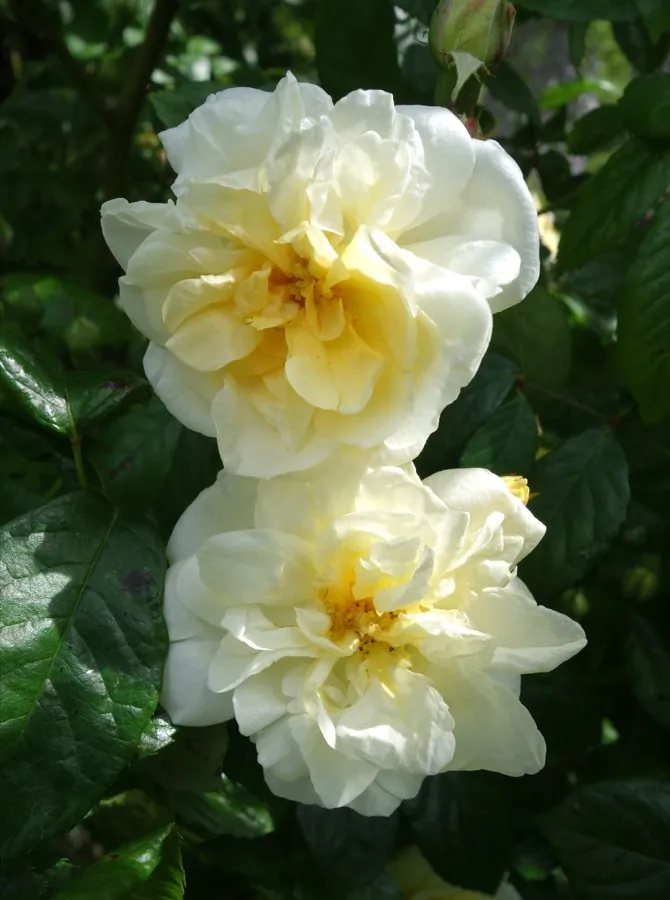
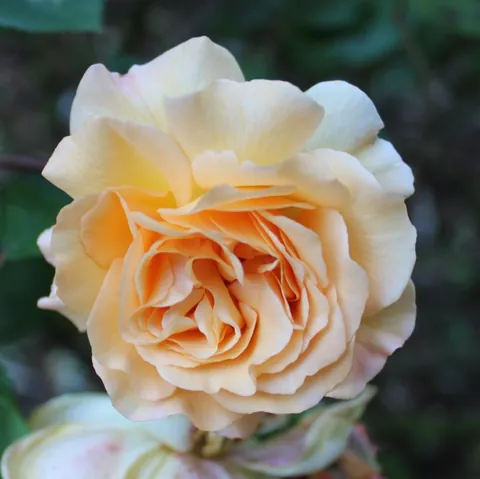
Rounded oval, dark yellow (yolk yellow / buff yellow)
Open flower
Cupped, with visible stamens; 7–8 cm across
Centre
Yellow stamens visible; a characteristic feature of semi-double Hybrid Musks
Fullness
Semi-double to double, 17–25 petals
Flower carriage
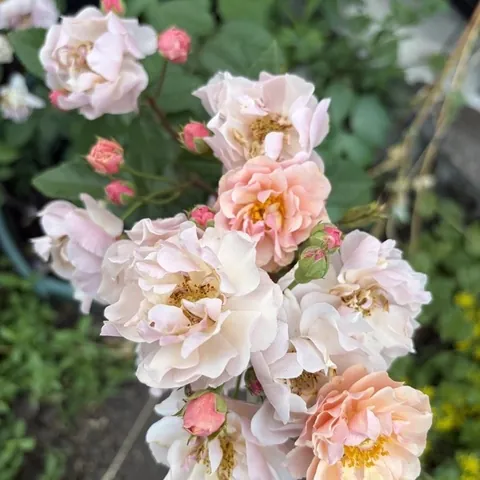
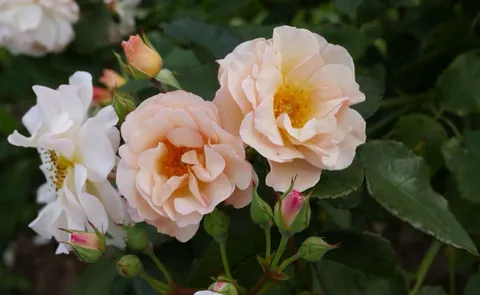
In large clusters of 5–15 flowers each; typical of Hybrid Musk

Fragrance

Moderate

Moderate to strong; a classic musk tone with notes of honey and tea rose; carries well on the air.

Disease resistance

5 out of 5
Black spotresistantPowdery mildewresistant

Legendarily tough; the benchmark for resistance to black spot and powdery mildew; one of the healthiest old roses.

Sun

Sun or part shade; tolerates more shade than most varieties; 4+ hours of sun

Thorns

Few
thornlessfewmoderatemanyvery many

Few and infrequent; the shoots are almost smooth.

Foliage

Dark green, healthy, typical of Hybrid Musks.

All characteristics in a table
Group
Hybrid Musk
Breeder
Pemberton, 1913
Bud shape
Rounded oval, dark yellow (yolk yellow / buff yellow)
Open flower
Cupped, with visible stamens; 7–8 cm across
Centre
Yellow stamens visible; a characteristic feature of semi-double Hybrid Musks
Colour
Bud dark yellow, opening to creamy yellow with a buttery tint; with age it fades to ivory / nearly white
Fullness
Semi-double to double, 17–25 petals
Flower carriage
In large clusters of 5–15 flowers each; typical of Hybrid Musk
Flowering
Continuous from June to the first frosts, abundant
Fragrance
Moderate to strong; a classic musk tone with notes of honey and tea rose; carries well on the air
Hips
Orange-red hips in autumn, decorative
Habit
Fountain-shaped, shoots arching over; in a warm climate a gentle climber up to 240–300 cm
Branching
Good; over time it forms a dense bush
Shoots
Long, flexible, arching
Thorns
Few and infrequent; the shoots are almost smooth.
Dimensions
150–185 cm tall × 90–120 cm wide; as a climber up to 300 cm
Support
Optional. As a shrub it needs no support; as a climber, a low support
Foliage
Dark green, healthy, typical of Hybrid Musks
Resistance
Legendarily tough; the benchmark for resistance to black spot and powdery mildew; one of the healthiest old roses
Variations of the variety
Pemberton's 'sister' varieties: Daphne (also 1913), Cornelia (1925), Penelope, Felicia, Buff Beauty

Colour scheme

Bud dark yellow, opening to creamy yellow with a buttery tint; with age it fades to ivory / nearly white

Rose neighbours

Perennials to plant nearby

Neighbouring roses

All 5 of Pemberton's 'legendary' Hybrid Musks together — the benchmark of a historic rose garden:

Perennial companions

A classic English palette — violet-blue and silvery:

Faassen's catmint (Nepeta)lavender 'Hidcote'soft lady's mantle (Alchemilla mollis)sage 'Caradonna'

Availability worldwide

A classic of old roses — specialist heritage nurseries:

  • 🇬🇧 Europe: Trevor White · Peter Beales · Lens Roses
  • 🇺🇸 USA: Antique Rose Emporium · Rogue Valley · Heirloom
  • 🇯🇵 Asia: patchy, via private collections
  • 🇺🇦 Ukraine: rare · mostly imported from Lens/Peter Beales

More about the variety

Hips
Orange-red hips in autumn, decorative
Variations of the variety
Pemberton's 'sister' varieties: Daphne (also 1913), Cornelia (1925), Penelope, Felicia, Buff Beauty

How to grow

Where to plant. Historic flower beds, romantic cottage gardens, next to paths (for the scent); copes well with partial shade, so it suits planting under trees; as a climber, on a low support or a wall.

Climate. Down to −23 °C; overwinters across Ukraine with moderate protection.

Care. Minimal, thanks to its legendary disease resistance. Only sanitary pruning; shaping is not needed. Regular feeding supports abundant flowering.

About the name

Name. Danaë, in Greek mythology the daughter of Acrisius, king of Argos, and mother of Perseus, conceived by Zeus in the form of a golden rain. The variety's yellow colour echoes the 'golden rain' myth. It is often written without the diacritic as 'Danae'.

Breeding. Raised by the Reverend Joseph Hardwick Pemberton (1852-1926) at Haywards Heath, Great Britain, 1913. Parentage: 'Trier' (Hybrid Multiflora, Lambert 1904) × 'Gloire de Chédane-Guinoisseau' (Hybrid Perpetual).

Significance. One of the first two Hybrid Musks in history (together with 'Daphne', also 1913). It is the founder of the whole Hybrid Musk class, from which Cornelia, Penelope, Felicia and Buff Beauty later emerged. In commerce for over 110 years, a phenomenon of longevity. A benchmark for resistance and repeat flowering in its era.

Frequently asked questions about Danaë

Does Danaë need winter protection?

The cultivar’s reference temperature is −23 °C (USDA zone 6b–10b). Overwintering depends on the conditions. All of Ukraine with moderate winter protection.

How many times a season does Danaë flower?

Continuous from June to the first frosts, abundant.

How big does Danaë grow?

150–185 cm tall, 90–120 cm wide. On a support — up to 300 cm.

Which diseases affect Danaë?

Overall resistance: 5 out of 5. Legendarily tough; the benchmark for disease resistance among Hybrid Musks.

How much sun does Danaë need?

Sun or part shade; tolerates more shade than most varieties; 4+ hours of sun.

What does Danaë smell like?

Moderate to strong; a classic musk tone with notes of honey and tea rose; carries well on the air.

Gardeners' photos and reviews

My climate

Choose a reference temperature to compare with the cultivar’s data. This is not an overwintering forecast or advice on winter protection; consider wind, moisture and the duration of frost.

Regional data are generalised. USDA describes average annual extreme minima, not a forecast; the values in the list are rounded. Check the conditions at your site. More information: Roses in Ukraine's climate.