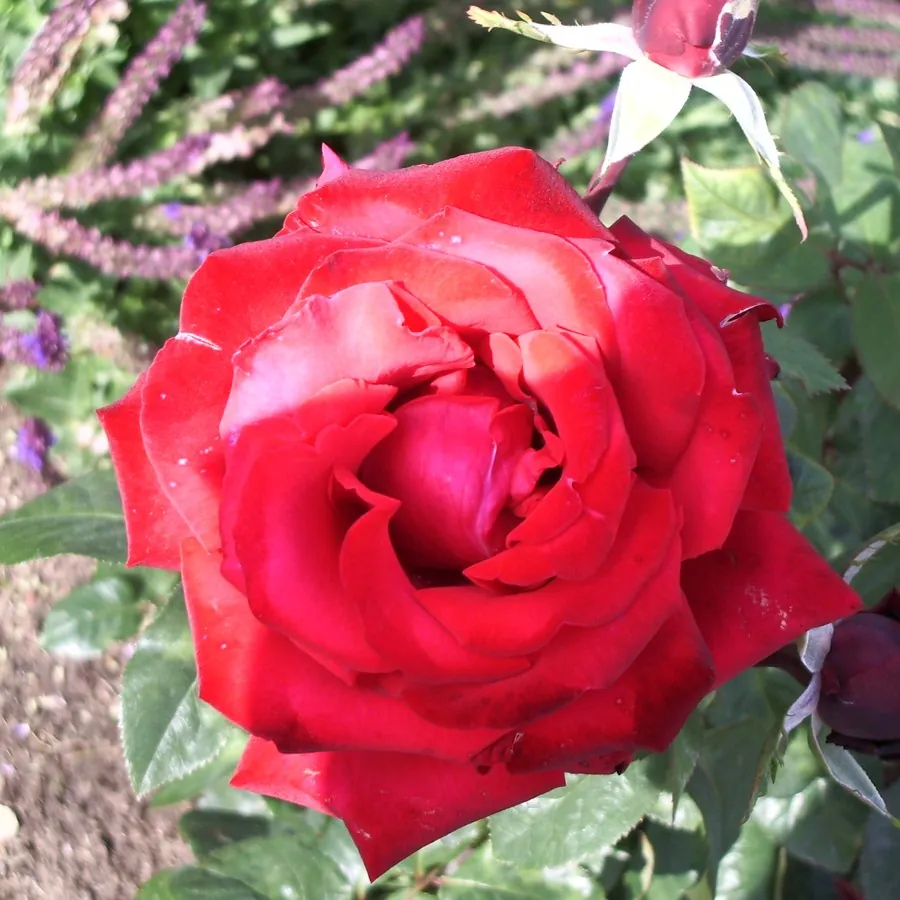
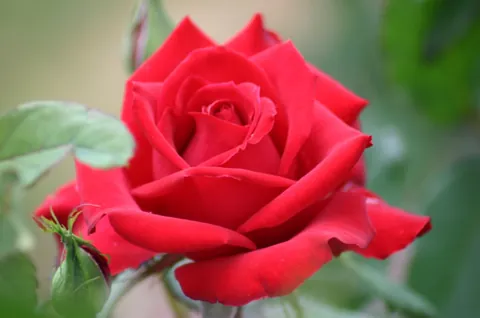




Grande Amore, close-up of the flower
Photo: Huhu, Public Domain
Back to catalogue
Hybrid Tea; Eleganza seriesTim Hermann Kordes; W. Kordes' Söhne, 2004Red

Grande Amore

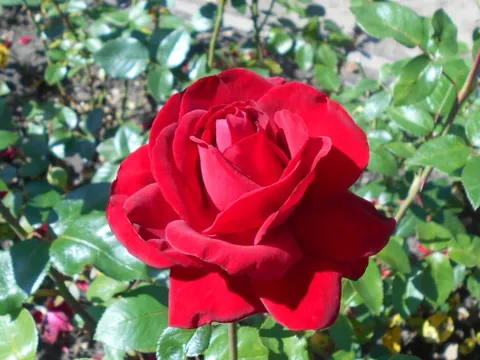
Rich bright red; classic high-centred form on long stems; colour-fast, rain-resistant; bush 80–90 cm, needs no support; not to be confused with the older Grande Amore (KORliegra, 1968).

Patent PP17047

Variety profile

Flowering

Repeat-flowering, in flushes throughout the season

Awards

ADR 2005

Gold medals, Rose Hills 2007, The Hague 2009, Lyon 2005 · Portland Best HT 2010

Plant size

80–90 × 50–70 cm
person 170 cm80–90 cm
Habit
Upright, compact, well branched
Dimensions
80–90 × 50–70 cm
Support
Not needed — an upright, compact bush holds itself up
Shoots
Strong, long — mostly with solitary flowers at the tips
Branching
Good — an even bush

Flower

8–10 cm
Bud shape
Classic elongated high-centred, deep red
Open flower
Classic high-centred HT form — elegant, exhibition type; 8–10 cm in diameter
Centre
Tightly furled, high — the steady 'classic' silhouette of a Hybrid Tea
Fullness
25–40 petals
Flower carriage
Mostly solitary flowers on long, strong stems — convenient for cutting

Fragrance

Delicate; unobtrusive (2.5/5)

Delicate, unobtrusive (2.5/5) — it does not dominate, leaving the main role to form and colour.

Sun

Colour-fast

Rich colour, rain-resistant; no data on fading.

Thorns

Moderate
thornlessfewmoderatemanyvery many

Moderate number of thorns — typical of Hybrid Teas.

Foliage

Semi-glossy, dark green.

Other names

Eleganza Grande Amore, My Valentine, Walter Sisulu
All characteristics in a table
Group
Hybrid Tea; Eleganza series
Breeder
Tim Hermann Kordes; W. Kordes' Söhne, Germany, 2004
Bud shape
Classic elongated high-centred, deep red
Open flower
Classic high-centred HT form — elegant, exhibition type; 8–10 cm in diameter
Centre
Tightly furled, high — the steady 'classic' silhouette of a Hybrid Tea
Colour
Rich bright red, colour-fast; rain-resistant; no data on fading in the sun
Fullness
25–40 petals
Flower carriage
Mostly solitary flowers on long, strong stems — convenient for cutting
Flowering
Repeat-flowering, in flushes throughout the season
Fragrance
Delicate, unobtrusive (2.5/5) — it does not dominate, leaving the main role to form and colour
Hips
Not documented
Habit
Upright, compact, well branched
Branching
Good — an even bush
Shoots
Strong, long — mostly with solitary flowers at the tips
Thorns
Moderate number of thorns — typical of Hybrid Teas.
Dimensions
80–90 × 50–70 cm
Support
Not needed — an upright, compact bush holds itself up
Foliage
Semi-glossy, dark green
Resistance
Two versions: in ADR trials — high; Kordes' official garden description notes susceptibility to black spot, mildew and rust (needs preventive care)
Variations of the variety
Code KORcoluma, patent PP17047; synonyms: Eleganza Grande Amore, My Valentine, Walter Sisulu (South Africa); not to be confused with the older Grande Amore (KORliegra, 1968)

Colour scheme

Rich bright red, colour-fast; rain-resistant; no data on fading in the sun

Rose neighbours

Perennials to plant nearby

Neighbouring roses

Classic red Hybrid Teas — a family of deep reds:

Companion perennials

Blue-lilac and silver neighbours set off the bright red:

catmint (Nepeta)lavenderbetony (Stachys)gypsophila

Availability worldwide

One of the leading red Hybrid Teas from Kordes in the 2000s:

🇩🇪 Germany: high · W. Kordes' Söhne🇺🇸 USA: high · Eleganza series🇿🇦 South Africa: sold as Walter Sisulu🇺🇦 Ukraine: on sale through nurseries

More about the variety

Hips
Not documented
Variations of the variety
Code KORcoluma, patent PP17047; synonyms: Eleganza Grande Amore, My Valentine, Walter Sisulu (South Africa); not to be confused with the older Grande Amore (KORliegra, 1968)

How to grow

Where to plant. A classic red Hybrid Tea for a sunny bed and for cutting. An upright, compact bush of 80–90 cm that needs no support. Striking on its own, in groups of red varieties (with Olympiad, Ingrid Bergman), or paired with blue-purple perennials.

Climate. USDA 6b–9b (~ −20…−23 °C). In Ukraine — in the Forest-Steppe and Steppe with light cover, further north with thorough cover.

Care. Sources differ on health — ADR trials showed high resistance, but Kordes' official garden description points to susceptibility to black spot, mildew and rust. We advise preventive treatments, especially in a wet season.

About the name

Name. 'grande amore' — Italian for 'great love'. Synonyms in different countries: Eleganza Grande Amore, My Valentine, and in South Africa the variety is known as Walter Sisulu.

Breeding. Bred by Tim Hermann Kordes at W. Kordes' Söhne (Germany), introduced in 2004. Code KORcoluma, patent PP17047. Belongs to the Eleganza series. Parents: Christopher Columbus × seedling. Not to be confused with the older Grande Amore (KORliegra, 1968) — a different, much earlier variety with the same name. Awards: ADR 2005, Gold Medal Rose Hills 2007, Portland Best HT 2010, Gold Medal The Hague 2009, Golden Rose of Lyon 2005. One of the well-awarded red Hybrid Teas from Kordes in the mid-2000s.

Frequently asked questions about Grande Amore

How many times a season does Grande Amore flower?

Repeat-flowering, in flushes throughout the season.

How big does Grande Amore grow?

80–90 cm tall, 50–70 cm wide.

How much sun does Grande Amore need?

Colour-fast; rich colour, rain-resistant; no data on fading.

What does Grande Amore smell like?

Delicate, unobtrusive (2.5/5) — it does not dominate, leaving the main role to form and colour.

Gardeners' photos and reviews

My climate

Choose a reference temperature to compare with the cultivar’s data. This is not an overwintering forecast or advice on winter protection; consider wind, moisture and the duration of frost.

Regional data are generalised. USDA describes average annual extreme minima, not a forecast; the values in the list are rounded. Check the conditions at your site. More information: Roses in Ukraine's climate.