




Back to catalogue
FloribundaHans Jürgen Evers; Rosen Tantau, 2000Bicolour

Heimatmelodie

Synonyms Franck Michael; Majora; Raspberry Queen; bred in 1996, introduced in 2000; the 9th variety of the Evers dynasty in our catalogue.

Evers dynasty · Tantau

Variety profile

Flowering

Repeat flowering, abundant

Origin

Tantau

2000 · bred 1996 · Evers dynasty

Winter hardiness

−20 °C

USDA zone 6. In Ukraine with moderate cover.

Compare reference temperatures

Plant size

70–100 × 60 cm
person 170 cm70–100 cm
Habit
Compact and upright — a typical modern Tantau-floribunda
Dimensions
70–100 cm tall × ~60 cm wide (compact)
Support
No support needed
Shoots
Strong, straight; they hold the clusters well
Branching
Good, even

Flower

15 petals
Bud shape
Round-oval, rich red
Open flower
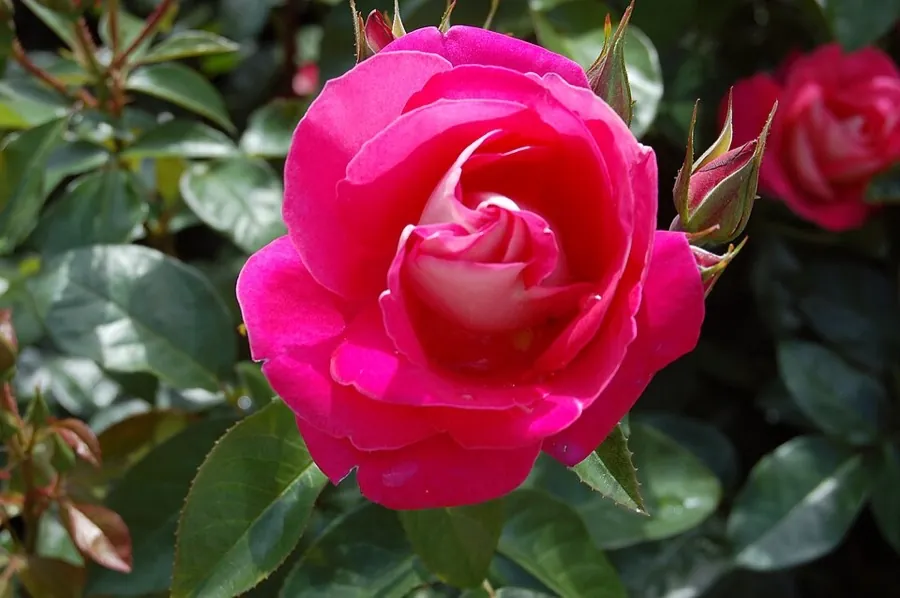
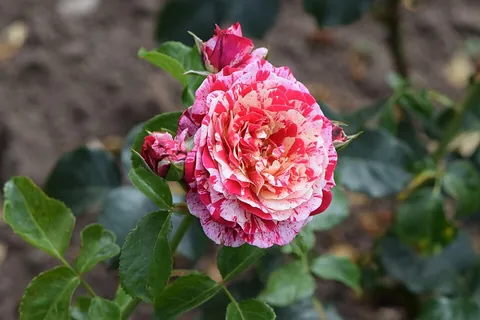
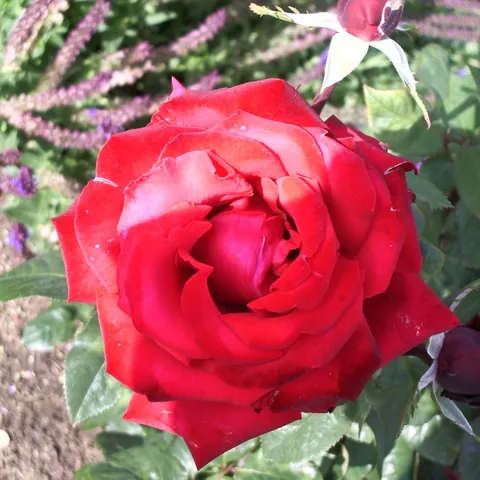
Semi-double, with a conspicuous white reverse; when opening, it gives the effect of a 'two-sided ribbon'
Centre
A dense red centre with conspicuous yellow stamens
Fullness
Semi-double, ~15 petals
Flower carriage
In clusters of 5–8 per stem

Fragrance

No scent

No scent — Tantau positions this variety as ornamental rather than fragrant (HMF: 'no fragrance').

Disease resistance

4 out of 5

High; typical modern Tantau-quality.

Sun

Full sun to show the bicolour

Thorns

Moderate
thornlessfewmoderatemanyvery many

Average number, typical of modern Tantau-floribundas.

Foliage

Dark green, glossy, healthy.

Other names

Franck Michael, Frank Michaël, Majora, Raspberry Queen
All characteristics in a table
Group
Floribunda
Breeder
Hans Jürgen Evers; Rosen Tantau, Germany, 2000
Bud shape
Round-oval, rich red
Open flower
Semi-double, with a conspicuous white reverse; when opening, it gives the effect of a 'two-sided ribbon'
Centre
A dense red centre with conspicuous yellow stamens
Colour
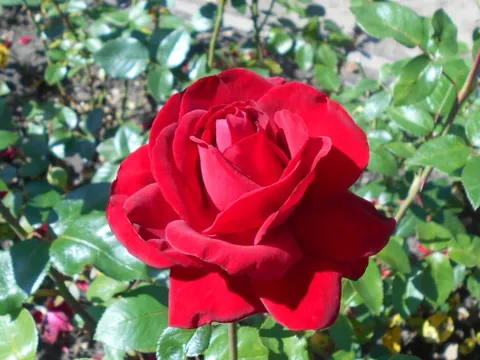
A dramatic bicolour: the upper side of the petals is a rich red and the reverse is pure white; when the flower moves in the wind, both colours 'play'
Fullness
Semi-double, ~15 petals
Flower carriage
In clusters of 5–8 per stem
Flowering
Repeat flowering, abundant
Fragrance
No scent — Tantau positions this variety as ornamental rather than fragrant (HMF: 'no fragrance')
Hips
Not documented (constant flowering interrupts it)
Habit
Compact and upright — a typical modern Tantau-floribunda
Branching
Good, even
Shoots
Strong, straight; they hold the clusters well
Thorns
Average number, typical of modern Tantau-floribundas.
Dimensions
70–100 cm tall × ~60 cm wide (compact)
Support
No support needed
Foliage
Dark green, glossy, healthy
Resistance
High — typical modern Tantau-quality
Variations of the variety
Code TANeidol (RT 96-115); many trade synonyms: Franck Michael; Frank Michaël; Majora; Raspberry Queen; parentage not published

Colour scheme

A dramatic bicolour: the upper side of the petals is a rich red and the reverse is pure white; when the flower moves in the wind, both colours 'play'

Rose neighbours

Perennials to plant nearby

Neighbouring roses

Bicolours and Evers relatives for a dramatic bed:

Companion perennials

Violet-silver accents for the red:

lavender 'Hidcote'Stachys byzantina (lamb's ear)lady's mantle (Alchemilla)salvia 'Caradonna'

Availability worldwide

A Tantau variety sold under several trade names in different countries:

  • 🇪🇺 Europe: moderate · Tantau classic
  • 🇺🇸 USA: low
  • 🇯🇵 Asia: low
  • 🇺🇦 Ukraine: moderate · available from Tantau dealers

More about the variety

Hips
Not documented (constant flowering interrupts it)
Variations of the variety
Code TANeidol (RT 96-115); many trade synonyms: Franck Michael; Frank Michaël; Majora; Raspberry Queen; parentage not published

How to grow

Where to plant. Sunny beds, groups of 3–5 bushes, borders with a dramatic colour palette; it looks lovely paired with white varieties to emphasise the bicolour; its compact size suits small plots or containers.

Climate. Down to −20 °C — in Ukraine with moderate cover; in the south, minimal cover.

Care. Classic floribunda — prune in spring by ⅓; removing spent blooms encourages new flushes; standard seasonal disease prevention.

About the name

Name. 'Heimatmelodie' is German for 'melody of the homeland'. A romantic, welcoming name that evokes home and nostalgia, conveying a warm emotional atmosphere. In different countries the variety is sold under different trade names: Franck Michael / Frank Michaël (possibly after the Belgian-French singer Franck Michel, born 1949), Majora and Raspberry Queen.

Breeding. CORRECTION: the earlier working notes had the hypothesis 'Tantau or Kordes'; Tantau is confirmed. Bred by Hans Jürgen Evers (1940–2007) at Rosen Tantau, Uetersen, Germany, in 1996; commercial introduction in 2000. Code TANeidol (RT 96-115). The parentage is not published, which is standard Tantau-practice.

Significance. The 9th variety of the 'Evers dynasty' in our catalogue. Together with Candlelight (1994), Cappuccino (2005), Andre Le Notre, Chippendale (2005), Elfe (2000), Dukat (2010), Friedenslicht (2010) and Hansestadt Rostock (2004), it belongs to the Evers family's group. Hans Jürgen Evers was Tantau's chief breeder from the 1970s to the 2000s, and he mostly bred nostalgic and dramatic varieties. Heimatmelodie stands out among his works for its clear bicolour character: it is not a 'nostalgic' rose but, on the contrary, a bright bed accent. The variety is especially valued in Germany and the post-Soviet space; in Ukraine it is also known by the name 'Malynova koroleva' (Raspberry Queen).

Frequently asked questions about Heimatmelodie

Does Heimatmelodie need winter protection?

The cultivar’s reference temperature is −20 °C (USDA zone 6). Overwintering depends on the conditions. In Ukraine with moderate cover.

How many times a season does Heimatmelodie flower?

Repeat flowering, abundant.

How big does Heimatmelodie grow?

70–100 cm tall, about 60 cm wide.

Which diseases affect Heimatmelodie?

Overall resistance: 4 out of 5. High; typical modern Tantau-quality.

How much sun does Heimatmelodie need?

Sun; full sun to show the bicolour.

What does Heimatmelodie smell like?

No scent — Tantau positions this variety as ornamental rather than fragrant (HMF: 'no fragrance').

Gardeners' photos and reviews

My climate

Choose a reference temperature to compare with the cultivar’s data. This is not an overwintering forecast or advice on winter protection; consider wind, moisture and the duration of frost.

Regional data are generalised. USDA describes average annual extreme minima, not a forecast; the values in the list are rounded. Check the conditions at your site. More information: Roses in Ukraine's climate.