





Back to catalogue
ShrubChristian Evers; Rosen TantauBicolour

Friedenslicht

Christened on 8 May 2015 at Gottorf Castle for the 70th anniversary of the end of the Second World War; synonyms Eirene®, Memorial Rose®; 1 € per bush — for memorial sites in Schleswig-Holstein.

Charity Rose · the Evers dynasty

Variety profile

Flowering

Repeat flowering

Repeat-flowering, June–October. Months are approximate, for the climate of Ukraine.

Awards

4 gold awards

Lyon · Orléans · Kortrijk · La Tacita 2018 · Hradec Králové 2nd place 2019

Winter hardiness

−23 °C

USDA zone 6. In Ukraine with winter protection in northern regions.

Compare reference temperatures

Plant size

120–150 × 50 cm
person 170 cm120–150 cm
Habit
A slender shrub (Strauchrose) — more upright than average shrubs
Dimensions
120–150 cm tall × ~50 cm wide (narrow, suitable for small plots)
Support
Needs no support
Shoots
Strong, straight, hold clusters well
Branching
Good, even

Flower

6–8 cm
Bud shape
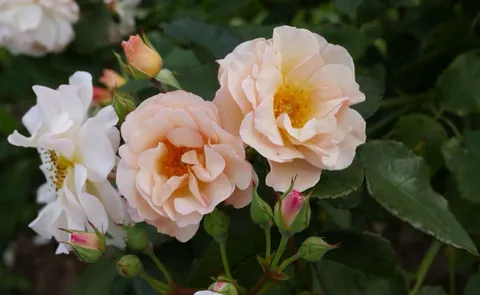
Round-oval, warm apricot-cream
Open flower
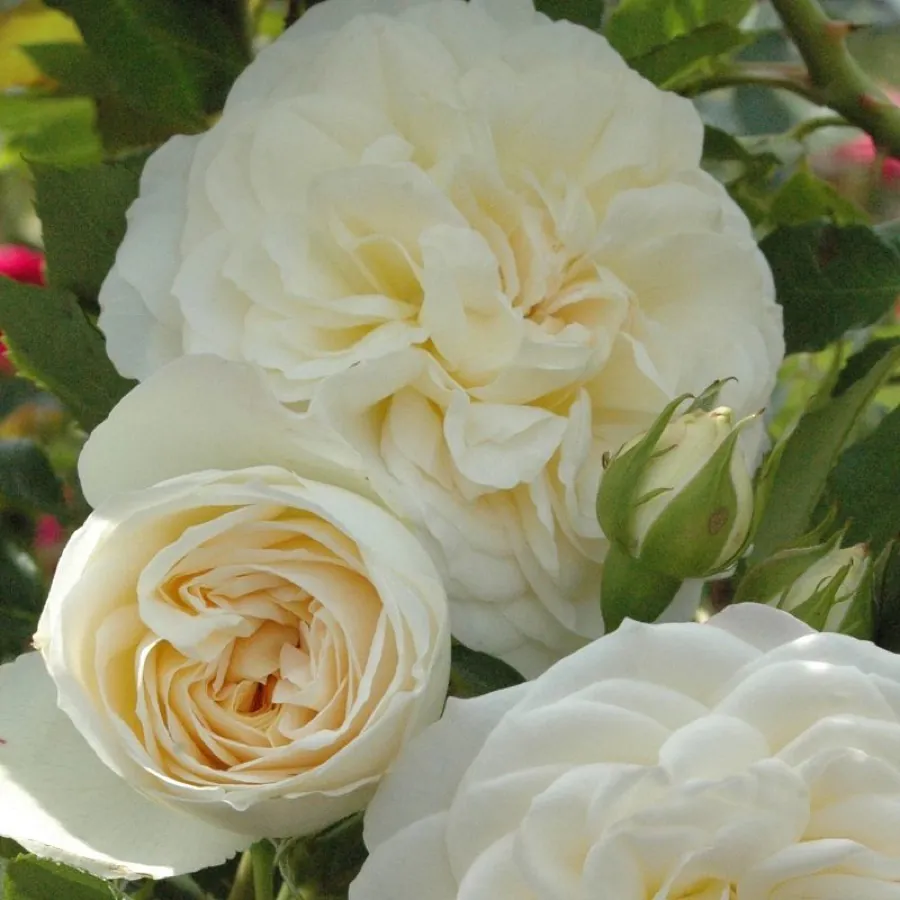
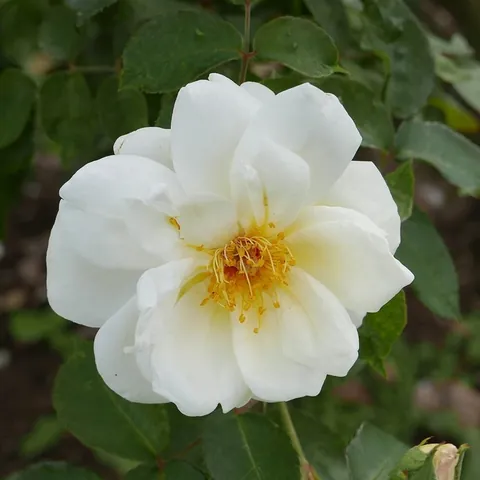
Cup-shaped, fully packed, becoming a flat rosette over time; 6–8 cm across
Centre
Warm apricot-cream in the bud; the centre lightens over time
Fullness
Densely packed, 26–40 petals
Flower carriage
In small clusters of 3–5 per shoot

Fragrance

Light

Light, pleasant (3/5 by Tantau's rating; mild by HMF) — not the variety's strong point; its main value is resistance and its symbolic story.

Disease resistance

4 out of 5
Black spotresistantPowdery mildewresistant

Good (3/5 Tantau): powdery mildew 4/5, black spot 4/5; no ADR-certificate — Tantau did not enter it in the competition.

Sun

Full sun for profuse flowering

Thorns

Moderate
thornlessfewmoderatemanyvery many

Medium number, typical of modern Tantau-shrubs.

Foliage

Dark green, leathery, healthy.

Other names

Eirene, Memorial Rose
All characteristics in a table
Group
Shrub
Breeder
Christian Evers; Rosen Tantau, Germany
Bud shape
Round-oval, warm apricot-cream
Open flower
Cup-shaped, fully packed, becoming a flat rosette over time; 6–8 cm across
Centre
Warm apricot-cream in the bud; the centre lightens over time
Colour
An interesting change: warm apricot-cream in the bud, fully white when open. Buds and open flowers appear on the same bush at once — a two-tone effect.
Fullness
Densely packed, 26–40 petals
Flower carriage
In small clusters of 3–5 per shoot
Flowering
Repeat-flowering, June–October
Fragrance
Light, pleasant (3/5 by Tantau's rating; mild by HMF) — not the variety's strong point; its main value is resistance and its symbolic story
Hips
Not documented (repeat flowering interrupts formation)
Habit
A slender shrub (Strauchrose) — more upright than average shrubs
Branching
Good, even
Shoots
Strong, straight, hold clusters well
Thorns
Medium number, typical of modern Tantau-shrubs.
Dimensions
120–150 cm tall × ~50 cm wide (narrow, suitable for small plots)
Support
Needs no support
Foliage
Dark green, leathery, healthy
Resistance
Good (3/5 Tantau): powdery mildew 4/5, black spot 4/5; no ADR-certificate — Tantau did not enter it in the competition
Variations of the variety
Synonyms Eirene® (Greek εἰρήνη — 'peace'; in Greece/Cyprus); Memorial Rose® (international name); code TAN10696 / RT 10-696; parentage not publicly documented

Colour scheme

An interesting change: warm apricot-cream in the bud, fully white when open. Buds and open flowers appear on the same bush at once — a two-tone effect.

Rose neighbours

Perennials to plant nearby

Rose neighbours (peace roses)

A thematic group of 'peace roses' — a symbolic composition with historical depth:

PeacePaxPenelopeCrocus Rose

Perennial companions

A calm silver-purple palette — it emphasises the memorial mood:

lavender 'Munstead'lady's mantle (Alchemilla mollis)lamb's ear (Stachys byzantina)catmint 'Walker's Low'

Availability worldwide

A memorial rose, mostly found in the DACH region:

  • 🇪🇺 Europe: moderate · Tantau · DACH region
  • 🇺🇸 USA: very low · Tantau is poorly represented there
  • 🇯🇵 Asia: low
  • 🇺🇦 Ukraine: very low · rare, specialist collections only

More about the variety

Hips
Not documented (repeat flowering interrupts formation)
Variations of the variety
Synonyms Eirene® (Greek εἰρήνη — 'peace'; in Greece/Cyprus); Memorial Rose® (international name); code TAN10696 / RT 10-696; parentage not publicly documented

How to grow

Where to plant. Memorial gardens, parks of remembrance, quiet corners of a family garden; its narrow outline (50 cm wide) suits small plots; looks lovely in a planting with Peace, Pax and Penelope as a 'bouquet of peace'.

Climate. To −23 °C — in northern and central Ukraine with winter protection; in southern Ukraine with moderate cover.

Care. A classic Tantau shrub — prune in spring by ⅓; removing spent flower trusses encourages new flushes. Good resistance means you can do without heavy chemical treatments.

About the name

Name. 'Friedenslicht' — German for 'Light of Peace'. Important clarification: the name is NOT linked to the Catholic scout tradition 'Friedenslicht aus Bethlehem' (Light of Peace from Bethlehem, from 1986, from Austria) — that is a separate story. In the case of this rose, 'Light of Peace' is a symbol of 1945, a memory of the end of the Second World War in Europe.

Breeding. Bred by Christian Evers at Rosen Tantau (Uetersen, Germany) in 2010, code TAN10696. Christian Evers is the son of Hans Jürgen Evers (who bred Candlelight, Cappuccino, Andre Le Notre, Chippendale, Elfe) — the fourth generation of the Evers family at Tantau (Dukat also belongs here). Parentage is not published (Tantau's standard practice).

Significance. Christened on 8 May 2015 at Gottorf Castle (Schleswig, Germany) for the 70th anniversary of the end of the Second World War in Europe (8 May 1945). The godmothers were Heide Simonis (former Minister-President of Schleswig-Holstein, the first woman to hold this office in the history of the Federal Republic of Germany) and Karin Penno-Burmeister (head of the ProGedenkstätten Schleswig-Holstein project). It is a charity rose ('Charity Rose'): 1 € from every bush sold goes to the work of memorial centres in Schleswig-Holstein — places commemorating victims of Nazism. Worldwide it is also sold as Eirene® (from Greek εἰρήνη, 'peace'; in Greece/Cyprus) and Memorial Rose® (the international name). It belongs to a special group of 'peace roses' alongside Peace (Meilland, christened 29 April 1945 — the day Berlin was taken), Pax (Pemberton 1918, after the First World War) and Hiroshima's Children (Harkness 1995, for the 50th anniversary of the Hiroshima bombing).

Frequently asked questions about Friedenslicht

Does Friedenslicht need winter protection?

The cultivar’s reference temperature is −23 °C (USDA zone 6). Overwintering depends on the conditions. In Ukraine with winter protection in northern regions.

How many times a season does Friedenslicht flower?

Repeat-flowering, June–October.

How big does Friedenslicht grow?

120–150 cm tall, about 50 cm wide.

Which diseases affect Friedenslicht?

Overall resistance: 4 out of 5. Powdery mildew 4/5; black spot 4/5 (no ADR).

How much sun does Friedenslicht need?

Sun; full sun for profuse flowering.

What does Friedenslicht smell like?

Light, pleasant (3/5 by Tantau's rating; mild by HMF) — not the variety's strong point; its main value is resistance and its symbolic story.

Gardeners' photos and reviews

My climate

Choose a reference temperature to compare with the cultivar’s data. This is not an overwintering forecast or advice on winter protection; consider wind, moisture and the duration of frost.

Regional data are generalised. USDA describes average annual extreme minima, not a forecast; the values in the list are rounded. Check the conditions at your site. More information: Roses in Ukraine's climate.