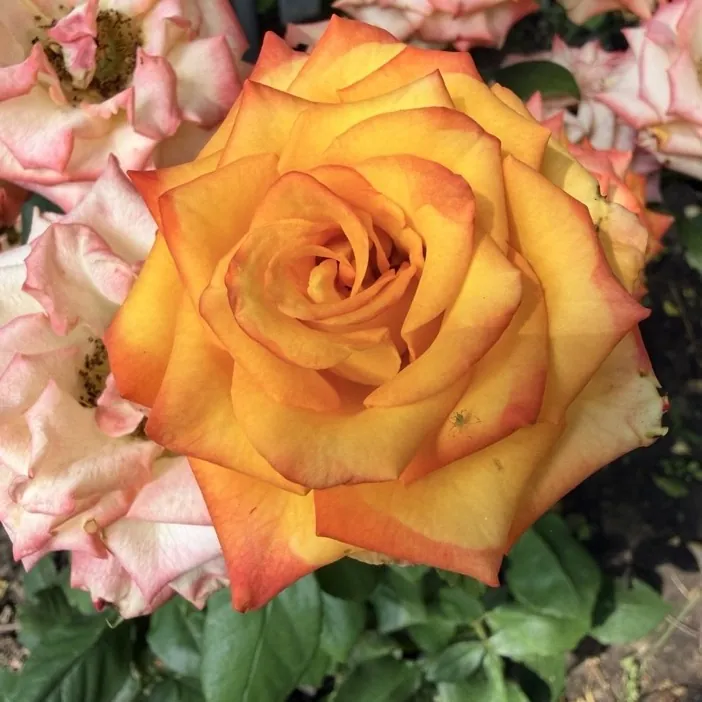
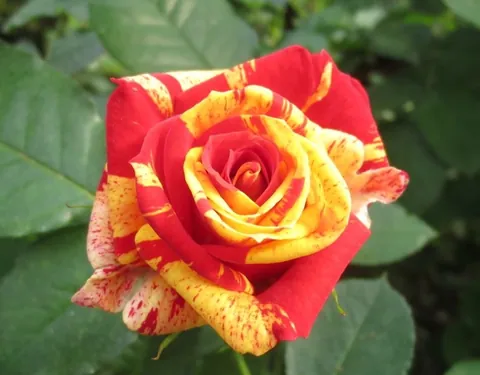
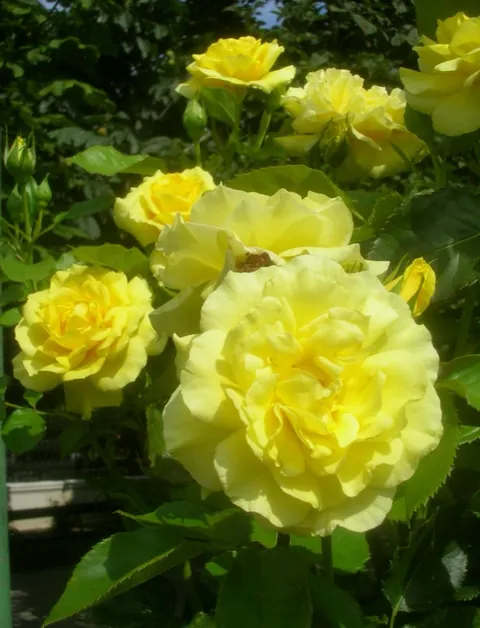
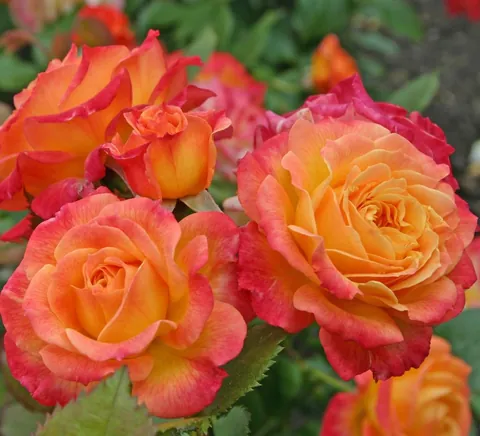
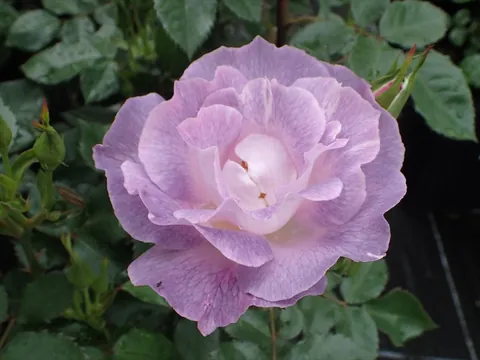



High Magic, close-up of the flower
Back to catalogue
Cut-flower HTTheo Segers; Preesman Royalty, 1999Bicolour

High Magic

CORRECTION: the working notes had Tantau — in fact it is Preesman (Netherlands); the colour is yellow with orange-red edges (not the other way round); first sales in Kenya in 2004, Australia in 2006.

Magic series · Preesman

Variety profile

Flowering

Repeat flowering; in a greenhouse — year-round

Origin

Preesman

1999 · Kenya/Ecuador glasshouses · commercial cut-flower

Winter hardiness

−12 °C

USDA zone 7+. Bred for cutting, but it also grows in the garden: in the Forest-Steppe and Steppe with light cover, further north with full cover.

Compare reference temperatures

Plant size

60 × 50 cm
person 170 cm60 cm
Habit
Upright, compact — a typical cut-flower HT; in a greenhouse, a commercial bush with long stems for cutting
Dimensions
~60 cm tall × ~50 cm wide as a patio plant; in a greenhouse up to 1.2 m
Support
No support needed
Shoots
Strong, straight, with long commercial stems of 40–70 cm
Branching
Good

Flower

9–10 cm
Bud shape
Elongated, high-centred, mainly yellow with orange edges
Open flower
Classic hybrid tea goblet-shaped form; diameter 9–10 cm
Centre
A bright yellow centre, visible when the flower is fully open
Fullness
Full, 26–30 petals
Flower carriage
Singly on a stem — a classic cut-flower HT

Fragrance

Barely noticeable

Barely noticeable — typical of modern cut-flower varieties (bred for vase life, not for scent).

Disease resistance

4 out of 5
Powdery mildewresistant

High — a greenhouse commercial selection; USDA 7+ — bred for cutting, but it also grows in the garden: in the Forest-Steppe and Steppe with light cover, in the north with full cover; winter hardiness is moderate.

Sun

Full sun to bring out the bicolour

Thorns

Few
thornlessfewmoderatemanyvery many

Few prickles — the commercial standard for cut flowers.

Foliage

Dark green, leathery, healthy.

Other names

High & Magic
All characteristics in a table
Group
Cut-flower HT
Breeder
Theo Segers; Preesman Royalty, Netherlands, 1999
Bud shape
Elongated, high-centred, mainly yellow with orange edges
Open flower
Classic hybrid tea goblet-shaped form; diameter 9–10 cm
Centre
A bright yellow centre, visible when the flower is fully open
Colour
A sunny bicolour: a yellow base to the petals with orange-red edges; the contrast is emphasised as the flower opens, and the tone deepens in the sun
Fullness
Full, 26–30 petals
Flower carriage
Singly on a stem — a classic cut-flower HT
Flowering
Repeat flowering; in a greenhouse — year-round
Fragrance
Barely noticeable — typical of modern cut-flower varieties (bred for vase life, not for scent)
Hips
Not documented (constant cutting interrupts it)
Habit
Upright, compact — a typical cut-flower HT; in a greenhouse, a commercial bush with long stems for cutting
Branching
Good
Shoots
Strong, straight, with long commercial stems of 40–70 cm
Thorns
Few prickles — the commercial standard for cut flowers.
Dimensions
~60 cm tall × ~50 cm wide as a patio plant; in a greenhouse up to 1.2 m
Support
No support needed
Foliage
Dark green, leathery, healthy
Resistance
High — a greenhouse commercial selection; USDA 7+ — bred for cutting, but it also grows in the garden: in the Forest-Steppe and Steppe with light cover, in the north with full cover; winter hardiness is moderate
Variations of the variety
Code CROhimagi; synonym High & Magic; parentage Unnamed Seedling P 203 (orange) × Unnamed Seedling 98-421 (yellow)

Colour scheme

A sunny bicolour: a yellow base to the petals with orange-red edges; the contrast is emphasised as the flower opens, and the tone deepens in the sun

Rose neighbours

Perennials to plant nearby

Neighbouring roses

A warm, sunny palette — in the garden or in a bouquet:

Companion perennials

Violet-blue accents — a classic contrast to the yellow-orange:

lavender 'Munstead'delphinium 'Pacific Giant'Stachys byzantina (lamb's ear)salvia 'Caradonna'

Availability worldwide

A global cut-flower variety — broad presence in florist trade:

  • 🇪🇺 Europe: HIGH · Dutch glasshouses · Royal FloraHolland
  • 🇺🇸 USA: high · Rio Roses · florists
  • 🇯🇵 Asia: moderate
  • 🇺🇦 Ukraine: HIGH · sold as spray/patio plants · florist trade

More about the variety

Hips
Not documented (constant cutting interrupts it)
Variations of the variety
Code CROhimagi; synonym High & Magic; parentage Unnamed Seedling P 203 (orange) × Unnamed Seedling 98-421 (yellow)

How to grow

Where to plant. Containers on a terrace, borders in warm colours, formal groups; as a cut flower for bouquets; in greenhouses — commercial production. It pairs beautifully with purple perennials.

Climate. USDA 7+, down to −12 °C. Bred for greenhouses, it also overwinters in open ground: in the Forest-Steppe and Steppe with light cover, and in the north with full cover. Winters vary, and in harsh snowless years some dieback is possible, so reliable cover is never unnecessary.

Care. Classic HT — prune in spring; removing spent blooms encourages new flushes; standard seasonal disease prevention; in the garden, the base of the bush must be mounded up and covered for winter.

About the name

Name. 'High Magic' — English for 'high magic'. 'High' refers to 'high-stem', the professional term for cut roses with long stems (60–70 cm), created specially for floristry. 'Magic' is a commercial series of Preesman/Theo Segers varieties, to which several bicolour HTs belong.

Breeding. MAJOR CORRECTION: the working notes had the hypothesis 'Tantau'; in fact it is Preesman Royalty B.V., Netherlands. Breeder: Theodorus Adrianus (Theo) Segers. Bred in 1999; EU patent 2004, AU 2009. Code CROhimagi. Parentage: Unnamed Seedling P 203 (orange) × Unnamed Seedling 98-421 (yellow); both parents are unnamed experimental lines from Preesman.

Significance. Preesman Royalty B.V. is the leading Dutch breeder of cut roses for the global market. High Magic reaches the markets of Europe and the USA through greenhouses in Kenya (Sun Spray Roses, Naivasha), Ecuador and Ethiopia. On the Ukrainian market, as plants, it is sold as a 'spray/patio' rose, a small sunny rose for containers. NOT to be confused with 'Magic Carpet' (another Preesman variety) or 'Magic' (Meilland HT 1957).

Frequently asked questions about High Magic

Does High Magic need winter protection?

The cultivar’s reference temperature is −12 °C (USDA zone 7+). Overwintering depends on the conditions. Bred for cutting, but it also grows in the garden: in the Forest-Steppe and Steppe with light cover, further north with full cover.

How many times a season does High Magic flower?

Repeat flowering; in a greenhouse — year-round.

How big does High Magic grow?

About 60 cm tall, about 50 cm wide.

Which diseases affect High Magic?

Overall resistance: 4 out of 5. High; greenhouse selection; strong against powdery mildew and black spot.

How much sun does High Magic need?

Sun; full sun to bring out the bicolour.

What does High Magic smell like?

Barely noticeable — typical of modern cut-flower varieties (bred for vase life, not for scent).

Gardeners' photos and reviews

My climate

Choose a reference temperature to compare with the cultivar’s data. This is not an overwintering forecast or advice on winter protection; consider wind, moisture and the duration of frost.

Regional data are generalised. USDA describes average annual extreme minima, not a forecast; the values in the list are rounded. Check the conditions at your site. More information: Roses in Ukraine's climate.