


Back to catalogue
Large-flowered climberG.L.M. Van de LaakLilac and purple

Indigoletta

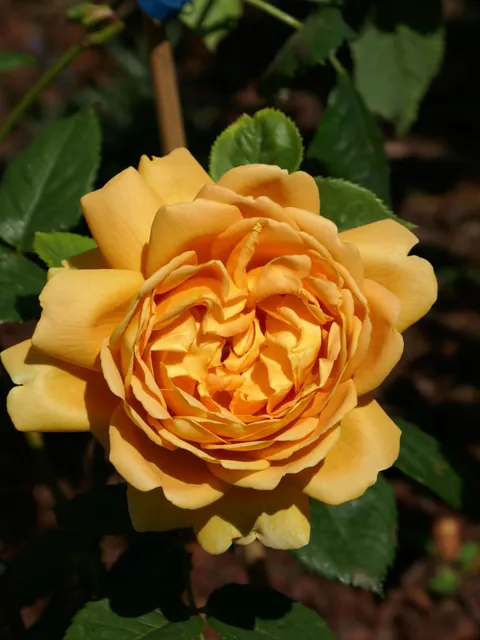
Sport of 'Mainzer Fastnacht' (Tantau 1964, the famous 'blue' rose). Mauve-violet climber with a vanilla-sweet scent. Synonyms: Azubis; Morvana; Blue Lady; Blue Queen.

Officially 'Azubis' · sport of Mainzer Fastnacht

Variety profile

Flowering

Repeat-flowering

Origin

Van de Laak

Bred 1981 · on the market 1985 · Limburg, NL

Winter hardiness

−20 °C

USDA zone 6b–9b. In Ukraine with moderate winter protection.

Compare reference temperatures

Plant size

250–300 × 150 cm
person 170 cm250–300 cm
Habit
A strong large-flowered climber: long canes, needs a tall support
Dimensions
250–300 cm tall × about 150 cm wide
Support
Needs support: pergola, trellis, south wall
Shoots
Long, flexible
Branching
Good

Flower

8–10 cm
Bud shape
Rounded-conical, dark violet
Open flower
Cupped, double; 8–10 cm across
Centre
A dense violet centre with stamens that create contrast
Fullness
22–30 petals
Flower carriage
In small clusters of 2–3

Fragrance

Strong

Strong vanilla-sweet scent, according to descriptions from the Lens-partners PharmaRosa and Agel-Rosen; a rare combination of a bluish colour and a rich fragrance.

Disease resistance

3 out of 5

Moderate; typical of 'blue' or mauve varieties; black spot is possible.

Sun

Sun or partial shade; partial shade keeps the blue tint, sun gives a deeper purple

Thorns

Moderate
thornlessfewmoderatemanyvery many

Average number, typical for climbers.

Foliage

Dark green, leathery.

Other names

Morvana, Blue Lady, Blue Queen
All characteristics in a table
Group
Large-flowered climber
Breeder
G.L.M. Van de Laak, Netherlands
Bud shape
Rounded-conical, dark violet
Open flower
Cupped, double; 8–10 cm across
Centre
A dense violet centre with stamens that create contrast
Colour
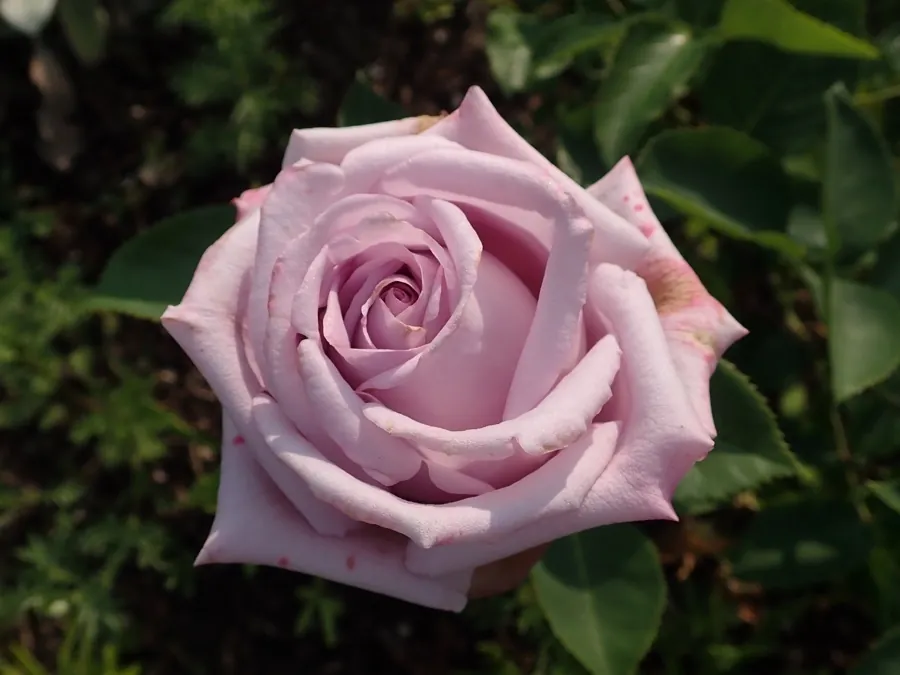
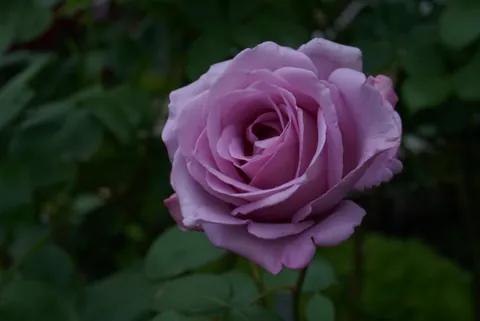
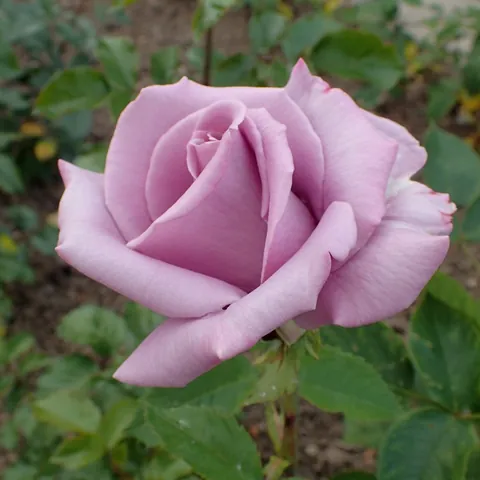
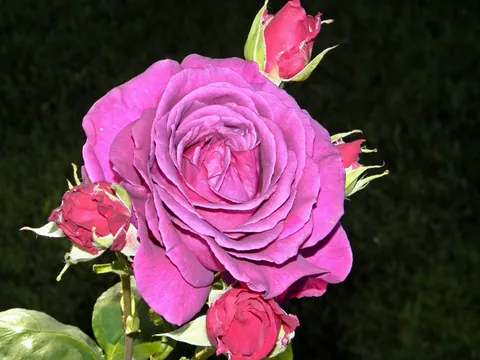
'Mauve': mauve-violet in bud, opening to a lighter lavender with a distinct blue tint; the colour depends on light: in partial shade it keeps the blue note, in full sun it turns a deeper purple
Fullness
22–30 petals
Flower carriage
In small clusters of 2–3
Flowering
Repeat-flowering
Fragrance
Strong vanilla-sweet scent, according to descriptions from the Lens-partners PharmaRosa and Agel-Rosen; a rare combination of a bluish colour and a rich fragrance
Hips
Not documented
Habit
A strong large-flowered climber: long canes, needs a tall support
Branching
Good
Shoots
Long, flexible
Thorns
Average number, typical for climbers.
Dimensions
250–300 cm tall × about 150 cm wide
Support
Needs support: pergola, trellis, south wall
Foliage
Dark green, leathery
Resistance
Moderate; typical of 'blue' or mauve varieties; black spot is possible
Variations of the variety
Official registered name 'Azubis'; patent codes: Belgium 305, Germany ROS 297, Netherlands 5325; synonyms Morvana, Blue Lady, Blue Queen; sport of 'Mainzer Fastnacht' (Tantau 1964, the legendary 'blue' HT), which explains its unusual shades

Colour scheme

'Mauve': mauve-violet in bud, opening to a lighter lavender with a distinct blue tint; the colour depends on light: in partial shade it keeps the blue note, in full sun it turns a deeper purple

Rose neighbours

Perennials to plant nearby

Rose neighbours

Themed 'blue' / mauve group:

Companion perennials

Blue spires bring out the blue tone:

lavender 'Hidcote'delphinium 'Black Knight'Byzantine stachyssoft lady's mantle

Availability worldwide

A European variety of collector interest:

  • 🇪🇺 Europe: moderate · PharmaRosa, Agel-Rosen, Schultheis
  • 🇺🇸 USA: low
  • 🇯🇵 Asia: moderate · popular in Japan
  • 🇺🇦 Ukraine: low · rare, collector's variety

More about the variety

Hips
Not documented
Variations of the variety
Official registered name 'Azubis'; patent codes: Belgium 305, Germany ROS 297, Netherlands 5325; synonyms Morvana, Blue Lady, Blue Queen; sport of 'Mainzer Fastnacht' (Tantau 1964, the legendary 'blue' HT), which explains its unusual shades

How to grow

Where to plant. Tall arches, pergolas, south and east walls of houses, themed 'blue' beds with delphiniums and lavender; excellent paired with white climbers (Iceberg climbing) for dramatic white-and-purple contrast; partial shade keeps the characteristic blue tint.

Climate. Down to −20 °C. In Ukraine, moderate winter protection in northern regions; in the south, no protection needed.

Care. Pruning of climbers is minimal; it is important to train the main canes horizontally for abundant flowering; seasonal black spot prevention.

About the name

Name. 'Indigoletta' comes from 'Indigo' (indigo, a blue-violet colour) plus the diminutive suffix '-letta', meaning 'little indigo' or 'delicate indigo'. The name emphasises the variety's characteristic blue-violet palette. This is a trade name that caught on commercially; the official registered name is 'Azubis'.

Breeding. Bred by G.L.M. Van de Laak in Limburg, Netherlands. Bred 1981, commercially introduced 1985. Patent codes: Belgium 305, Germany ROS 297, Netherlands 5325. IMPORTANT: Indigoletta is a sport mutation of 'Mainzer Fastnacht' (Tantau 1964, the famous 'blue' Hybrid Tea). A sport mutation means a cane on a Mainzer Fastnacht bush appeared with changes in colour and habit. Van de Laak isolated this cane and propagated it as a new climbing variety. This is the second 'blue' line alongside Mainzer Fastnacht (HT) and Indigoletta (climber).

Significance. One of the few 'blue' climbing roses in the world. 'Blue' varieties are usually Hybrid Teas (Blue Moon, Blue Nile, Mainzer Fastnacht), while climbing forms are extremely rare. Indigoletta fills that niche. Sold in different countries as Azubis (official), Morvana, Blue Lady and Blue Queen, which are commercial marketing names. In popular culture it is a collectors' variety for lovers of 'blue' roses and vertical designs. In our catalogue it belongs to the thematic group of 'blue' varieties, alongside Blue Moon (Tantau 1964), Blue Nile (Delbard 1981), Ebb Tide (Carruth 2004) and Big Purple (Stephens NZ 1985).

Frequently asked questions about Indigoletta

Does Indigoletta need winter protection?

The cultivar’s reference temperature is −20 °C (USDA zone 6b–9b). Overwintering depends on the conditions. In Ukraine with moderate winter protection.

How many times a season does Indigoletta flower?

Repeat-flowering.

How big does Indigoletta grow?

250–300 cm tall, about 150 cm wide.

Which diseases affect Indigoletta?

Overall resistance: 3 out of 5. Moderate; typical of 'blue' varieties.

How much sun does Indigoletta need?

Sun or partial shade; partial shade keeps the blue tint, sun gives a deeper purple.

What does Indigoletta smell like?

Strong vanilla-sweet scent, according to descriptions from the Lens-partners PharmaRosa and Agel-Rosen; a rare combination of a bluish colour and a rich fragrance.

Gardeners' photos and reviews

My climate

Choose a reference temperature to compare with the cultivar’s data. This is not an overwintering forecast or advice on winter protection; consider wind, moisture and the duration of frost.

Regional data are generalised. USDA describes average annual extreme minima, not a forecast; the values in the list are rounded. Check the conditions at your site. More information: Roses in Ukraine's climate.