



Back to catalogue
Hybrid TeaDelbard, 1981Lilac and purple

Blue Nile

French original Nil Bleu; Médaille d'Or Bagatelle 1981 – one of the best lavender-purple Hybrid Teas for cutting.

'blue' series by Delbard · for cutting

Variety profile

Flowering

Repeat-flowering

Awards

Or

Médaille d'Or Bagatelle 1981 · Paris

Winter hardiness

−20 °C

USDA zone 6b–9b. All of Ukraine · north — with light protection.

Compare reference temperatures

Plant size

100–130 × 70–80 cm
person 170 cm100–130 cm
Habit
Tall, upright, spreading
Dimensions
100–130 cm tall × 70–80 cm wide
Support
No support needed – the bush is self-supporting (support is only needed for climbing varieties)
Shoots
Strong, long – ideal for cutting
Branching
Well branched

Flower

≈ 10 cm

25–30 petals.

Bud shape
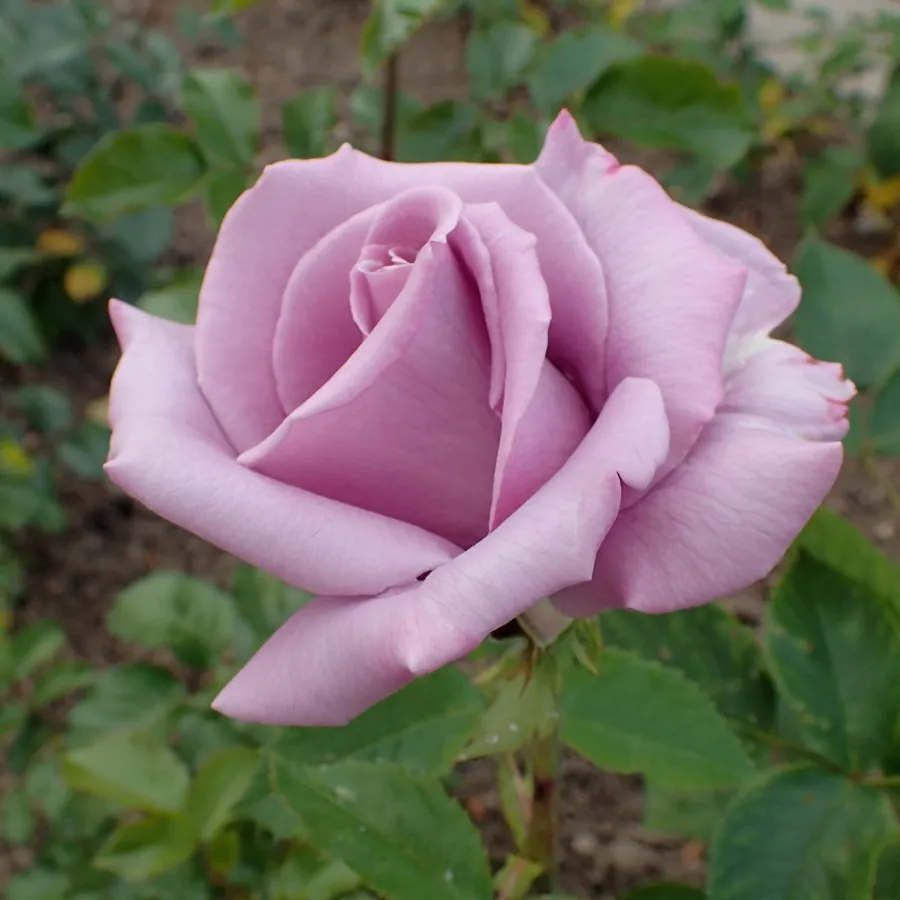
Long, elegant, lavender-purple
Open flower
Classic high-cone HT form; diameter about 10 cm
Centre
Dense, no visible stamens
Fullness
Double; the patent describes 25–30 petals plus 0–5 petaloids (petal-like structures)
Flower carriage
The patent describes occasional single flowers, but usually small clusters of 2–4

Fragrance

Strong

Strong – citrus, fruit and tea notes (a signature feature of the Delbard series).

Disease resistance

4 out of 5
Powdery mildewmoderate

Good against powdery mildew, moderate against black spot.

Sun

Full sun

Tolerates warmth well, but the colour fades slightly in heat.

Thorns

Moderate
thornlessfewmoderatemanyvery many

Standard for HT.

Foliage

Dark green, leathery, semi-glossy.

Other names

Breeder's code DELnible.

All characteristics in a table
Group
Hybrid Tea
Breeder
Delbard, 1981
Bud shape
Long, elegant, lavender-purple
Open flower
Classic high-cone HT form; diameter about 10 cm
Centre
Dense, no visible stamens
Colour
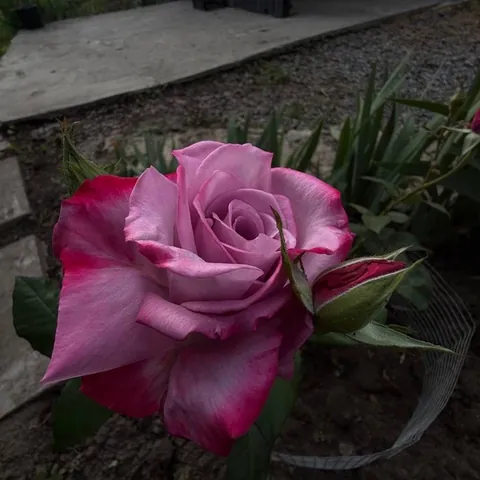
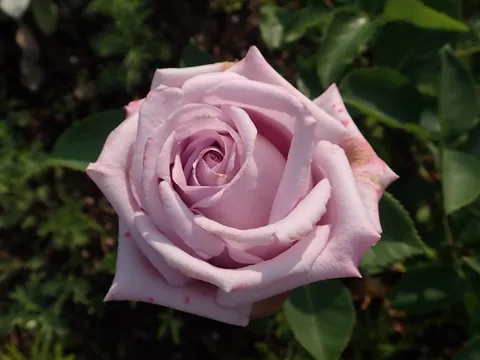
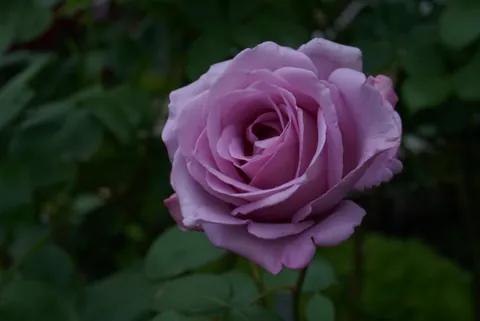
Deep lavender with purple and a blue sheen; darker and richer than Blue Moon
Fullness
Double; the patent describes 25–30 petals plus 0–5 petaloids (petal-like structures)
Flower carriage
The patent describes occasional single flowers, but usually small clusters of 2–4
Flowering
Repeat-flowering
Fragrance
Strong – citrus, fruit and tea notes (a signature feature of the Delbard series)
Hips
Rare
Habit
Tall, upright, spreading
Branching
Well branched
Shoots
Strong, long – ideal for cutting
Thorns
Standard for HT.
Dimensions
100–130 cm tall × 70–80 cm wide
Support
No support needed – the bush is self-supporting (support is only needed for climbing varieties)
Foliage
Dark green, leathery, semi-glossy
Resistance
Good against powdery mildew, moderate against black spot
Variations of the variety
No separate sports have been recorded

Colour scheme

Deep lavender with purple and a blue sheen; darker and richer than Blue Moon

Rose neighbours

Perennials to plant nearby

Neighbouring roses

A lavender-purple palette holds a rich mood around Blue Nile.

Perennial companions

The blue haze of Perovskia and silver foliage bring out the depth of the purple tone:

perovskiacatmint (Nepeta)lamb's earsalvia 'Mainacht'

Contrasting accents

For a play of warm and cool tones — terracotta and spotted orange accents:

Achillea TerracottaHemerocallis Frans HalsVerbena bonariensis

More about the variety

Hips
Rare
Variations of the variety
No separate sports have been recorded

How to grow

Where to plant. A rose garden, cutting beds, beside a fence or wall (as a vertical accent), containers.

Climate. Ideal for central and southern Ukraine; in the north, with moderate winter protection.

Care. Moderate pruning in spring; feeding during bud formation; removing spent flowers for a repeat flush.

About the name

Name. Nil Bleu (French for 'Blue Nile') – a reference to the Blue Nile, the main tributary of the River Nile, which rises in the Ethiopian highlands. Chosen for its deep 'river blue' shade.

Breeding. Bred by André Delbard-Chabert (Delbard, France), introduced in France in 1977 and in the USA in 1981. Parentage: [(Holstein × Bayadère) × Prélude] × Saint-Exupéry. Patent code DELnible (US PP 4,671 of 17.03.1981).

Significance. It reflects the breeder's dream of 'blue water' amid a sea of roses. Médaille d'Or Bagatelle 1981 (Paris) – one of the best lavender-purple HTs for cutting. Darker and richer than Blue Moon.

Frequently asked questions about Blue Nile

Does Blue Nile need winter protection?

The cultivar’s reference temperature is −20 °C (USDA zone 6b–9b). Overwintering depends on the conditions.

How many times a season does Blue Nile flower?

Repeat-flowering.

How big does Blue Nile grow?

100–130 cm tall, 70–80 cm wide.

Which diseases affect Blue Nile?

Overall resistance: 4 out of 5. Above average resistance to the main diseases; good against powdery mildew.

How much sun does Blue Nile need?

Sun; full sun; tolerates warmth well, but the colour fades slightly in heat.

What does Blue Nile smell like?

Strong – citrus, fruit and tea notes (a signature feature of the Delbard series).

Gardeners' photos and reviews

My climate

Choose a reference temperature to compare with the cultivar’s data. This is not an overwintering forecast or advice on winter protection; consider wind, moisture and the duration of frost.

Regional data are generalised. USDA describes average annual extreme minima, not a forecast; the values in the list are rounded. Check the conditions at your site. More information: Roses in Ukraine's climate.